Nokia Launches Next-Gen Datacenter Switches Optimized for the AI Revolution
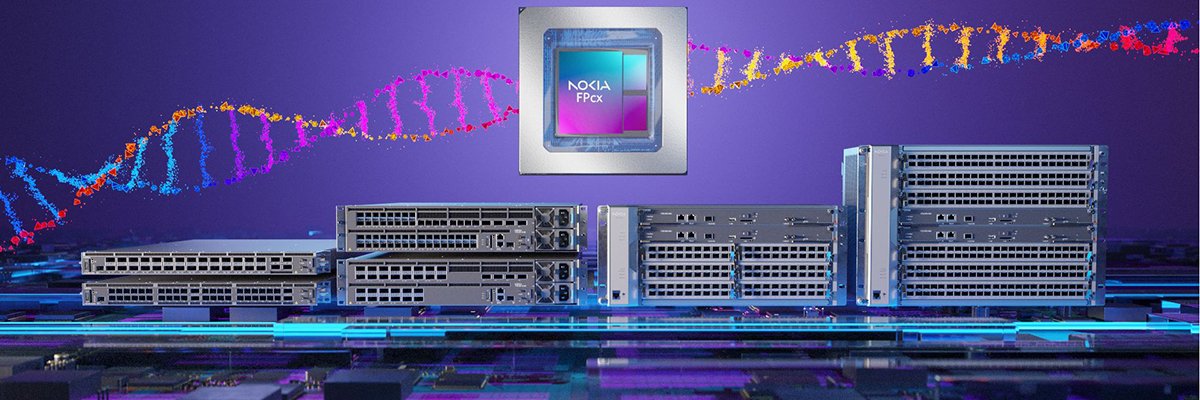
Nokia has unveiled a new family of datacenter switches designed to meet the escalating demands of Artificial Intelligence (AI) and High-Performance Computing (HPC) workloads. These switches aren’t just about speed; they represent a fundamental shift in datacenter networking, prioritizing efficiency, automation, and resilience in the face of unprecedented scale.
Addressing the AI Infrastructure Gap
The explosive growth of AI is fundamentally reshaping datacenter infrastructure. Customary networking approaches are struggling to keep pace with the bandwidth, latency, and management complexities introduced by AI “factories” – environments housing massive clusters of processing units. Nokia’s new switches directly address these challenges.
Here’s a breakdown of the key features and benefits:
* Ultra Ethernet Compliance: Built on the cutting-edge Ultra Ethernet Consortium (UEC) specifications,these switches optimize packet flow,minimize congestion,and maximize network efficiency. This is crucial for supporting large-scale AI deployments, perhaps scaling to one million XPUs and beyond, as highlighted by Broadcom’s advancements.
* High-Density 1.6TE Interface: the 1.6TE interface provides a sweet spot for performance, aligning perfectly with the evolving needs driven by agentic AI.
* Flexible Deployment Options: Available in both liquid-cooled and air-cooled configurations, the switches seamlessly integrate into diverse datacenter rack setups. This adaptability is vital for organizations with varying infrastructure constraints.
* Software Choice: Nokia uniquely supports both its embedded SR Linux Network Operating System (NOS) and the open-source SONiC, giving datacenter operators unparalleled software adaptability. This avoids vendor lock-in and allows for tailored solutions.
AI-Powered Network Operations: A Game Changer
Beyond the hardware,Nokia is integrating advanced AI capabilities into its Event-Driven Automation (EDA) platform. This isn’t just about automating tasks; it’s about intelligent automation that proactively identifies and resolves network issues.
* Agentic AI for Proactive Problem Solving: Nokia’s agentic AI-enabled capabilities leverage natural language processing and reasoning to pinpoint issues, determine root causes, and implement solutions with speed and accuracy.
* Real-Time Visibility & Confidence: Combined with EDA’s real-time telemetry, digital twin, dry-run, and instant roll-back features, operators can address problems swiftly and confidently.
* Dramatic Downtime Reduction: A recent study by Bell Labs Consulting and Futurum (datacentre fabric reliability study) suggests this technology could reduce datacenter network downtime by up to 96%. this level of reliability is paramount for always-on services.
The Rise of AIOps and Automation
The need for automation, AIOps, and modernization is paramount as cloud providers and enterprises prioritize service availability. As AIOps solutions like NumoData gain traction, intelligent network management becomes a necessity, not a luxury.Nokia’s approach directly addresses this trend.
Industry Validation
Industry analysts recognize the significance of Nokia’s advancements. Alan Weckel, founder and technology analyst at 650 Group, notes that the 1.6TE interface and agentic AI-powered AIOps are “timely, driving increased operational efficiency and reliability.” He also highlights Nokia’s commitment to the UEC, predicting Ethernet will be the dominant networking protocol for AI.
Looking Ahead: Supporting the AI Super-Cycle
Vach Kompella, Senior Vice President and General Manager of IP