Kim Jong Un Declares Economic Success as North Korea Holds Key Party Congress
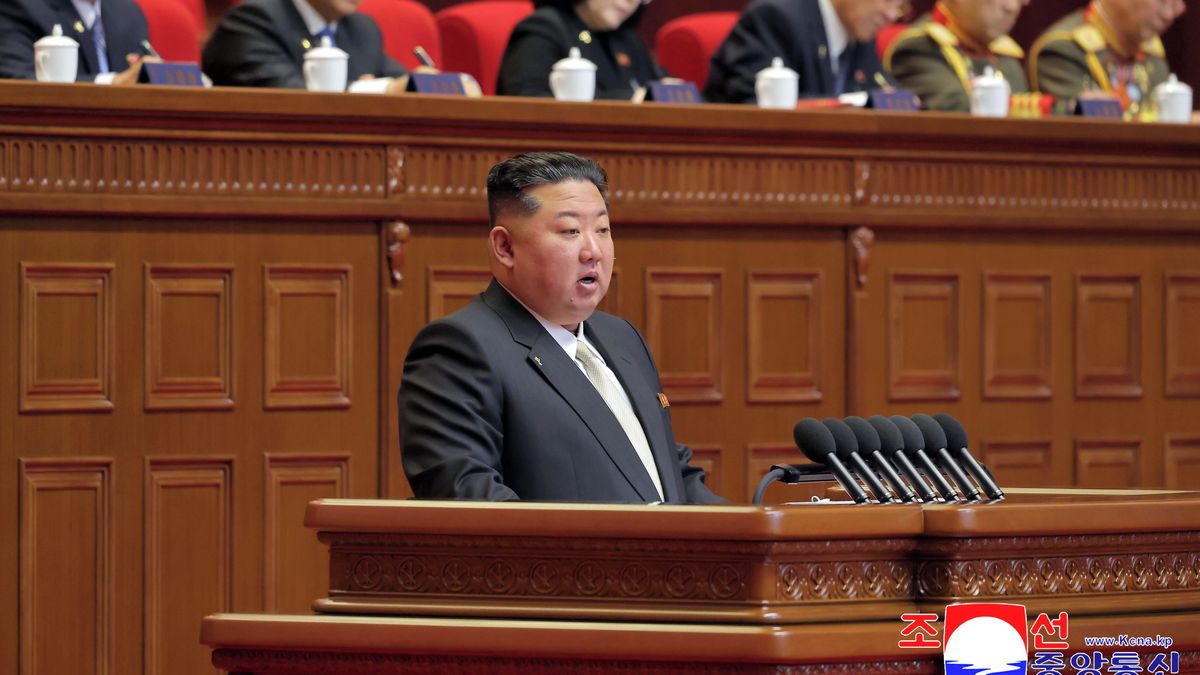
Pyongyang, February 20, 2026 – North Korean leader Kim Jong Un opened the 9th Congress of the ruling Workers’ Party of Korea on Friday, touting significant economic achievements over the past five years and signaling a shift in the country’s geopolitical approach. The congress, a major political event held every five years, serves as a platform to assess North Korea’s performance, set fresh policy objectives, and potentially reshuffle leadership. Kim’s address focused heavily on overcoming economic hardship and strengthening the nation’s self-reliance, even as international observers remain skeptical of the claims.
The congress unfolds against a backdrop of continued international sanctions and a complex regional security landscape. While North Korea remains one of the world’s most isolated and heavily sanctioned nations, Kim asserted that the country has made “significant successes” in politics, the economy, defense, culture, and diplomacy. He specifically claimed that the North Korean economy has overcome recession and achieved substantial economic goals during the last five-year period. This declaration comes as the country continues to prioritize its nuclear weapons program, a source of ongoing tension with the international community.
Notably, Kim similarly stated that North Korea has brought about a “great change” in its relationships with other countries and on the global geopolitical stage. This assertion is particularly relevant given the country’s increasingly visible support for Russia in its ongoing conflict with Ukraine, a relationship that appears to be yielding economic and technological benefits for Pyongyang. Recent reports indicate that North Korea has been providing military assistance to Russia, and in return, has received financial aid, military technology, and supplies of food and energy. According to Czech news outlet Seznam Zpravy, this exchange has been a key factor in bolstering North Korea’s economy.
Economic Claims and International Scrutiny
Kim’s claims of economic success are met with considerable skepticism from international analysts. North Korea’s economy has long been hampered by international sanctions imposed in response to its nuclear weapons program and human rights abuses. While official data is scarce and often unreliable, independent assessments suggest that the country continues to face significant economic challenges, including food shortages and limited access to essential goods. The United Nations has consistently reported on the dire humanitarian situation within North Korea, highlighting the vulnerability of a large portion of the population.
Despite these challenges, the North Korean leader emphasized the country’s commitment to self-reliance, or *Juche*, a guiding ideology that prioritizes national independence and economic self-sufficiency. He presented the recent economic achievements as evidence of the success of this policy, arguing that North Korea has been able to overcome external obstacles and achieve progress through its own efforts. However, the extent to which these achievements are sustainable and broadly beneficial to the North Korean population remains unclear.
The 9th Party Congress is expected to outline new economic plans for the next five years. Approximately 5,000 members of the Workers’ Party are participating in the congress, according to the official Korean Central News Agency (KCNA). These plans will likely focus on strengthening the country’s industrial base, improving agricultural production, and expanding trade relationships, particularly with countries willing to circumvent international sanctions. The congress also provides an opportunity for Kim to consolidate his power and promote loyalists within the party hierarchy.
Strengthening Ties with Russia and Military Developments
The deepening relationship between North Korea and Russia has become a significant factor in the geopolitical landscape of Northeast Asia. As reported by multiple sources, including Seznam Zpravy, North Korea has provided support to Russia in its war against Ukraine, including the dispatch of troops. In exchange, Pyongyang has reportedly received crucial economic and military assistance from Moscow.
This alliance challenges the international consensus on sanctions against North Korea and raises concerns about the potential for further proliferation of weapons technology. Analysts suggest that Russia may be providing North Korea with advanced military technology, including components for its ballistic missile program, in exchange for Pyongyang’s support in Ukraine. This exchange could further destabilize the region and undermine efforts to denuclearize the Korean Peninsula.
Adding to the regional tensions, North Korea recently showcased a new intercontinental ballistic missile, the Hwasong-20, during a large-scale military parade. Media24.cz reported that this display of military prowess underscores North Korea’s continued commitment to developing its nuclear arsenal and its willingness to defy international pressure. The Hwasong-20 is believed to be capable of reaching the continental United States, raising concerns about the potential for a direct threat to American territory.
Internal Political Dynamics and Future Outlook
The 9th Party Congress also provides an opportunity to assess the internal political dynamics within North Korea. While Kim Jong Un’s grip on power appears secure, the congress could see the promotion of key officials and the implementation of new policies aimed at strengthening the regime’s control over the population. The congress is expected to reaffirm the importance of ideological purity and loyalty to the Kim dynasty, reinforcing the country’s totalitarian system.
Kim Jong Un, in his opening address, expressed optimism about the future, stating that the country had overcome “the worst difficulties.” However, the reality on the ground suggests that North Korea continues to face significant challenges, including economic hardship, political repression, and international isolation. The success of the new economic plans outlined at the congress will depend on a variety of factors, including the country’s ability to secure external assistance, overcome sanctions, and address its internal structural weaknesses.
The congress’s outcome will be closely watched by regional powers, including South Korea, the United States, and China. These countries have a vested interest in maintaining stability on the Korean Peninsula and preventing further escalation of tensions. The international community will be looking for signs of a willingness from North Korea to engage in meaningful dialogue and take concrete steps towards denuclearization. However, given the country’s track record, such expectations remain low.
As the 9th Party Congress progresses, the world will be watching to see whether Kim Jong Un’s rhetoric of economic success and geopolitical realignment translates into tangible changes for the North Korean people and a more stable future for the region. The next key development to watch for will be the official publication of the congress’s resolutions and the announcement of any significant personnel changes within the ruling Workers’ Party.
What are your thoughts on North Korea’s claims of economic progress? Share your insights and perspectives in the comments below. Don’t forget to share this article with your network to keep the conversation going.