
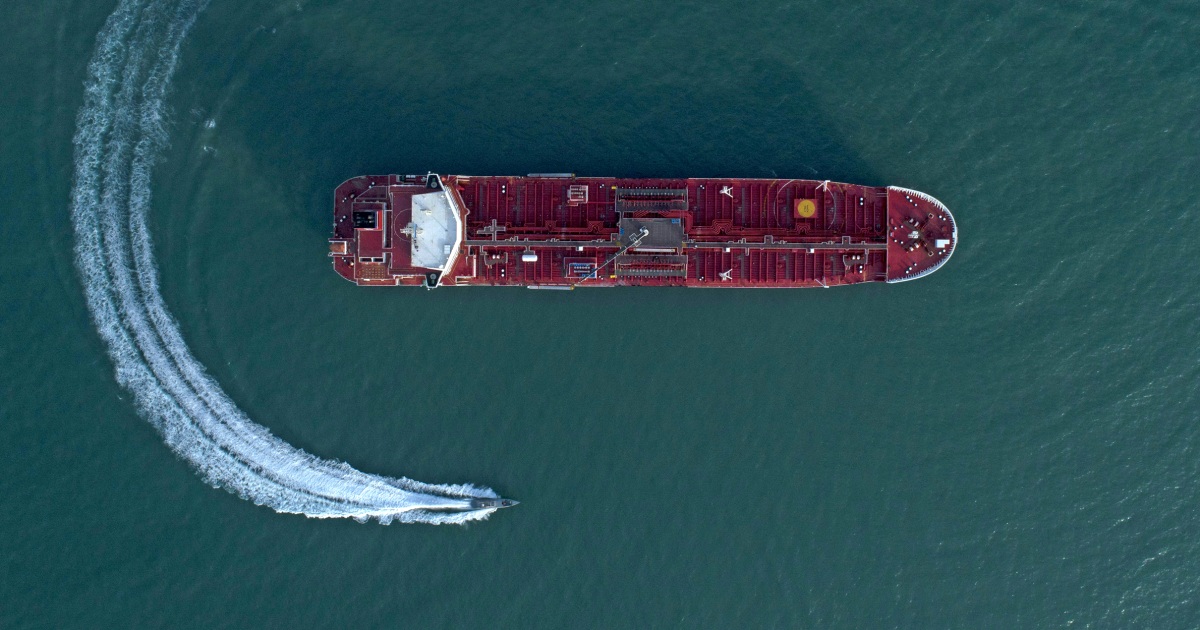
Global energy markets are in turmoil as oil prices jumped above $116 on Tuesday, driven by escalating tensions between the United States and Iran. The surge comes as the Trump administration’s deadline for the reopening of the Strait of Hormuz looms, coinciding with reports of fresh U.S. Military strikes on a critical Iranian oil export hub.
The focus of the military activity is Kharg Island, a strategic continental island in the Persian Gulf that serves as a primary gateway for Iran’s petroleum exports. According to the Iranian Mehr news agency, the island was targeted in several strikes on Tuesday, a claim later confirmed by a U.S. Official who stated that the attacks hit military targets via Axios.
The volatility in the oil market reflects deep investor anxiety over the potential for a total blockade of the Strait of Hormuz. President Donald Trump has issued a stark ultimatum, threatening to “decimate” Iran’s civilian infrastructure—including power plants and bridges—if the strait is not reopened by 8 p.m. EDT (12 a.m. GMT/1 a.m. BST) on Tuesday per reports from The Independent.
As the deadline approaches, the rhetoric from both Washington and Tehran has reached a fever pitch. President Trump stated he is “not at all” concerned about the possibility of committing war crimes, while simultaneously warning that a “whole civilisation will die tonight” if conditions are not met. In response, the Islamic Revolutionary Guard Corps (IRGC) warned that any crossing of “red lines” would result in a response extending beyond the region, potentially disrupting global oil and gas supplies for years.
The Strategic Importance of Kharg Island
To understand why strikes on Kharg Island are triggering a global economic reaction, one must look at the island’s role in the Iranian economy. Located 25 kilometers off the coast of Iran and 660 kilometers northwest of the Strait of Hormuz, Kharg Island is a vital piece of infrastructure according to Wikipedia.
The island functions as a sea port for the export of up to 90% of Iran’s oil products and provides storage capacity for as many as 30 million barrels (5 million cubic metres) of oil. Its proximity to several major offshore oil fields—including the Faridun, Darius, Cyrus and Ardašir fields—makes it the linchpin of Tehran’s ability to generate foreign currency through energy sales.
Beyond its industrial utility, the island is an administrative part of the Bushehr Province and is home to a population of 8,193 as of 2016. It too possesses significant historical value, containing archaeological sites such as the ruins of a Christian monastery that may date back to the 7th century.
Escalation and the Strait of Hormuz Deadline
The current crisis centers on the Strait of Hormuz, one of the world’s most important oil transit chokepoints. The threat to “decimate” civilian infrastructure is part of a broader U.S. Strategy to force the reopening of the waterway. The stakes are heightened by the fact that Tehran has already rejected a 45-day ceasefire proposal, insisting instead on a permanent finish to the conflict as reported by The Independent.
The potential for humanitarian and economic catastrophe has drawn sharp criticism within the U.S. Government. Senator Chuck Schumer described President Trump as an “extremely sick individual” following threats to annihilate the Iranian population.
Market Impact and Economic Fallout
The jump in oil prices above $116 is a direct response to the risk of supply chain interruptions. Since Kharg Island handles the vast majority of Iran’s oil exports, any sustained damage to its loading terminals or storage facilities—or a wider conflict closing the Strait of Hormuz—would remove significant volumes of oil from the global market.
Financial markets have reacted with volatility, with stocks tumbling as investors fear a prolonged energy crisis. The IRGC’s threat to disrupt gas and oil supplies “for years” suggests a strategy of mutual economic destruction if the U.S. Proceeds with its threats against civilian infrastructure.
Summary of Current Conflict Status
| Event/Factor | Details | Impact |
|---|---|---|
| U.S. Deadline | 8pm EDT / 12am GMT Tuesday | Threat of strikes on civilian infrastructure |
| Kharg Island Strikes | Multiple strikes on military targets | Disruption of 90% of Iran’s oil export hub |
| Oil Price Reaction | Jumped above $116 | Global market instability and stock declines |
| IRGC Response | Threat of “beyond the region” retaliation | Potential long-term disruption of energy supplies |
The immediate focus now remains on the 8 p.m. EDT deadline. Whether the U.S. Follows through with strikes on bridges and power plants, or whether a diplomatic breakthrough occurs in the final hours, will determine the trajectory of global oil prices and the stability of the Persian Gulf region.
The next critical checkpoint is the expiration of the deadline at 8 p.m. EDT, after which the White House or the Pentagon is expected to provide an update on further military actions or the status of the Strait of Hormuz.
World Today Journal encourages readers to share this report and join the conversation in the comments section below as we continue to monitor this developing geopolitical crisis.