
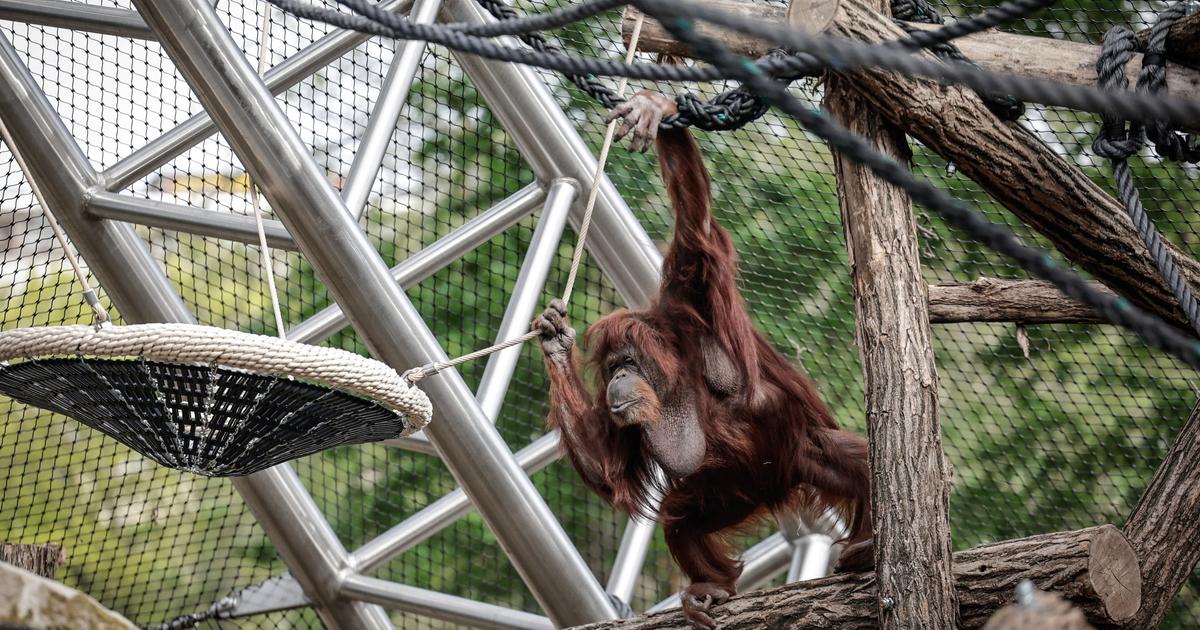
In a milestone for animal welfare at one of the world’s most historic zoological sites, Nénette, the 57-year-old matriarch of the orangutan population at the Ménagerie du Jardin des Plantes, has officially transitioned to a modern outdoor enclosure. After spending more than half a century confined to indoor quarters, the iconic primate entered her new habitat on Friday, April 10, 2026, marking the end of a long era of indoor captivity.
The move represents a significant shift in the management of the great apes at the facility, which is operated by the Muséum national d’histoire naturelle (MNHN). For Nénette and her companions, the transition is more than just a change of scenery; it is the culmination of an eight-year project designed to align the facility’s standards with modern animal welfare requirements.
Christelle Hano, the chief keeper of the ménagerie located in the heart of Paris, expressed optimism regarding the new living conditions. “Les orangs-outans disposent de conditions optimales,” Hano stated, noting that the animals now have the freedom to choose between indoor and outdoor environments, as well as the ability to retreat from public view according to reports on the inauguration.
Engineering for Primate Well-being
The new enclosure is a stark departure from the previous housing. The former monkey house, a building dating back to 1934 and classified as a historic monument, had become a symbol of an outdated approach to zoo design, characterized by cramped spaces that had been frequently criticized by animal rights organizations.
To rectify these issues, the new space provides five great apes from Borneo with a significant increase in both area and volume. The new habitat features a surface area of 570 m² and a total volume of 2,255 m³, allowing the arboreal primates to climb to heights of up to 15 meters as detailed in technical specifications of the project. This verticality is essential for the natural behavior of orangutans, who spend the majority of their lives in the canopy.
Beyond the dimensions, the enclosure enables critical natural behaviors that were previously restricted. The primates can now engage in brachiation—the act of swinging from one branch to another using their arms—and have access to bathing areas, providing a level of physical and psychological stimulation that was impossible in the old interior settings.
The Legacy of a Cinematic Icon
Nénette is not merely a resident of the Jardin des Plantes; she is a recognized figure in the world of documentary film and art. In 2010, she served as the protagonist of a documentary film directed by Nicolas Philibert, which brought international attention to her life and personality. Nénette has gained a reputation as an artist painter in her spare time, adding to her status as an emblematic figure of the Paris zoo.
Her transition to the outdoors is seen as a “golden age” for the animal, who has spent the vast majority of her 57 years away from the open air. The ability to interact with the environment in a way that mimics her native Borneo is a critical development for her quality of life in her senior years.
A Historic Institution in Transition
The Ménagerie du Jardin des Plantes, established in 1794, holds the distinction of being the second oldest zoo in the world. While its history is prestigious, the institution has had to grapple with the tension between preserving historic architecture—such as the 1934 monkey house—and providing modern, ethical care for its animals.
The eight-year project to create this new volière signifies the Muséum national d’histoire naturelle’s commitment to evolving its practices. By prioritizing volume and choice—specifically the choice to avoid public interaction—the facility is moving away from the “desuète” or outdated vision of animal exhibition that defined much of the 20th century.
Key Improvements at a Glance
| Feature | Previous Condition (1934 House) | New Enclosure (2026) |
|---|---|---|
| Environment | Primarily Indoor/Cramped | Integrated Indoor/Outdoor Choice |
| Vertical Space | Limited | Up to 15 Meters High |
| Surface Area | Exiguous/Restricted | 570 m² |
| Total Volume | Limited | 2,255 m³ |
| Behavioral Options | Restricted | Brachiation and Bathing |
As Nénette and her fellow orangutans settle into their new home, the focus remains on their adaptation to the open air. The project stands as a benchmark for how historic zoological gardens can modernize their facilities to ensure that the welfare of the animals takes precedence over the limitations of heritage architecture.
For those following the progress of the primates at the Jardin des Plantes, the current phase focuses on the animals’ integration into the expanded volume of the new enclosure. Further updates on the health and adaptation of the Borneo group are expected as the facility continues to monitor their use of the new space.
Do you believe historic zoos can successfully balance architectural preservation with modern animal welfare? Share your thoughts in the comments below.