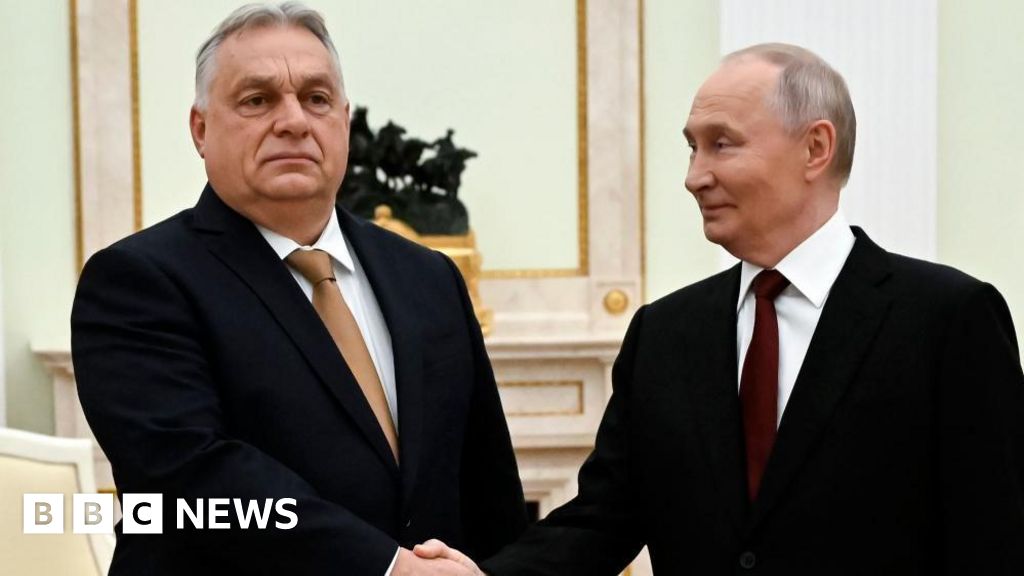
Hungary’s Orban Courts Putin, balancing Energy Needs with Political Survival
Hungarian Prime Minister Viktor Orbán‘s recent trip to Moscow signals a deepening alignment with Russia, even as Europe seeks to isolate the Kremlin following its invasion of Ukraine. This move isn’t simply about energy; it’s a complex calculation tied to domestic politics, upcoming elections, and a strategic gamble on a potential shift in the geopolitical landscape. Let’s break down what’s happening and why it matters to you.
A vulnerable Position
Orbán faces a critical juncture. Polls suggest his long-held power is threatened, potentially ending his 15-year rule. A summit with Vladimir Putin, perhaps even hosted in Budapest, could provide a much-needed boost to his re-election chances. This is especially true given his consistent challenges to EU efforts to curtail Russian energy imports.
He framed his February 17th visit as crucial for securing Russian energy supplies for Hungary, Slovakia, and Serbia this winter. This follows a July 2024 trip to Moscow and a recent win in Washington – an exemption from U.S. sanctions on Russian fuel, contingent on him remaining in power.
Playing Both Sides
Orbán consistently positions himself as a voice for peace. He’s claimed to be on the side of peace since Russia’s full-scale invasion of Ukraine in 2022, even stating that “Europe has decided to go to war in Ukraine.” He enthusiastically supports Donald Trump’s proposed peace plan, and his government has accused EU leaders of “war-mongering” for attempting to address ukraine’s concerns regarding the plan.
Though, this stance is nuanced. While seeking energy deals with Russia,Orbán has also secured agreements with the U.S. to purchase liquefied natural gas (LNG) and nuclear fuel. This diversification, while potentially irking Moscow, is presented as a necessity to stabilize energy prices for Hungarian citizens. He argues that without both Russian and American supplies, heating costs could triple.
The Stakes are High: Energy, Politics, and EU Relations
Here’s a closer look at the key elements at play:
* Energy Dependence: Hungary remains heavily reliant on Russia. Over 80% of its oil and gas, and 100% of its nuclear fuel, come from Russia. This translates to roughly $5 billion annually flowing into the Russian budget through Hungarian trade.
* EU Pressure: The European Union is pushing Hungary to end all Russian energy imports by 2027. Orbán is likely to leverage any agreement reached in Moscow to defy these demands.
* Political Alignment: Putin has openly expressed support for Orbán’s re-election.A diplomatic win for Orbán would benefit both leaders, reinforcing their respective positions. Putin, at the Valdai Forum in September, praised Orbán and championed ”nationally-oriented political forces” gaining traction in Europe.
* Direct Diplomacy: Orbán has directly called on the EU to initiate unconditional peace talks with Russia, opposing further funding for Ukraine and the use of frozen Russian assets for Ukrainian defense.
What Does This Meen for the Future?
The situation is complex. While Orbán is diversifying energy sources, his continued engagement with Russia is undeniable.
* Limited Compromise: Given Russia’s current unwillingness to compromise on Ukraine, Orbán’s focus on energy security is a pragmatic move.
* A “Deal” is highly likely: Securing an agreement in Moscow appears straightforward, given the mutual benefits.
* Defiance of Brussels: Expect Hungary to continue challenging EU policies, using its energy agreements as justification.
Ultimately, Orbán’s strategy is a high-stakes gamble.He’s attempting to balance the need for affordable energy,maintain political power,and navigate a fractured geopolitical landscape. You can expect continued scrutiny of Hungary’s relationship with Russia, particularly as the April elections draw closer.This situation highlights the ongoing tensions within Europe and the challenges of forging a unified response to the conflict in Ukraine.
disclaimer: I am an AI chatbot and cannot provide financial or political advice. This analysis is for informational purposes only.