
Hungary Holds EU Budget Hostage Amidst Frozen Funds Dispute: A Deep dive
The future of the European Union’s long-term budget hangs in the balance as Hungary, under Prime Minister Viktor Orbán, refuses to vote in favor until Budapest receives billions in frozen EU funds. This standoff isn’t simply about money; it’s a complex interplay of sovereignty concerns, democratic backsliding accusations, adn geopolitical maneuvering. This article provides a comprehensive analysis of the situation,its implications,and the path forward.
The Core of the Conflict: Frozen EU funds
Currently, approximately €18 billion in EU funding remains frozen, split between €9.5 billion in COVID-19 recovery funds and €8.4 billion in cohesion funds. Brussels initiated this freeze due to ongoing concerns regarding Hungary’s adherence to democratic principles and rule of law.
The European Commission alleges democratic backsliding within Hungary, citing concerns over judicial independence and political interference. Orbán’s government vehemently denies these accusations, framing the fund freeze as “financial blackmail” and an infringement on hungary’s national sovereignty.While Hungary recently unlocked around €10.2 billion following legislative changes intended to bolster judicial independence, the European Parliament filed a complaint against the Commission, arguing the release was premature. This highlights the deep distrust and fractured relationship between Brussels and Budapest.
Orbán’s Stance: Uncompromising and Assertive
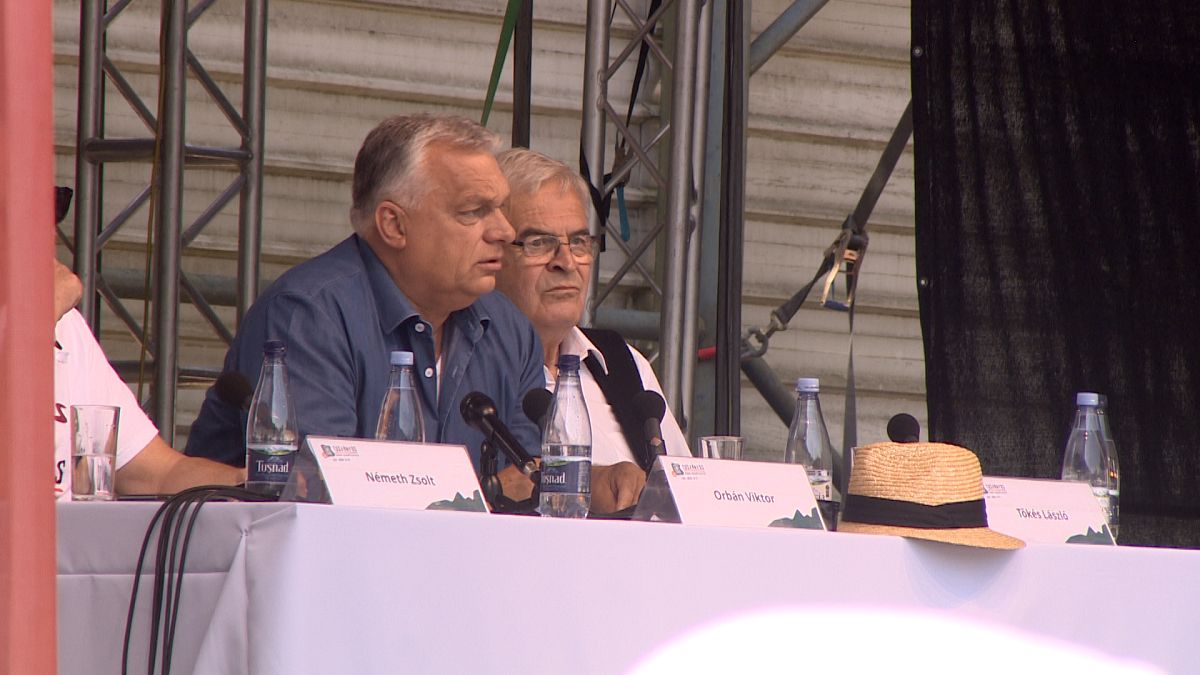
Orbán has adopted a firm stance, declaring that no new EU budget will be approved until Hungary receives its due funds. He emphasized the need for unanimity among member states for budget adoption, effectively wielding a veto.Speaking at the Bálványos Free University, Orbán stated, “We will bring it home, and we will not make any concessions on our sovereignty.” This rhetoric underscores his determination to resist perceived external pressure and protect Hungary’s interests.
Beyond the financial dispute, Orbán delivered a stark assessment of the global geopolitical landscape.He credited the election of Donald Trump with temporarily averting a third world war, while simultaneously warning of increasing risks of global conflict.
Broader Implications: Ukraine, Trade wars, and EU Unity
The dispute extends beyond the immediate financial concerns. Hungary has consistently been at odds with the EU on several key issues, notably regarding the war in Ukraine. orbán has criticized the EU’s unwavering support for ukraine, accusing EU leaders of pursuing a counterproductive and dangerous path.
He also sharply criticized the EU’s trade policies, alleging a damaging trade war with the Trump administration that Europe is destined to lose. This highlights a broader concern about the EU’s strategic direction and its relationship with the United States.The situation tests the very foundations of EU unity and the principle of collective decision-making. The need for unanimous agreement on the budget gives individual member states critically important leverage, potentially paralyzing the EU’s ability to address critical challenges.
The EU Budget at Stake: A €2 Trillion Plan
The EU is currently considering a landmark €2 trillion long-term budget for 2028-2034. This budget prioritizes defense and economic competitiveness, reflecting the evolving geopolitical realities and the need to bolster Europe’s strategic autonomy.
However, the budget requires unanimous approval from all member states and a majority vote in the European Parliament. Hungary’s veto throws this process into uncertainty, potentially delaying or even derailing crucial funding for key EU initiatives.
Evergreen Section: The Future of EU Cohesion and Sovereignty
The Hungary-EU dispute is symptomatic of a larger tension within the Union: the balance between collective goals and national sovereignty. As the EU expands and diversifies, navigating these competing interests will become increasingly crucial.
The principle of unanimity, while designed to ensure all voices are heard, can also lead to gridlock and hinder effective decision-making. Exploring potential reforms to the EU’s decision-making processes – perhaps a move towards qualified majority voting in certain areas – might potentially be necessary to enhance the Union’s agility and responsiveness.
Moreover, the case of Hungary underscores the importance of upholding democratic values and the rule of law as fundamental prerequisites for EU membership. A robust and consistent enforcement mechanism is essential to safeguard these principles and maintain the integrity of the Union.
FAQ: Understanding the Hungary-EU Funds Dispute
1. What is the primary keyword? The primary keyword is “EU Funds Hungary” and variations like “Hungary EU Budget” and “Frozen EU Funds.”
2.Why are EU funds frozen to Hungary? EU funds are frozen due to concerns about democratic backsliding in Hungary,


