Pakistan Under Scrutiny: Navigating Human rights Commitments and the Future of GSP+ Trade Status
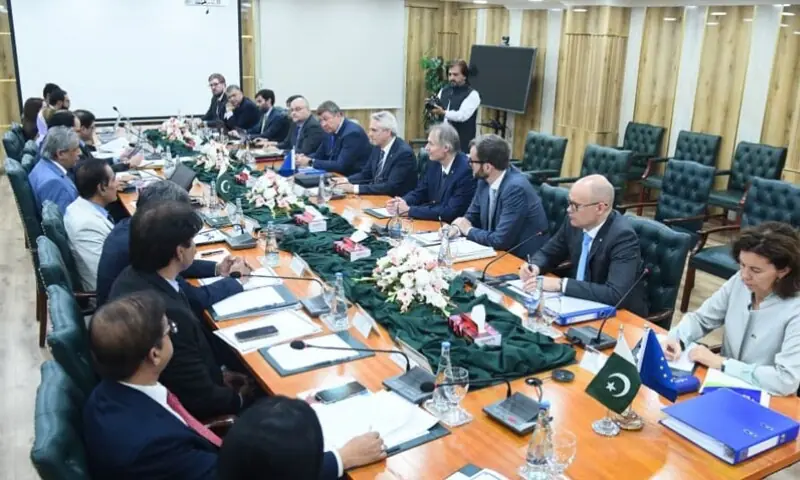
Pakistan is currently engaged in a critical dialog with the European Union regarding its human rights record, a conversation intrinsically linked too the nation’s continued access to the preferential trade benefits offered under the EU’s Generalized Scheme of Preferences Plus (GSP+) status. Recent meetings between Pakistani officials,led by Human Rights minister Law and Justice Secretary Ehtashamul Haq Tarar,and an EU delegation underscore the increasing pressure on Islamabad to demonstrate tangible progress in upholding international human rights standards. This analysis delves into the key areas of discussion, Pakistan’s responses, and the potential implications for its economic future.
A Multifaceted Human Rights Agenda
The discussions covered a broad spectrum of human rights concerns, reflecting the 27 core United Nations conventions that underpin the GSP+ agreement. Pakistani officials presented a thorough overview of ongoing initiatives, highlighting advancements in several key areas:
* Business and Human Rights: Efforts to align national and provincial policies with international standards on business and human rights were detailed, demonstrating a growing awareness of corporate duty in safeguarding fundamental freedoms.
* Gender Equality: The National Gender Policy framework (2022), coupled with gender-responsive budgeting and provincial-level initiatives, signals a commitment to empowering women.Flagship programs like the Benazir Income Support program, currently reaching over 9.1 million women, and the Prime Minister’s Women Empowerment Package are demonstrably contributing to socio-economic inclusion.
* Child Rights: Significant strides have been made in child protection, evidenced by the establishment of the National commission for Child Rights (NCRC), the Zainab Alert, Response and Recovery Agency, and dedicated Child Protection Institutes. Recent legislation aimed at preventing child marriage,alongside ongoing efforts to combat child labor,online exploitation,and ensure access to education,were also highlighted.
* Freedom of Expression & Media Safety: Pakistan reaffirmed its commitment to protecting journalists and media professionals, supported by the National Commission for Protection of Journalists and Media Professionals. Moreover, updates were provided on sensitive legal reforms, including reductions in capital offences, the implementation of the Mercy Petition Policy, the enforcement of the Torture and Custodial Death Act, and a reported 85%+ resolution rate of cases by the Commission of Inquiry on Enforced Disappearances.
Addressing Concerns and Demonstrating Commitment
While acknowledging progress,the EU delegation raised concerns and identified areas requiring further attention. These included the need for stronger policies, more robust legislation, and more effective institutions to fully meet Pakistan’s international obligations.
Minister Tarar responded by reaffirming Pakistan’s unwavering commitment to these obligations. He emphasized the country’s “robust constitutional and legal safeguards” and pointed to its recent election to the UN Human Rights Council as a testament to international confidence in its constructive role. Crucially,he assured the delegation that a detailed account of progress,challenges,and future plans would be provided during the ongoing visit.
Pakistan also welcomed the EU’s constructive feedback, specifically regarding data integration, inter-provincial coordination, treaty reporting, and implementation mechanisms. Officials indicated that these suggestions are being actively incorporated through strengthened reporting processes, increased provincial engagement, and enhanced monitoring systems.
The Stakes are High: GSP+ and Pakistan’s Economic Future
The GSP+ status is vital to Pakistan’s economy.This special trade incentive allows for zero tariffs on two-thirds of its exports to the EU, fostering sustainable growth, good governance, and economic growth. However, maintaining this status is contingent upon consistent and demonstrable progress in upholding the 27 international conventions related to human rights, labour rights, good governance, and environmental protection.
Recent statements from EU Ambassador to Pakistan, Raimundas Karoblis, have underscored the urgency of the situation, emphasizing the need for Pakistan to “do more” ahead of the upcoming GSP+ review. Last week,both Pakistan and the EU reaffirmed the importance of deepening trade and investment ties,recognizing the GSP+ scheme as a key driver for sustainable growth and job creation.
Looking Ahead: Transparency, Accountability, and Sustained Progress
The current dialogue represents a pivotal moment for Pakistan. Successfully navigating this scrutiny requires more than just presenting a list of initiatives. It demands demonstrable evidence of impact, increased transparency in reporting, and a commitment to addressing systemic challenges.
The ongoing EU-Pakistan cooperation under the Huqooq-i-Pakistan Project provides a valuable framework for continued collaboration. Sustaining progress on GSP+ requires a long-term, holistic approach that prioritizes human rights not merely as a condition for trade, but as a fundamental pillar of a just and prosperous society. Pakistan’s ability to demonstrate genuine and