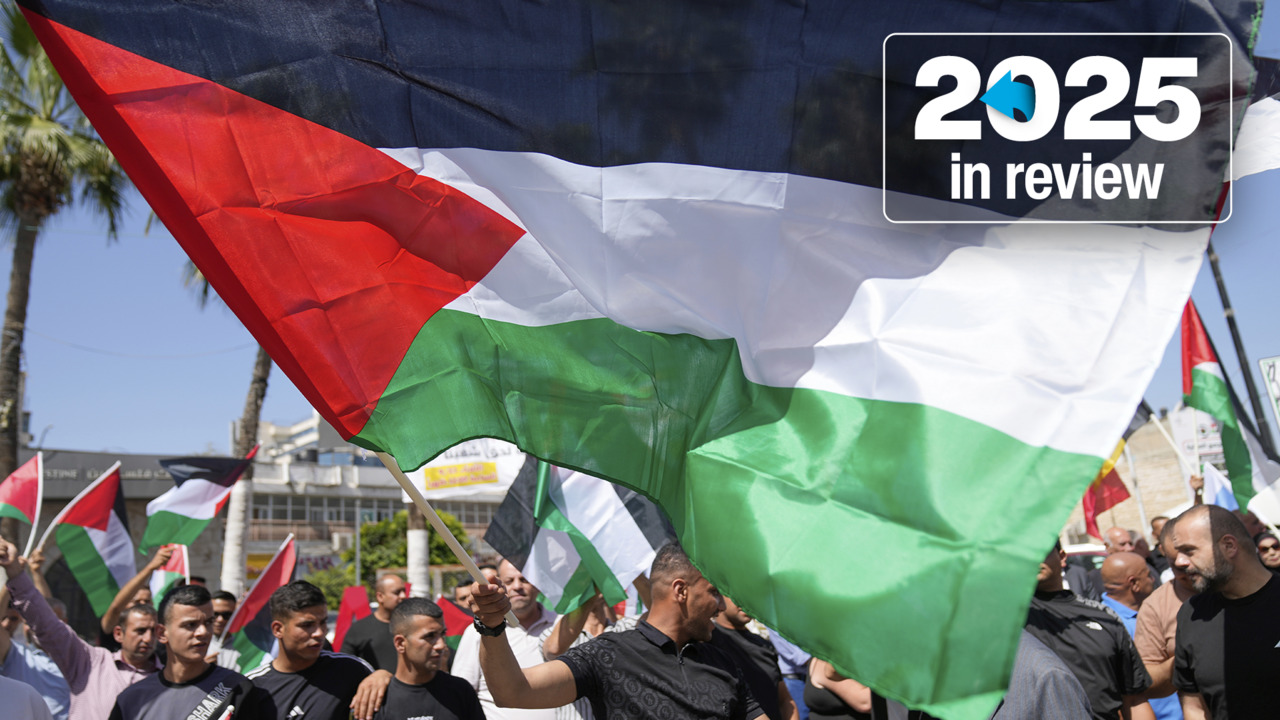
France’s Recognition of a Palestinian State: A Symbolic Step Amidst Diminishing Prospects for Peace
The recent wave of European nations recognizing a Palestinian state, spearheaded by France, represents a meaningful – and arguably overdue – political gesture. However,as a long-time observer of the Israeli-Palestinian conflict,I beleive it’s crucial to understand that while symbolically powerful,these recognitions are currently falling far short of translating into tangible improvements for Palestinians on the ground. This isn’t to dismiss the importance of the move, but to provide a realistic assessment of its impact and the challenges that lie ahead.
France’s decision, announced in late May, wasn’t simply a matter of aligning with international consensus. As Dr. Yasmine Chagnollaud, a specialist in the region, explains, it was a deliberate attempt to “rally part of the Western world that had previously been reluctant.” This initiative culminated in the New York Declaration, a document endorsed by a remarkable 142 states, framing recognition of a Palestinian state as “essential and indispensable” for a lasting resolution.
This broader diplomatic push, co-chaired by France and Saudi Arabia, aimed to re-establish the two-state solution as the only viable path forward. The Declaration explicitly outlined a roadmap for a political settlement, crucially excluding hamas from any future governing role in Gaza. The timing is key. President Macron’s perspective shifted dramatically following a visit to Egypt in April, bringing him close to the devastation in Gaza. Witnessing the unfolding atrocities, he felt compelled to act, a decision Chagnollaud notes is ultimately a personal one, fraught with doubts and hesitations.
Beyond Symbolism: Limited Impact and Existing Obstacles
While the recognition opens doors for strengthened bilateral ties with Palestine and theoretically increases pressure on Israel, the practical effects remain limited. Despite French assertions that the move would bolster calls for a Gaza ceasefire – a demand echoed by US President Trump shortly after the UN General Assembly vote – the core issues persist.The occupation continues, settlement expansion remains unchecked, and violence against Palestinian civilians hasn’t abated. Hamas, despite the Declaration’s stipulations, maintains its control over Gaza.
The fundamental problem lies in implementation. The New York Declaration, while a significant statement of intent, lacks the teeth to enforce its provisions. Without sustained, robust pressure on the Israeli government, coupled with a genuine willingness from the United States to recalibrate the power dynamics, these recognitions risk becoming little more than symbolic gestures.
“the effects are clearly limited and, in some respects, counterproductive,” Chagnollaud rightly points out. France and other European nations lack the leverage necessary to effect real change on the ground,a power currently held - and,in this case,actively resisted – by the United States. The true potential of these recognitions hinges on collective action. If states simply stop at recognition without pursuing concrete measures, such as targeted sanctions against Israel for its actions in Gaza and the West Bank, they are effectively abdicating their responsibility.
The Shadow of US Policy and a Bleak Outlook
Regrettably, the diplomatic momentum generated by the New York Declaration was quickly overshadowed by the Trump management’s peace plan. While the plan did achieve a ceasefire in Gaza, it prioritized US and Israeli security concerns, leaving the underlying grievances that fuel the conflict unaddressed. This approach, in my assessment, further entrenches the status quo and diminishes the prospects for a just and lasting peace.
The current trajectory is deeply concerning. As Chagnollaud starkly warns, “We are heading towards the crushing of the Palestinian question, both literally and figuratively.” The coming year, 2026, is predicted to be one of the moast challenging periods in Palestinian history.
Looking Ahead: A Call for Concrete Action
the recognition of a Palestinian state by France and other nations is a positive step, signaling a growing international acknowledgement of Palestinian rights and aspirations.However, it’s a step that must be followed by decisive action.
This requires:
* Unified International Pressure: A coordinated effort from the international community, including Europe and the US, to hold Israel accountable for its actions and compel adherence to international law.
* Concrete Implementation of the New York Declaration: Moving beyond rhetoric to establish a clear and enforceable roadmap for a two-state solution.
* Re-engagement with Palestinian Leadership: Supporting a reformed and unified Palestinian Authority capable of effectively governing and negotiating a lasting peace.
* Addressing Root Causes: Tackling the underlying issues of occupation, settlement expansion, and the humanitarian crisis in Gaza.
Without these critical