
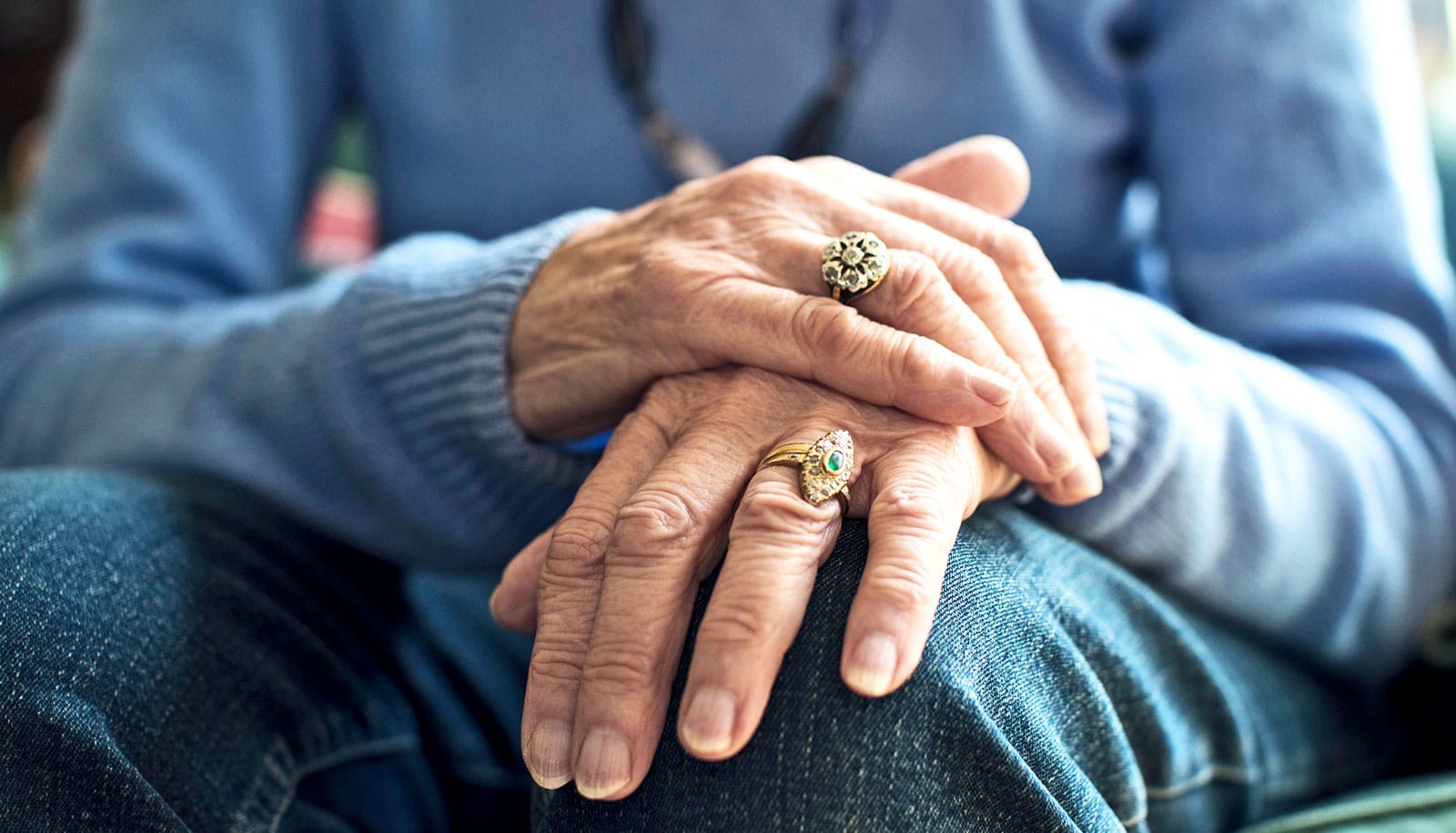
Decoding the Brain’s Signals: A New Approach to diagnosing Parkinson’s and Essential Tremor
For decades, differentiating between Parkinson’s disease and essential Tremor - two neurological conditions often presenting with similar motor symptoms – has been a diagnostic challenge. Now, groundbreaking research from a collaborative team at Virginia tech, Wake Forest University, and Aarhus University is offering a novel approach, moving beyond symptom observation to analyze the intricate interplay between brain chemistry, expectation, and decision-making. This research, published in Nature Communications, doesn’t just refine our understanding of these conditions; it opens a potential new window for earlier, more accurate diagnosis and personalized treatment strategies.
The Power of Prediction Errors: A Deep Dive into Brain Chemistry
The study centers around the concept of ”prediction errors” – the discrepancies between what we expect to happen and what actually happens. Researchers discovered that the way the brain processes these prediction errors, specifically changes in serotonin activity, can serve as a powerful biomarker distinguishing between Parkinson’s disease and Essential Tremor.
This wasn’t a leap in the dark. The research builds upon decades of work in computational neuroscience, spearheaded by Dr. Read Montague and his team at the Fralin Biomedical Research Institute at Virginia Tech. Montague’s lab has long been refining models to decode dopamine and serotonin signals, initially informed by experiments in mice. This foundational work provided the statistical framework for analyzing human patient data, allowing researchers to extract previously hidden insights into decision-making processes.
“What they added was a computational model of what the subjects expected would happen,” explains Dr.Howe, highlighting the crucial contribution of the team. “When we reframed the data that way,we were able to reveal a difference in how the brain responded in these two patient groups.”
From Mouse Models to Human Insights: A Collaborative Triumph
The success of this study is a testament to the power of interdisciplinary collaboration. Kenneth Kishida, a co-first author, initially collected the core dataset during his postdoctoral work with Montague, then carried that expertise to Wake Forest University. This seamless transfer of knowledge,coupled with the expertise of researchers at Aarhus University in Denmark,allowed for a holistic analysis of the data.
“It’s exciting to see that effort applied in a way that might help diagnose or stratify real clinical populations,” says Montague, emphasizing the potential clinical impact. “These models improve over time as they’re trained on more data,” adds Seth Batten, a co-author, underscoring the iterative nature of scientific progress. “But just as significant was the collaborative approach-bringing in new people with different expertise allowed us to see patterns we hadn’t recognized before.”
Why This Matters: Prevalence and the Need for Better Diagnostics
The implications of this research are significant, considering the widespread prevalence of these conditions. Parkinson’s disease affects approximately 1 million Americans and over 10 million people globally, while Essential Tremor is even more common, impacting an estimated 7 million Americans. Accurate and timely diagnosis is critical for managing symptoms, improving quality of life, and perhaps slowing disease progression.
“It’s very powerful to link moment-to-moment changes in internal beliefs-here what a person expects from others-to measurable chemical signals in the brain,” notes dr. Dan Bang of Aarhus university.”This opens a new window into how deeply human cognitive processes, like social evaluation, are shaped by disease.”
looking Ahead: A New Era in Neurological Diagnosis
This study represents a crucial step forward, but researchers emphasize that it’s just the beginning. The ability to correlate internal cognitive processes with specific neurochemical signals offers a promising avenue for developing more elegant diagnostic tools and personalized treatment plans.
the research team is committed to further refining their models and expanding their datasets to validate these findings and explore their applicability to other neurological and psychiatric conditions. This collaborative spirit, combined with a dedication to rigorous scientific inquiry, promises to unlock even deeper insights into the complexities of the human brain and pave the way for a future where neurological diseases can be diagnosed and treated with greater precision and efficacy.
Funding & Support: This research was generously supported by the National Institutes of Health (including the National Institute of Diabetes and Digestive and Kidney Diseases, the National Institute of Mental Health, the National Center for Advancing Translational Sciences, the National Institute on Drug Abuse, and the National Institute of Neurological Disorders and Stroke), the Lundbeck Foundation, and the Red Gates Foundation.
Original Source: [https://newsvtedu/articles/2025/09/research-fralinbiomed-parkinson-0902html?utm_source=cmpgn_news&utm_[https://newsvtedu/articles/2025/09/research-fralinbiomed-parkinson-0902html?utm_source=cmpgn_news&utm_[https://newsvtedu/articles/2025/09/research-fralinbiomed-parkinson-0902html?utm_source=cmpgn_news&utm_[https://newsvtedu/articles/2025/09/research-fralinbiomed-parkinson-0902html?utm_source=cmpgn_news&utm_





