
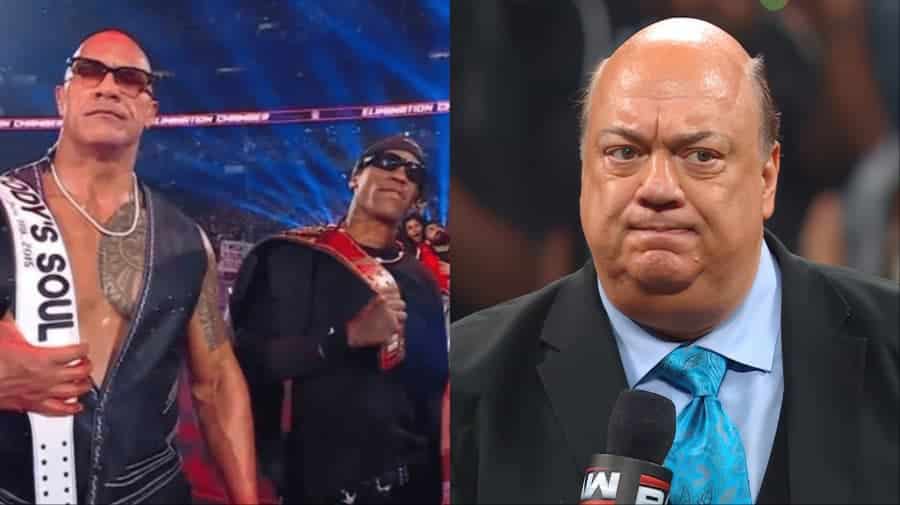
John Cena’s Heel Turn: A Deep Dive into WWE‘s Evolving Audience & what Went Wrong with The Rock & Travis Scott
Paul Heyman,a veteran of the professional wrestling industry and current chief Creative Officer of WWE,recently offered a engaging,candid assessment of John Cena’s much-discussed heel turn on The Ariel Helwani Show. The interview sheds light not only on the storyline itself, but also on the evolving dynamics of the modern WWE audience and the behind-the-scenes realities of booking major stars.this article breaks down the key takeaways, offering an in-depth look at what worked, what didn’t, and what it all means for the future of WWE.
Understanding the Modern WWE Fan
Heyman’s most compelling observation revolves around the current WWE fanbase. he argues that today’s audience isn’t solely invested in conventional storyline progression. Rather, they crave spectacle, performance, and a meta-awareness of the wrestling product itself.
Hear’s what Heyman revealed about the audience’s shift:
Gratitude for Performance art: Fans now actively appreciate the “twisted performance art” that is professional wrestling. They understand the constructed nature of the drama. Acknowledging the Role: Crowds are increasingly aware of their role in the show. They’ll boo a villain during the event, but then offer a standing ovation recognizing the performer’s effort and the end of their appearance in that city.
star Power reigns Supreme: above all, the audience is there to see stars. Storylines are meaningful, but the charisma and performance of the individuals involved are paramount.
Was Cena’s Heel Turn a Mistake? Absolutely Not.
Despite the storyline not unfolding exactly as planned, Heyman unequivocally stated that the heel turn wasn’t a mistake. It was a necessary experiment, and a valuable learning experience.
“No,” he stated firmly when asked if it was a misstep. “it opened my eyes to the fact that this is an audience that is here to see stars and performances as much as they are rooted into the storylines.”
The turn allowed Cena to explore a previously unseen side of his character,challenging his long-held “hero” persona. And, crucially, it answered a long-standing question within the wrestling community: ”what if John Cena had ever turned heel?” now, we know.
A Calculated Risk for a Global Brand
Cena’s decision to embrace a villainous role was a significant risk, particularly given his established brand and numerous outside commitments. Heyman highlighted the potential pitfalls:
Merchandise Sales: Cena is a merchandise juggernaut.A heel turn could alienate a portion of his fanbase and impact sales.
* Hollywood Connections: Cena has built a successful acting career. A controversial character could potentially jeopardize future opportunities. Heyman specifically cited a provocative line from a Cena promo – “I’ve been the one to raise your kids because your parents have done such a lousy job of doing it” – as a statement that could have caused issues with studio executives.
Despite these risks, Heyman believes Cena “delivered” in the role, pushing boundaries and demonstrating a willingness to reinvent himself.He took the character as far as he possibly could, even exceeding Heyman’s initial expectations.
The Rock & Travis Scott: What Happened?
The initial plans for Cena’s heel turn involved aligning him with high-profile figures The Rock and Travis Scott.However, this aspect of the storyline ultimately “fell apart.”
Heyman was direct about The Rock’s non-participation: “I don’t know what happened with Dwayne. That’s something you should have dwayne come into these beautiful yahoo studios and answer for himself… I really don’t know.”
He explained that he was focused on the WrestleMania main event and couldn’t dedicate attention to storylines that weren’t guaranteed to make the show. the details surrounding Travis Scott’s departure remain unclear.
looking Ahead: Cena vs. Lesnar & The Future of WWE Storytelling
Cena’s heel run concluded before SummerSlam, setting the stage for a highly anticipated feud with Brock Lesnar. This rivalry promises to be a compelling clash of titans, capitalizing on the momentum generated by Cena’s character change.
Ultimately, Heyman views the entire experience as a success. It provided valuable insights into the modern WWE audience,





