
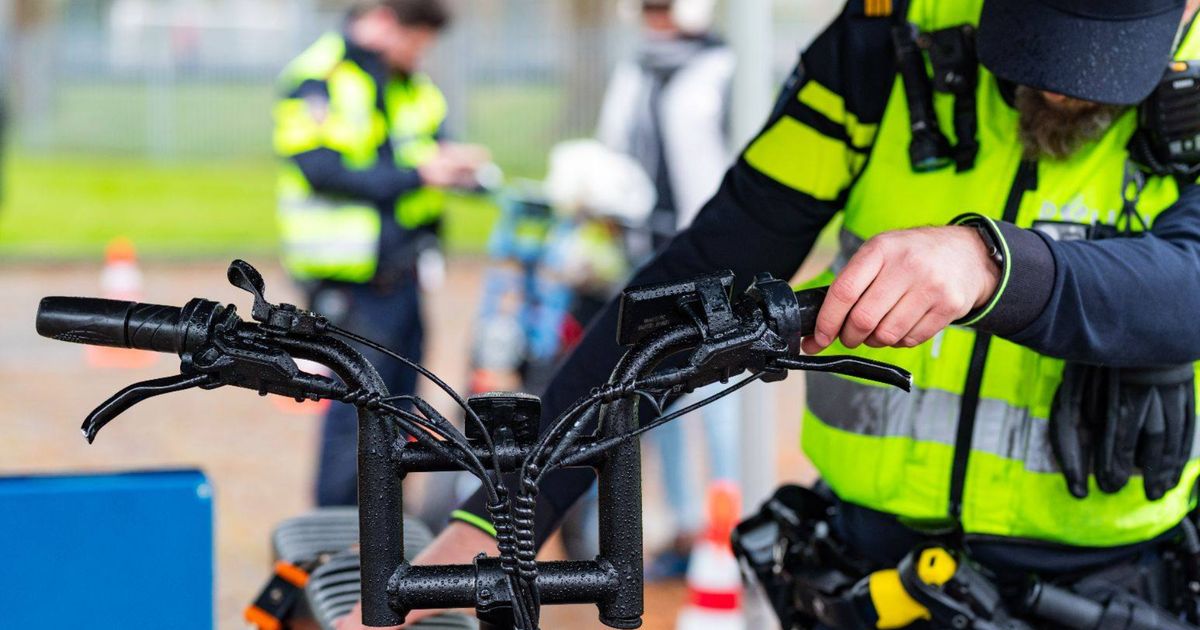
Law enforcement agencies across the Netherlands have intensified their focus on the rising utilize of modified electric bicycles, commonly known as fatbikes, as part of a broader effort to reduce urban traffic accidents and improve road safety. Recent large-scale operations in the cities of Hengelo and Geleen have resulted in scores of fines and vehicle seizures, signaling a zero-tolerance approach toward “opgevoerde” (tuned) bikes that exceed legal speed limits.
The crackdown targets a specific trend where owners modify the software or hardware of these heavy-duty e-bikes to achieve speeds far beyond the legal threshold for bicycles. Authorities have expressed growing concern that these modified vehicles, often operated by younger riders, create hazardous conditions for other vulnerable road users, including pedestrians and traditional cyclists.
In a series of coordinated efforts, police and municipal enforcement officers have deployed specialized equipment, including roller benches, to objectively measure vehicle speeds. These operations are not merely about issuing penalties but are designed to prevent casualties by removing unsafe vehicles from the streets and enforcing basic traffic laws, such as the use of lighting and adherence to traffic signals.
Hengelo Operation: 108 Fines Issued in Two-Day Sweep
In the city center of Hengelo, a comprehensive traffic control operation conducted over two days resulted in 108 process-verbals (official reports) being issued. Police officers and municipal enforcement officers (boa’s) established checkpoints at high-risk locations, including Langestraat near the city hall, to monitor behavior in areas where pedestrians are most frequent.
While fatbikes were a primary focus, the operation targeted a wide array of traffic violations. Officers issued fines for the use of mobile phones while cycling or driving, the absence of required bicycle lighting, and the blatant ignoring of red lights. A significant number of riders were penalized for operating modified electric bikes, some of which were found to have malfunctioning or inadequate braking systems.
The Police of Hengelo emphasized that the primary objective of the operation was safety rather than revenue. According to police statements, the goal is “to prevent victims from falling” by focusing on locations where vulnerable road users are put at unnecessary risk due to traffic violations.
Technical Inspections in Geleen: Speed Tests and Vehicle Seizures
Parallel efforts in Geleen focused heavily on the technical specifications of fatbikes to determine if they complied with national regulations. During a major control operation conducted on the Jos Klijnenlaan in Geleen-Zuid and the Doctor Nolenslaan in the city center, police checked 95 vehicles for their technical state.
To ensure accuracy in speed detection, officers utilized a “rollenbank” (roller bench), allowing them to test the maximum speed of the e-bikes in a controlled environment. By the complete of the operation, the police had issued 63 fines. The most common violations included exceeding the legal speed limit, possessing non-functioning brakes, and the failure of riders to present a valid identity document.
The Geleen operation resulted in more severe administrative actions than simple fines. One fatbike was seized entirely, and three other vehicles were issued a “Wachten Op Keuring” (WOK) status. A WOK status indicates that a vehicle is either unsafe or not approved for public roads; such vehicles are prohibited from being used until they have undergone repairs and received official approval from the RDW (the Netherlands Vehicle Authority).
Understanding the Risks: Tuned E-Bikes and the WOK Status
The distinction between a standard e-bike and an “opgevoerde” fatbike is critical for road safety. In the Netherlands, e-bikes are generally categorized by their power and speed limits. When a bike is “tuned,” it often exceeds these limits, effectively turning a bicycle into a moped without the corresponding safety requirements, such as helmets, mirrors, or certified braking systems.

The use of the WOK status is a key tool for law enforcement to ensure that dangerous vehicles do not simply return to the road after a fine is paid. By requiring RDW approval, the state ensures that the vehicle’s technical modifications are reversed or brought up to a legal and safe standard before it can be legally operated again.
These operations were triggered in part by multiple reports of “overlast” (nuisance) from local residents and business owners, highlighting the friction between the popularity of fatbikes and the safety of urban infrastructure. The collaboration between police and municipal authorities suggests a coordinated strategy to manage the integration of these high-powered vehicles into city centers.
Key Takeaways from Recent Fatbike Enforcement
- High Volume of Penalties: Between Hengelo and Geleen, nearly 170 fines were issued in recent targeted sweeps.
- Technical Non-Compliance: Speeding and faulty brakes are the primary technical violations leading to fines and seizures.
- Strict Oversight: The use of roller benches ensures that speed violations are documented with precision.
- Administrative Blocks: The WOK status prevents unsafe bikes from returning to the road without RDW certification.
- Safety-First Mandate: Authorities are prioritizing the protection of vulnerable road users over the act of fining.
As urban centers continue to adapt to the rise of electric mobility, residents and riders are encouraged to ensure their vehicles meet all legal requirements and that they adhere to standard traffic laws to avoid penalties and ensure public safety.
Further traffic controls are expected as municipalities continue to monitor “hotspots” of traffic violations. Updates regarding future enforcement schedules or changes in e-bike regulations are typically released via official municipal and police communication channels.
World Today Journal encourages readers to share their thoughts on the balance between e-mobility and urban safety in the comments below.