
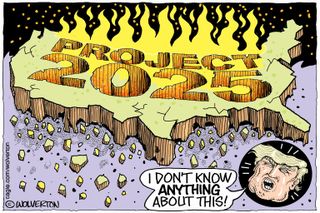
The intersection of political commentary and visual art continues to be a cornerstone of public discourse in Venezuela. On Saturday, April 11, 2026, a recent collection of editorial cartoons was released, reflecting the ongoing social and political climate of the region. These visual critiques serve as a daily mirror to the complexities of Venezuelan life, translating dense news cycles into accessible, satirical imagery.
Editorial cartoons in Venezuela often transcend simple humor, acting as a form of social record and a tool for civic engagement. By synthesizing current events into single frames, these artists highlight the tensions between government policy and the lived reality of the population. The release on April 11 follows a consistent pattern of daily updates, ensuring that the public has a visual touchstone for the day’s most pressing stories.
This tradition of visual storytelling is deeply embedded in the Venezuelan cultural landscape, where art is frequently used to challenge authority and preserve national identity. From the digital archives of modern news portals to physical installations in urban spaces, the use of caricature provides a critical layer of interpretation that traditional reporting sometimes misses.
The Role of Visual Satire in Venezuelan Media
Visual satire operates as a powerful medium for communicating complex political messages to a wide audience. In a landscape where news can be overwhelming or restrictive, cartoons provide a shorthand for understanding power dynamics and systemic failures. The daily publication of these works allows for a real-time dialogue between the artist and the citizenry.

The impact of these works is not limited to the digital sphere. The influence of caricature extends into the physical environment, where artists use public spaces to honor national figures and promote civic values. For example, the work of cartoonist and plastic artist Eduardo Sanabria, known as Edo, has been integrated into urban projects such as the Paseo Enrique Eraso in Las Mercedes. This “road museum,” supported by the Alcaldía de Baruta, showcases figures who have elevated the name of Venezuela in fields ranging from medicine to music via LaPatilla.
Sanabria’s contributions to the Paseo Eraso include a recreation of “Conductores de un país 2,” a tribute to Pedro León Zapata and his 1999 mural. This installation features figures such as Renny Ottolina, Rafael Vidal, Omar Vízquel, and Oscar de León, alongside Gego, Carlos Cruz Diez, and Simón Díaz. According to Aurora Blyde, the Director of Culture for the Baruta municipality, these pieces are intended to represent the values that lead to success and reflect the vision of the country the community aspires to be.
Bridging the Gap Between Art and Activism
The transition from daily editorial cartoons to permanent public art installations illustrates the versatility of the medium. While the cartoons released on April 11, 2026, provide immediate commentary on the current news cycle, public murals and “road museums” create a lasting historical narrative. This duality allows artists to address both the fleeting nature of daily politics and the enduring nature of national heritage.
The integration of art into public infrastructure, as seen in the Baruta municipality’s initiatives, aims to move artistic pieces out of closed galleries and museums and into the daily path of the citizen. This approach democratizes art, making it a part of the urban experience and a catalyst for citizen consciousness.
Key Figures in Venezuelan Visual Arts
The influence of artists like Eduardo Sanabria and Pedro León Zapata highlights the importance of the “visual voice” in Venezuela. Their work often focuses on:
- National Identity: Celebrating figures who have achieved international acclaim in sports, music, and science.
- Social Critique: Using satire to point out contradictions in governance and social behavior.
- Civic Values: Promoting a vision of a successful and ethical society through representative imagery.
Digital Distribution and Public Reach
The speed at which editorial cartoons are consumed has evolved with the rise of digital platforms. The ability to publish and share these works instantly via WhatsApp, Telegram, and X (formerly Twitter) has amplified the reach of political satire. This digital ecosystem ensures that the commentary released on Saturday, April 11, reaches a global audience of Venezuelans and observers almost immediately after publication.
The consistent daily cadence of these releases—ranging from the archives of March 2026 through April 2026—demonstrates a commitment to continuous monitoring of the state of the nation. This steady stream of content allows readers to track the evolution of specific political themes and the shifting focus of national concerns over time.
As these visual narratives continue to evolve, they remain a vital component of the entertainment and news landscape, blending the line between artistic expression and journalistic reporting. The ability of a single image to encapsulate a day’s struggle or triumph is what makes the editorial cartoon an indispensable tool for understanding the Venezuelan experience.
For those following the daily developments of Venezuelan current affairs, the next scheduled updates to the cartoon archives will continue to provide a visual record of the country’s trajectory. Stay tuned for further updates as the news cycle unfolds.
We invite our readers to share their thoughts on the role of political art in the comments below and share this article with others interested in the intersection of art and politics.