
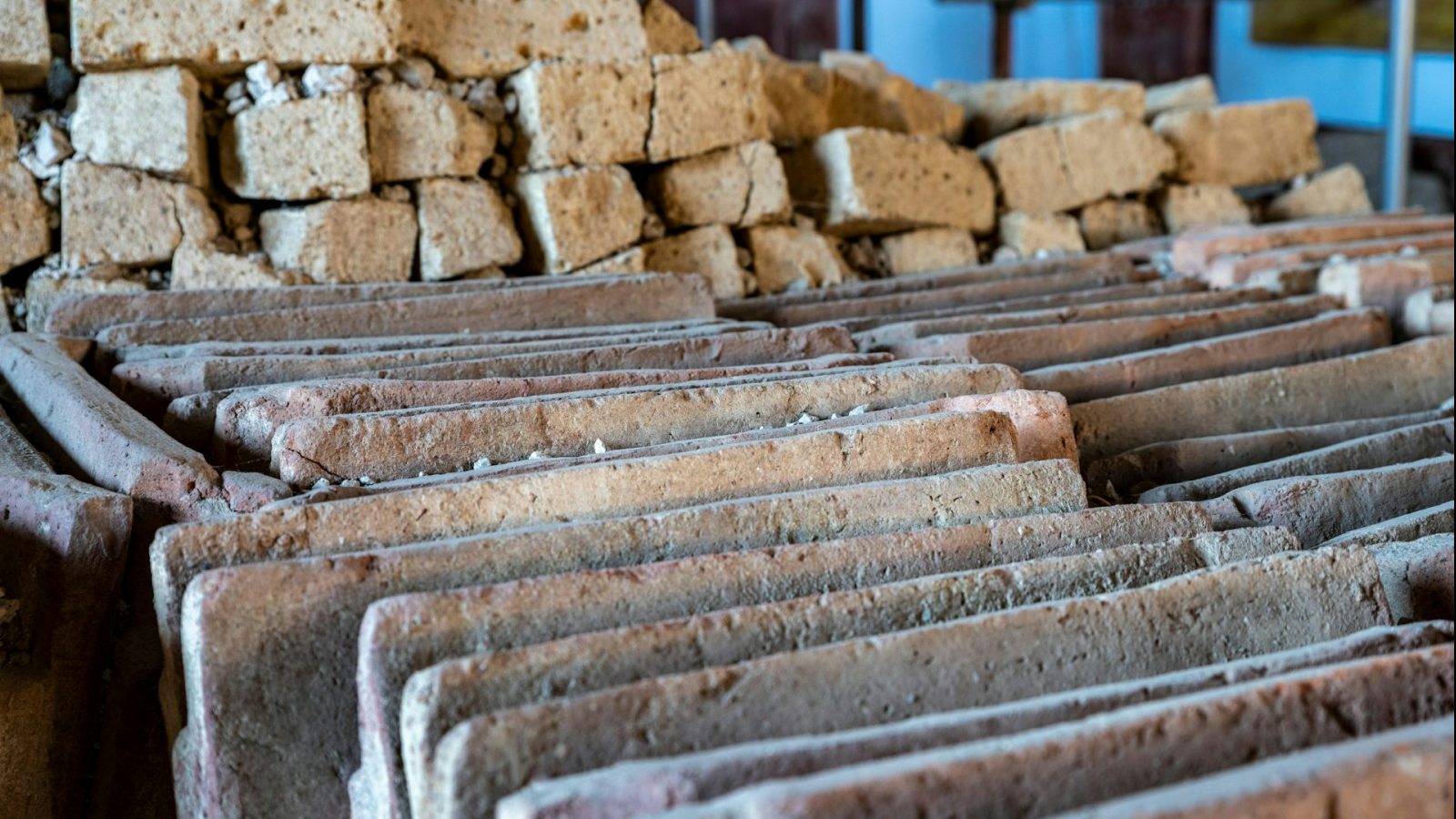
The Enduring Mystery of roman Concrete: Self-Healing and Lasting Questions
Recent discoveries surrounding ancient Roman concrete are generating excitement, but a nuanced understanding is crucial. While the Romans demonstrably possessed the knowledge to create remarkably durable concrete, it’s a mistake to assume all their construction adhered to the highest standards.
The ability to produce exceptional concrete mortars didn’t guarantee consistent submission. Past accounts,like those from Pliny the Elder,actually document instances of buildings collapsing in Rome due to substandard mortar. just because they could build well doesn’t mean they always did.
So, what do we truly know, and what questions still linger?
Unlocking the Secrets of Self-Healing Concrete
A new study focusing on a remarkably well-preserved example from 79 CE Pompeii has revealed fascinating insights into the concrete’s self-healing properties. This concrete contained unique lime clasts – small fragments of lime – that appear to play a key role in automatically repairing cracks.
Here’s what makes this finding so meaningful:
* Reactive Lime: The presence of quicklime,when exposed to water,creates a reactive component.
* Crack Mitigation: This reaction fills developing cracks, preventing further structural damage.
* Longevity: This self-healing mechanism contributes to the unusual longevity of Roman structures.
Though, this raises several significant questions that require further investigation.
Lingering Questions and Future Research
Can we confidently extrapolate the findings from this single Pompeii example to all Roman concrete construction? It’s a crucial consideration.
Several other key questions need answering:
* Evolution of Techniques: Does this discovery demonstrate a progression in concrete technology from earlier roman writings, such as those by Vitruvius?
* Earthquake Resilience: Was the use of quicklime a deliberate response to the seismic activity common in the region, anticipating future cracking?
* Prevalence of Lime Clasts: How widespread was the inclusion of lime clasts in Roman concrete across different regions and time periods?
* Self-Healing Identification: Where else can we identify instances of self-healing in existing Roman concrete structures?
To truly understand the full scope of Roman concrete technology, more research is essential. We need to analyze a broader range of samples and investigate the prevalence of this self-healing mechanism across the Roman world.
Ultimately, unraveling the mysteries of Roman concrete offers valuable lessons for modern construction. By understanding their techniques, we can potentially develop more durable, enduring, and resilient building materials for the future. It’s a fascinating area of study with the potential to revolutionize how we approach construction today.




![Gender-Affirming Care Rule: Risks & Concerns | [Year] Update](https://i0.wp.com/www.statnews.com/wp-content/uploads/2025/12/AP25211634727537-1024x576.jpg?resize=330%2C220&ssl=1 "Gender-Affirming Care Rule: Risks & Concerns | [Year] Update")


