
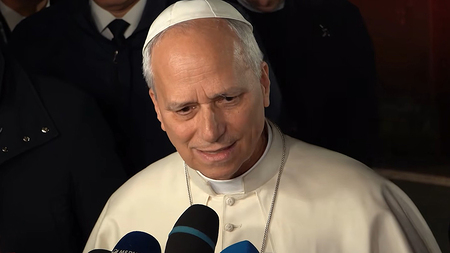
In a rare and direct diplomatic intervention, Pope Leo XIV has condemned a threat by U.S. President Donald Trump to destroy Iranian infrastructure, labeling the ultimatum “unacceptable.” The pontiff’s remarks mark a significant shift in the Vatican’s public stance, moving from quiet diplomacy to pointed criticism of the American administration’s approach to the ongoing conflict in Iran.
The confrontation reached a boiling point on Tuesday, April 7, 2026, when President Trump posted a stark warning on Truth Social. In the post, Trump suggested that “an entire civilisation will die tonight, never to be brought back,” though he noted he did not want such an outcome to occur. He framed the potential destruction as a catalyst for “complete and total regime change,” suggesting that “smarter, and less radicalised minds” might prevail in the aftermath Wanted in Rome.
Speaking to journalists as he departed Villa Barberini in Castel Gandolfo, Pope Leo XIV characterized the situation not merely as a legal or diplomatic dispute, but as a profound moral crisis. The Pope emphasized that the threat against the people of Iran was unacceptable, urging world leaders to consider the humanitarian cost of such an escalation, particularly the impact on innocent children and the elderly Wanted in Rome.
This public rebuke follows a period of increasing tension between the Holy See and the White House. As recently as March 31, 2026, Pope Leo XIV had issued a broader appeal from Castel Gandolfo, calling on the U.S. President and other global leaders to find a viable path to end the war in Iran YouTube.
A Moral Crisis Over Legal Mandates
The Pope’s intervention highlights a fundamental clash between the “regime change” doctrine pursued by the Trump administration and the Vatican’s commitment to the protection of civilian populations. By stating that the issue was “a moral question for the good of the entire people,” Leo XIV shifted the conversation away from the geopolitical justifications for military action and toward the human rights of the Iranian citizenry.
The timing of these statements is particularly critical. The world had been on high alert following the American ultimatum on April 7, with the Pope breaking his silence at a moment when large-scale military action appeared imminent. His focus remained steadfastly on the “innocent people” who would become victims of the escalation, framing the potential destruction of Iranian civilization as a moral catastrophe rather than a strategic victory Wanted in Rome.
The Vatican’s Shifting Stance on the Iran War
The emergence of Pope Leo XIV as a pointed critic of Donald Trump represents a departure from traditional papal neutrality in the face of superpower aggression. While the Vatican often advocates for peace, the directness of the language used—specifically calling a U.S. President’s threats “unacceptable”—signals an urgent attempt to prevent a total collapse of stability in the region.
This shift is part of a broader pattern of engagement where the Pope has repeatedly appealed for an end to the hostilities. From his March appeals to his April 7 condemnation, the pontiff has consistently positioned the Catholic Church as a voice for the vulnerable in the face of “revolutionary” military strategies YouTube.
Key Takeaways of the Papal Intervention
- Condemnation of Threats: Pope Leo XIV explicitly rejected President Trump’s threat to destroy Iranian civilization as “unacceptable.”
- Moral vs. Legal: The Vatican argues that the current crisis is a moral failure, regardless of any international law arguments used to justify military action.
- Humanitarian Focus: The Pope specifically highlighted the risk to innocent civilians, including children and the elderly.
- Call for De-escalation: The Holy See continues to urge world leaders to find a diplomatic end to the war in Iran.
Geopolitical Implications of the Papal Rebuke
The tension between the Vatican and the U.S. Administration adds a complex layer to the international response to the Iran crisis. As the Pope appeals to the “hearts” of leaders and the public, the Trump administration continues to lean into a strategy of maximum pressure and the promise of a “wonderful and revolutionary” outcome through regime change.

The international community now watches to see if this moral pressure from the Holy See, combined with other global diplomatic efforts, can temper the U.S. Ultimatum or if the administration will proceed with the threatened infrastructure destruction. The Pope’s insistence that the question is “not merely legal but moral” challenges the legitimacy of using total destruction as a tool for political transformation.
For those following the developments, official updates regarding the status of the U.S. Ultimatum and any subsequent diplomatic responses from Tehran or the Vatican can be monitored through official government channels and the Holy See Press Office.
World Today Journal encourages readers to share this report and join the conversation in the comments below regarding the role of religious leadership in preventing global conflict.