Russia’s Pivot to China: A Decade-Long Path to Gas Export Expansion
Russia is embarking on a meaningful, yet lengthy, journey to redirect it’s natural gas exports eastward. The nation aims to lessen its reliance on European markets following significant losses due to the conflict in Ukraine. A key component of this strategy is the Power of Siberia 2 pipeline,designed to dramatically increase gas flow to China. however, realizing this ambition will take considerable time and investment.
A New agreement, Familiar Challenges
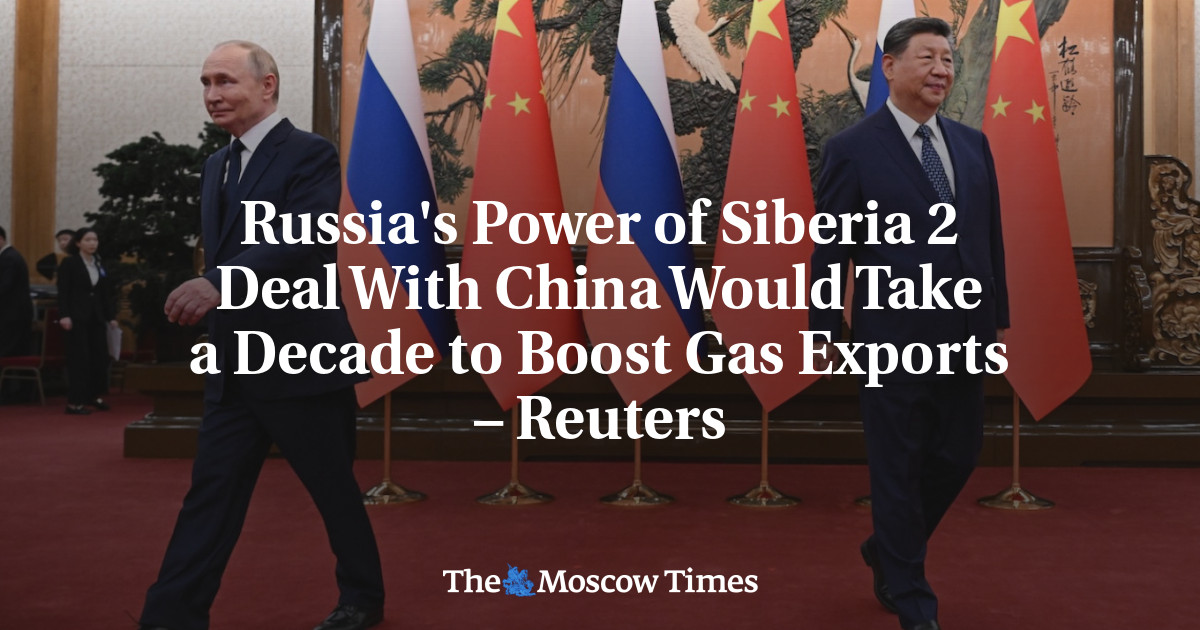
During President Vladimir Putin’s recent visit to China, Russian energy giant Gazprom announced a “legally binding” agreement for Power of Siberia 2. Despite this milestone, critical details remain unresolved. Reuters reported that negotiations stalled on key issues like gas pricing, investment terms, and a concrete delivery schedule.
Timeline for Full Capacity: A Long Road Ahead
Even with a finalized deal next year,experts predict a minimum of ten years before Power of Siberia 2 substantially boosts Russia’s gas exports to China.Here’s a breakdown of the anticipated timeline:
* Construction: At least five years are needed to build the pipeline.
* Ramp-Up: an additional five years will be required to reach full operational capacity.
* Partial Capacity: Some sources estimate the pipeline won’t reach even half of its potential until 2034-2035, assuming a 2031 start to gas flows.
This extended timeframe underscores the complexity of large-scale energy infrastructure projects. It also highlights the challenges Russia faces in quickly reorienting its energy markets.
Current Gas Flows & Future Projections
Currently, Gazprom delivers 38 billion cubic meters (bcm) of gas to China annually via Power of Siberia 1, which began operations in 2019. Furthermore,a separate Far Eastern route is slated to add another 12 bcm per year starting in 2027.
Power of Siberia 2 is projected to eventually deliver up to 50 bcm per year. This would represent a substantial increase, but it’s critically important to understand the current context.
The Price of the Pivot: Discounted Rates for China
Russia is offering significantly discounted gas prices to China compared to its other international customers. According to Russia’s Economic Advancement Ministry, China currently pays around $248 per 1,000 cubic meters. This is 38% lower than the $402 paid by gazprom’s clients outside the Commonwealth of Independent States.
Projected prices for next year fall even further, to $240, representing a 37% discount from the average export price of $380. While securing a reliable buyer is crucial, these lower prices impact Russia’s overall revenue.
Europe’s Loss, China’s Gain – But Not a Full Replacement
The shift to China is partially offsetting the dramatic decline in Russian gas exports to Europe. Though, current sales to China only cover approximately one-fifth of Gazprom’s former European volumes.
Consider these stark figures:
* Pre-Invasion Peak: Gazprom exported around 200 bcm annually to europe.
* Recent Decline: In the first half of 2025,Gazprom shipped just 8.8 bcm to Europe.
* Annual Forecast: Total annual exports to Europe are expected to barely exceed 16 bcm – the maximum capacity of the TurkStream pipeline‘s European branch.
This represents the lowest level of Russian gas supplies to Europe as the early 1970s. You can see the scale of the disruption and the challenge russia faces in finding alternative markets.
What This means for You
This situation has broader implications for global energy markets. As Russia increasingly relies on China,it creates a tighter energy relationship between the two nations. For you,this could mean increased volatility in global gas prices and a reshaping of the geopolitical landscape. Understanding these dynamics is crucial for businesses and consumers alike.
Looking Ahead
Russia’s energy future is undeniably intertwined with its relationship with China. while the Power of Siberia 2 pipeline represents a strategic move, the path to full realization is long and complex.