Unraveling the Genetic Roots of Brain Size: How an Actin Mutation Disrupts Early Growth
Baraitser-Winter syndrome, a rare genetic disorder, is characterized by distinctive facial features and, critically, considerably reduced brain size. For years, the underlying mechanisms linking the genetic defect to this developmental issue remained elusive. Now,groundbreaking research led by Nataliya Di Donato,Director of the Institute of Human Genetics at Hannover Medical school,and Michael Heide,group leader at the German Primate Center,has pinpointed a crucial role for the protein actin in shaping early brain development,offering new insights into the disorder and potential avenues for future therapeutic intervention. This study, published recently, leverages cutting-edge brain organoid technology to reveal how a single genetic mutation can profoundly impact the intricate processes governing brain formation.
The Cytoskeleton: A Foundation for Brain Development
The brain’s remarkable complexity arises from a precisely orchestrated series of events during development. Central to this process is the cytoskeleton – the internal scaffolding of cells that provides structural support and facilitates essential functions like cell division and migration. Actin, a key component of the cytoskeleton, is vital for these processes. In individuals with Baraitser-Winter syndrome, a mutation occurs in one of two genes responsible for producing actin.Understanding how this mutation disrupts brain development has been a significant challenge.
Brain Organoids: Modeling Human Brain Formation in the Lab
To overcome this challenge, the research team employed a powerful technique: induced pluripotent stem cells (iPSCs).Skin cells from patients with Baraitser-Winter syndrome were reprogrammed into iPSCs, which possess the remarkable ability to differentiate into any cell type in the body. These iPSCs were than guided to develop into three-dimensional brain organoids – miniature, simplified versions of the developing human brain. This innovative approach allows researchers to study human brain development in vitro, providing a level of detail and relevance previously unattainable.
A Cascade of Developmental Disruptions
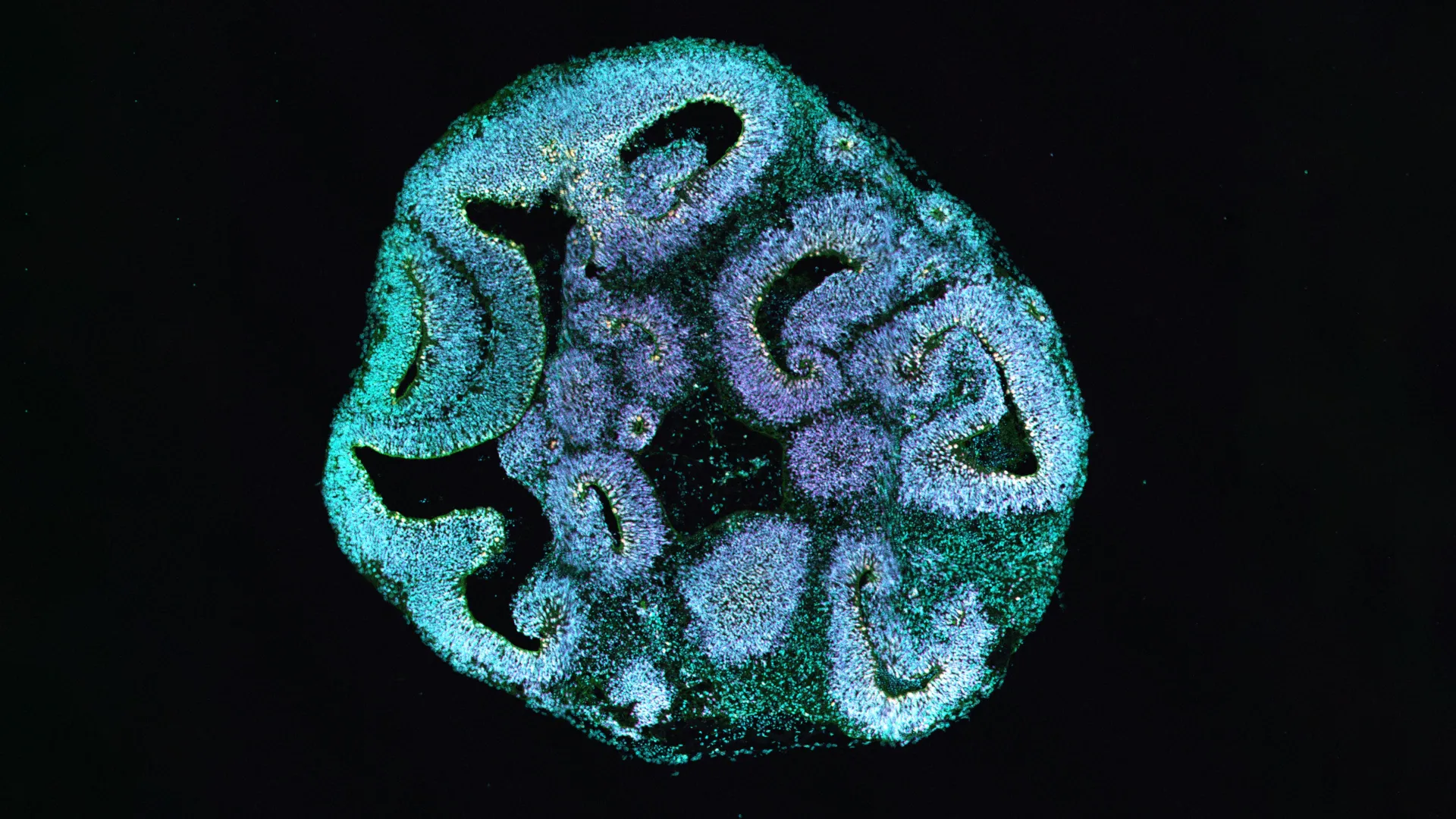
The results were striking. Brain organoids derived from patient cells exhibited a consistent pattern of abnormalities. Notably, they were approximately 25% smaller than organoids grown from healthy donor cells. Further examination revealed a significant reduction in the size of ventricle-like regions,critical hubs where progenitor cells – the precursors to nerve cells – congregate and initiate brain formation.
Delving deeper, the researchers identified a critical shift in the balance of progenitor cell populations. Specifically, there was a marked decrease in apical progenitor cells, essential for building the cerebral cortex, the brain’s outer layer responsible for higher-level cognitive functions. Concurrently, an increase was observed in basal progenitor cells, which typically appear later in development.this imbalance strongly suggested a disruption in the timing and regulation of cell division.
The Key Finding: Disrupted Cell Division Orientation
Using high-resolution microscopy, the team uncovered the precise mechanism driving these developmental defects. under normal conditions,apical progenitor cells divide primarily at right angles to the ventricular surface,ensuring the equal distribution of cellular components and the generation of two new apical progenitor cells. Though, in organoids carrying the actin mutation, this pattern was dramatically altered.
Vertical divisions were significantly reduced, replaced by a dominance of horizontal and angled divisions.This shift in orientation impaired the ability of apical progenitor cells to self-renew, leading to their detachment from the ventricular zone and a subsequent conversion into basal progenitor cells. As Michael Heide succinctly states, ”Our analyses show very clearly that a change in the division orientation of the progenitor cells is the decisive trigger for the reduced brain size.”
Confirming Causation and Uncovering Subtle Structural Defects
To definitively establish that the actin mutation was the cause of the observed defects, the researchers employed CRISPR/Cas9 gene editing technology. They introduced the same mutation into a healthy stem cell line, and the resulting brain organoids exhibited the identical developmental abnormalities seen in patient-derived organoids. This crucial control experiment provided irrefutable evidence linking the mutation to the observed phenotype.
further analysis using electron microscopy revealed subtle, yet significant, structural defects at the ventricular surface.Cell shapes were irregular, and abnormal protrusions formed between neighboring cells. Elevated levels of tubulin, another key cytoskeletal protein involved in cell division, were also observed at cell junctions. These subtle changes, while not dramatically altering overall cell structure, appear to be sufficient to disrupt the delicate process of cell division orientation.
implications for Diagnosis and Future Therapies
This research represents a significant advancement in our understanding of the genetic basis of brain malformations.The findings not only illuminate the mechanisms underlying Baraitser-Winter syndrome but also underscore the power of brain organoids as a model for studying human brain development and disease.
“Our findings help us understand how rare genetic disorders lead to complex brain malformations and highlight the potential of brain organoids for biomedical research,” explains Michael Heide.
Nataliya Di Donato emphasizes the clinical implications, stating