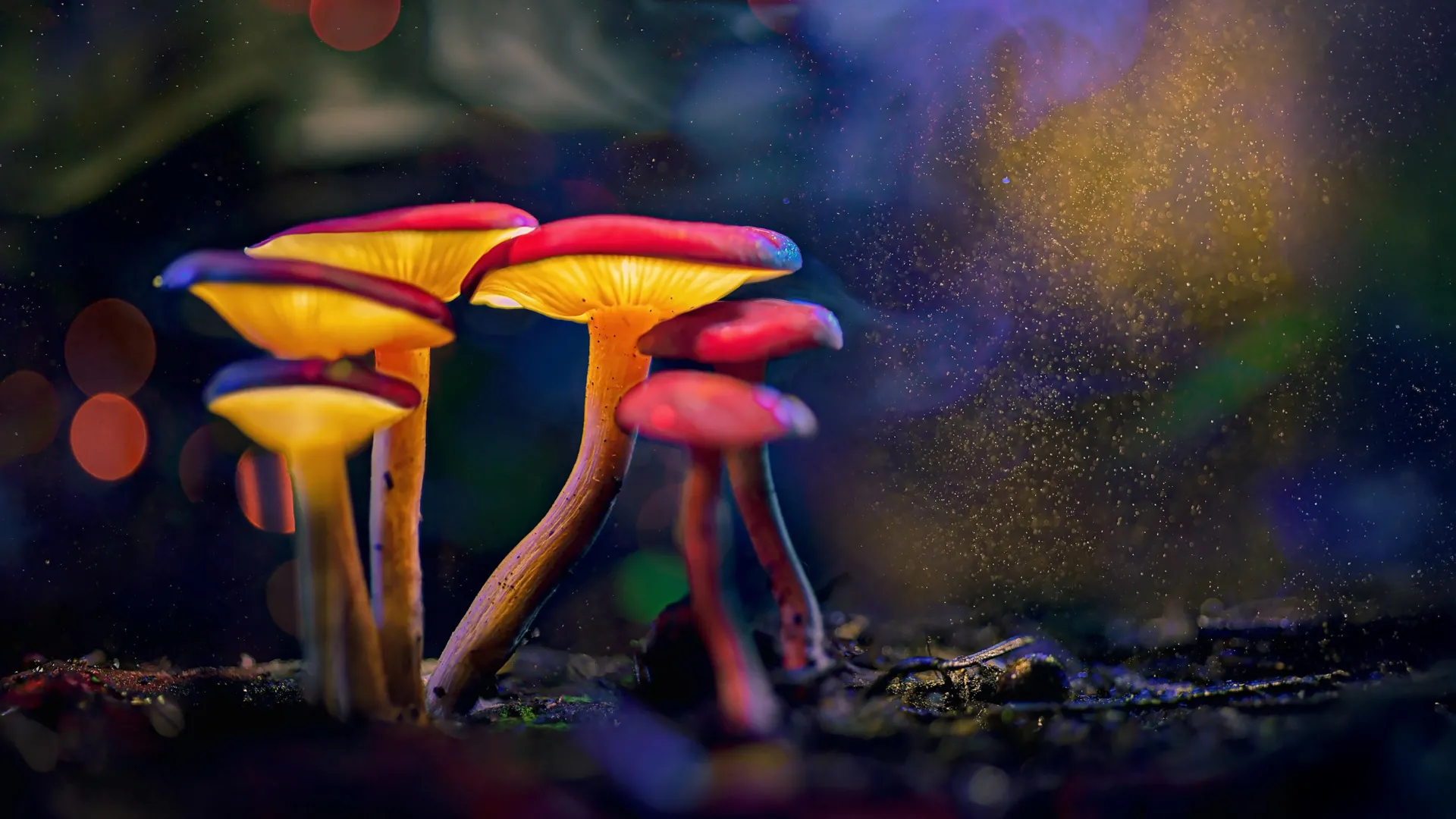
The Convergent Evolution of Psilocybin: Unlocking the Secrets of ‘magic Mushrooms’ and Pioneering New Production Pathways
For millennia, humans have interacted with psilocybin, the psychoactive compound found in certain mushrooms, often referred too as “magic mushrooms.” Beyond it’s historical and cultural significance,psilocybin is rapidly gaining recognition as a potential breakthrough treatment for conditions like therapy-resistant depression. Now, groundbreaking research from Friedrich Schiller university Jena and the Leibniz Institute for Natural Product Research and Infection Biology (Leibniz-HKI) has revealed a interesting insight into the biosynthesis of this complex molecule: fungi have independently evolved the ability to produce psilocybin at least twice, utilizing remarkably different biochemical pathways.
This revelation, published within the framework of the Cluster of Excellence ‘Balance of the microverse’ and supported by the German Research Foundation (DFG), isn’t just a fascinating example of convergent evolution - it also holds important promise for the future of psilocybin production and our understanding of fungal ecology.
Two Roads to the Same Destination: A Biochemical Puzzle
The research team, led by Professor Dirk Hoffmeister, focused on comparing psilocybin production in two distinct fungal groups: the well-studied psilocybe species and fiber cap mushrooms (genus Galerina). Traditionally, Psilocybe mushrooms were considered the primary model for understanding psilocybin biosynthesis. However, the investigation revealed a startling difference.
“It was like observing two wholly separate workshops, each employing unique tools and techniques, yet both ultimately producing the exact same product,” explains Tim Schäfer, lead author of the study and doctoral researcher in Hoffmeister’s team. While Psilocybe utilizes a known enzymatic toolkit, fiber cap mushrooms employ a completely novel biochemical arsenal.
Detailed analysis, including protein modeling conducted by Innsbruck chemist Bernhard Rupp, confirmed that the sequence of reactions leading to psilocybin formation differs considerably between the two groups.This confirms a true instance of convergent evolution – where unrelated species independently develop similar traits. “Nature has, in effect, invented the same active compound twice,” Schäfer emphasizes.
Why the Redundancy? Unraveling the ecological Role of Psilocybin
the question naturally arises: why would two such disparate groups of fungi evolve the same complex biochemical pathway? The answer, as Professor Hoffmeister readily admits, remains elusive.
“Nature rarely acts without purpose. There must be an evolutionary advantage to both fiber cap mushrooms and psilocybe species producing psilocybin, weather it’s related to their habitat, defense mechanisms, or other ecological factors.We simply haven’t identified it yet.”
One compelling hypothesis centers around predator deterrence. Psilocybe mushrooms visibly react to injury by turning blue, a result of the breakdown of psilocybin. This visible signal could serve as a warning to potential herbivores, indicating the presence of a potentially unpleasant or even toxic compound. Psilocybin, thus, might function as a chemical defense mechanism. Further research is needed to validate this and other potential ecological roles.
Beyond Understanding: Revolutionizing Psilocybin Production
This discovery isn’t purely academic. The identification of choice enzymatic pathways opens up exciting new avenues for the biotechnological production of psilocybin. Currently, psilocybin is often produced through complex and costly chemical syntheses.
“Now that we’ve identified additional enzymes involved in psilocybin biosynthesis, we have significantly expanded our ‘toolbox’ for production,” explains Hoffmeister. “This allows us to explore more efficient and sustainable methods.”
Schäfer adds, “We are hopeful that our findings will contribute to the future production of psilocybin for pharmaceutical applications in bioreactors, bypassing the need for intricate chemical processes.” The Leibniz-HKI in Jena is actively collaborating with its Bio Pilot Plant to develop scalable production processes for natural products like psilocybin, bringing this vision closer to reality.
A Deeper Dive into the Microverse and the Future of Natural Product Research
This research exemplifies the core mission of both the Collaborative Research Center ChemBioSys and the Cluster of Excellence ‘Balance of the Microverse’ at Friedrich Schiller University Jena.ChemBioSys investigates how natural compounds shape biological communities, while the Cluster of Excellence focuses on the intricate dynamics between microorganisms and their environment.
the study highlights the remarkable chemical diversity within the fungal kingdom and underscores the importance of exploring these often-overlooked organisms for novel compounds with therapeutic potential. It’s a testament to the power of interdisciplinary research, combining expertise in microbiology, chemistry, and bioinformatics to unlock the secrets of the natural world and pave the way for innovative solutions in medicine and biotechnology.
**Key Take





![Harvard Medical School: 6 Top Investments for Health Systems | [Year]](https://i0.wp.com/hitconsultant.net/wp-content/uploads/2025/12/Harvard-Primary-Care-Investment-Guide.jpg?resize=330%2C220&ssl=1 "Harvard Medical School: 6 Top Investments for Health Systems | [Year]")