Erbium Quantum Light Sources: Building the Foundation for Scalable Quantum Networks
The future of secure interaction and powerful computing hinges on the progress of robust quantum networks. A groundbreaking new research collaboration between Denmark and Germany, the EQUAL (Erbium-based silicon quantum light sources) project, is poised to accelerate progress in this field. Funded by the Innovation Fund Denmark with 40 million Danish crowns (approximately €5.3 million), this five-year initiative, launched in May 2025, focuses on harnessing the unique properties of the rare-earth element erbium to create scalable quantum light sources – a critical component currently missing from the quantum technology landscape.But what makes erbium so special,and why is this project a significant leap forward?
The Quantum Networking Challenge: Why We Need New Light Sources
Quantum technology promises revolutionary advancements,from unbreakable encryption methods to computational capabilities far exceeding those of today’s computers. However, realizing this potential requires a network to connect these quantum devices – an optical quantum network. This is where the challenge lies. existing quantum light sources often fall short, lacking compatibility with both quantum memories and the optical fibers that form the backbone of our current communication infrastructure.
“It is a really tough task,but we have also set a really strong team. one of the toughest goals is to integrate quantum light sources with quantum memories. This seemed unrealistic just a few years ago, but now we see a path forward,” explains Professor Søren Stobbe, project coordinator at the Technical University of Denmark (DTU).
The core problem? Many quantum light sources are either incompatible with quantum memories – essential for storing and processing quantum facts – or unable to transmit signals efficiently through standard optical fibers. This incompatibility hinders the creation of a truly scalable and practical quantum internet.
Why Erbium? The Key to Bridging the Gap
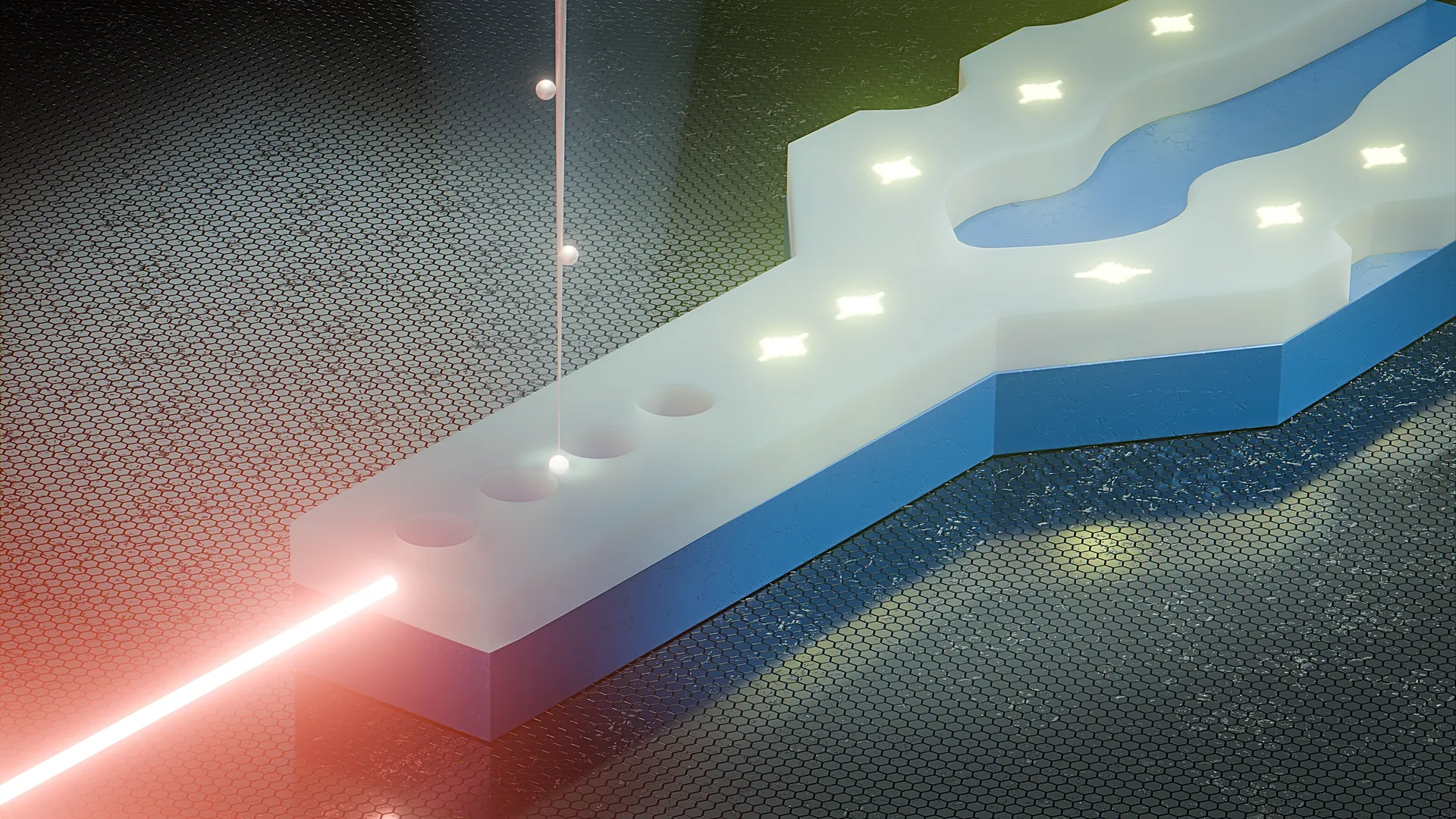
While numerous types of quantum light sources exist,researchers believe erbium offers the most viable path forward. Erbium possesses unique quantum properties, but historically, its interaction with light has been too weak for practical applications. However, recent advancements in nanophotonic technology, spearheaded by DTU, are changing this.These new nanophotonic chips dramatically enhance the interaction between erbium and light,opening up possibilities previously considered unattainable. This enhancement is crucial because it allows for the creation of quantum light sources that can operate at the same wavelengths used in existing fiber-optic communication networks - a critical factor for seamless integration.
The EQUAL Project: A Multi-Disciplinary Approach
The EQUAL project isn’t just about enhancing erbium’s light interaction; it’s a holistic approach leveraging expertise from multiple institutions and disciplines. The project’s success relies on a synergistic combination of:
Nanophotonics (DTU): Developing the advanced chips that amplify the erbium-light interaction.
Silicon Quantum Light Sources (HZDR): Utilizing ion beam techniques to implant erbium atoms into silicon structures, leveraging the ubiquity and cost-effectiveness of silicon technology. Dr.Yonder Berencén of the Helmholtz-Zentrum Dresden-Rossendorf (HZDR) explains, “We intend to use advanced ion beam techniques to implant erbium atoms into tiny silicon structures and study how using ultra-pure silicon can improve their performance. This research will lay the foundation for building quantum devices that can be integrated into today’s technology.”
Quantum Networks (Humboldt University of Berlin): Contributing expertise in the architecture and protocols for building functional quantum networks.
Nanotechnology (Beamfox Technologies ApS): Providing cutting-edge nanotechnology solutions for device fabrication.
Integrated Photonics (Lizard Photonics ApS): Focusing on developing low-power consumption integrated photonic components.This collaborative effort aims to overcome the limitations of current quantum light sources by creating devices that are not only efficient and compatible with existing infrastructure but also scalable for future network expansion.
Recent Advances & The State of Quantum Networking (2024-2025)
The field of quantum networking is rapidly evolving. A recent report by McKinsey & Company (November 2024) estimates the global quantum computing market will reach $85 billion by 2030, with quantum communication representing a significant portion of this growth. Furthermore, research published in Nature Photonics* (February 2025) demonstrated a record-breaking entanglement distribution distance of 100km using erbium-doped fiber amplifiers - a crucial step towards long-distance quantum communication.
These advancements underscore the growing momentum behind quantum networking and highlight the importance of projects like EQUAL in translating theoretical breakthroughs into practical technologies. The focus is shifting from proof-of-concept demonstrations to building robust, reliable, and scalable quantum networks.
Practical Implications & Future Outlook
The triumphant development of erbium-based quantum light sources



![Boost Android Performance: Essential Settings & Hidden Features [Video]](https://i0.wp.com/9to5google.com/wp-content/uploads/sites/4/2025/12/Google-Pixel-10-Pro-XL-in-hand.jpg?resize=1200%2C628&quality=82&strip=all&ssl=1 "Boost Android Performance: Essential Settings & Hidden Features [Video]")