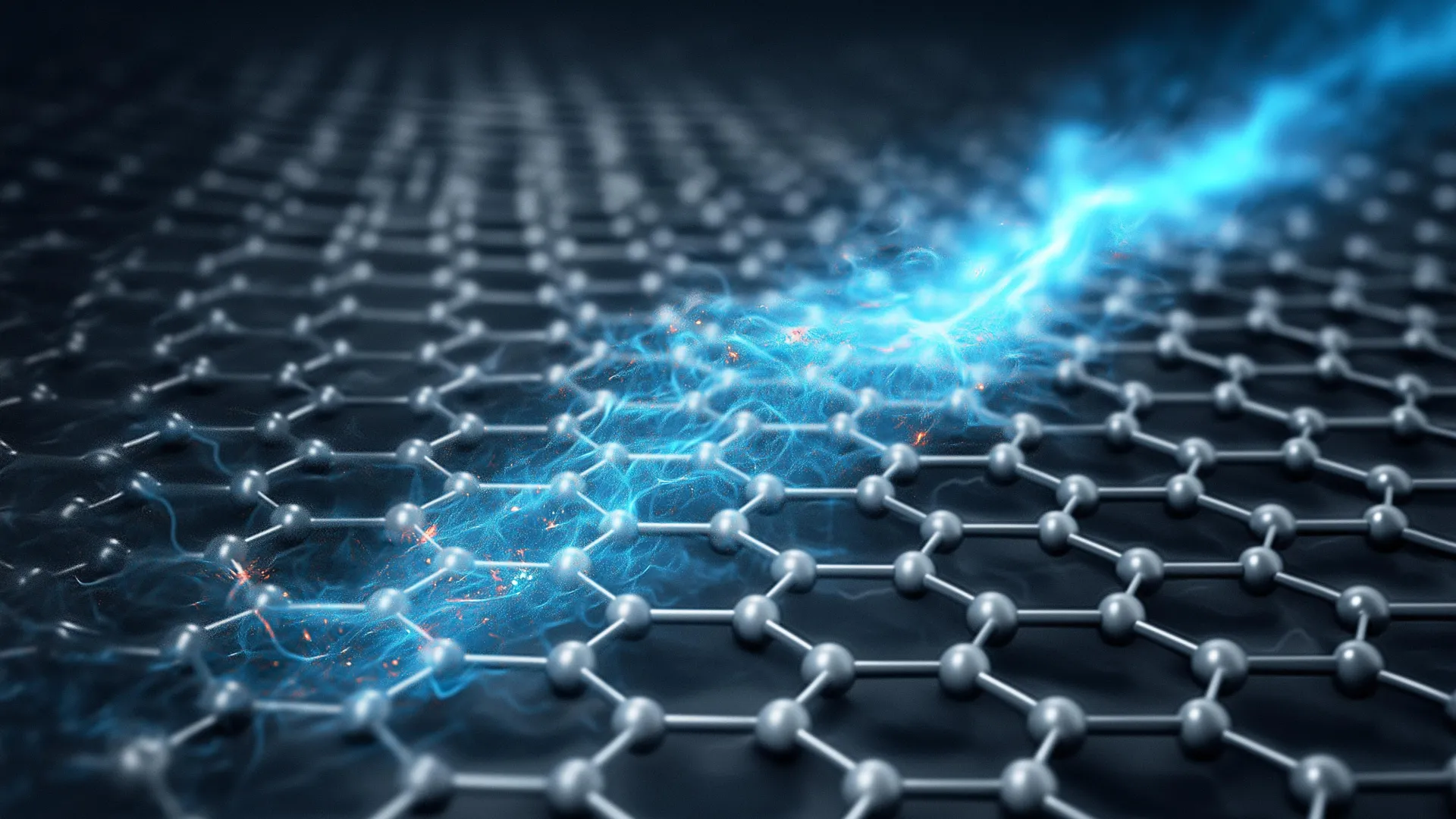
Graphene‘s Quantum Leap: How Light manipulation Could Unlock Next-Gen Technologies
Have you ever imagined a world where electronics are sculpted not by physical design, but by precisely timed pulses of light? That future is edging closer to reality thanks to groundbreaking research into graphene, the “miracle material” poised to revolutionize everything from batteries to computing. A recent study, published in Nature Physics, has confirmed a pivotal capability within graphene: its responsiveness to “Floquet effects,” opening doors to unprecedented control over material properties and potentially ushering in a new era of quantum technology.
What is Graphene and why All the Hype?
Graphene is a single-atom-thick layer of carbon atoms arranged in a honeycomb lattice. This seemingly simple structure belies its remarkable properties. It’s incredibly strong, remarkably flexible, and an remarkable conductor of electricity and heat. These characteristics have fueled intense research into its applications, including:
* Flexible Electronics: Imagine foldable smartphones and wearable sensors seamlessly integrated into clothing.
* Advanced Batteries: Graphene’s high conductivity can significantly improve battery charging speeds and energy density.
* Next-Generation Solar Cells: Enhancing light absorption and energy conversion efficiency.
* Highly Sensitive Sensors: Detecting minute changes in the surroundings for applications in healthcare and environmental monitoring.
But the potential of graphene doesn’t stop there. The latest research suggests we’ve only scratched the surface of what this material can achieve.
Floquet Engineering: Sculpting Materials with Light
For years, scientists have theorized about the possibility of using “Floquet engineering” to alter the properties of materials. This technique involves using precisely timed laser pulses to manipulate the quantum states of electrons within a material. Though, proving its effectiveness in metallic and semi-metallic materials like graphene has been a meaningful challenge – until now.
A team led by the University of Göttingen, in collaboration with researchers from Braunschweig, Bremen, and Fribourg, has provided the first direct evidence of Floquet effects in graphene. This breakthrough confirms that Floquet engineering can function in these complex materials, paving the way for a new level of control over their behavior.
How the Research Was Conducted: A Deep Dive into Femtosecond Momentum Microscopy
The team employed a refined technique called femtosecond momentum microscopy. This method allows researchers to observe the incredibly rapid changes in electron behavior within the graphene. Here’s a breakdown of the process:
- Illumination: Graphene samples were bombarded with extremely short bursts of light - measured in femtoseconds (quadrillionths of a second).
- Momentum Mapping: A delayed pulse of light was then used to examine how the electrons responded to the initial pulse. This allowed the team to map the momentum of the electrons, revealing changes in their energy and behavior.
- Direct Observation: The measurements definitively showed the presence of “Floquet states” – altered electronic states created by the interaction with the light pulses - in the graphene’s photoemission spectrum.
“Our measurements clearly prove that ‘Floquet effects’ occur in the photoemission spectrum of graphene,” explains Dr. Marco Merboldt, the study’s first author. “This makes it clear that Floquet engineering actually works in these systems – and the potential of this finding is huge.”
The Implications: A Future Shaped by Light-Controlled Quantum Materials
The ability to precisely tune materials with light has profound implications for a wide range of technologies. Here’s what this breakthrough could unlock:
* Revolutionary Electronics: Imagine circuits where electron flow is controlled with laser precision, leading to faster, more efficient, and more versatile electronic devices.
* Advanced Computing: The manipulation of quantum states could be crucial for developing more powerful and stable quantum computers.
* Highly Advanced Sensors: Creating sensors capable of detecting even the faintest signals, with applications in medical diagnostics, environmental monitoring, and security.
* Topological Materials Research: The research opens avenues for investigating topological properties – unique, stable characteristics with immense potential for reliable quantum computing and novel sensor development.
Professor marcel Reutzel, who co-led the project, emphasizes the significance: “our results open up new ways of controlling electronic states in quantum materials with light. This could lead to technologies in which electrons are manipulated in a targeted and controlled manner.”
Recent Developments & The Broader Context (Updated November 2023)
While the University of Göttingen study is a landmark achievement, it’s part of a larger, rapidly evolving field. Recent research (within the last 12 months) highlights the growing momentum:
* Increased Focus on Topological Insulators: Researchers are increasingly exploring the combination of Floquet engineering with topological insulators - materials that conduct electricity on their surface but act as insulators in their bulk – to create even more robust quantum devices