
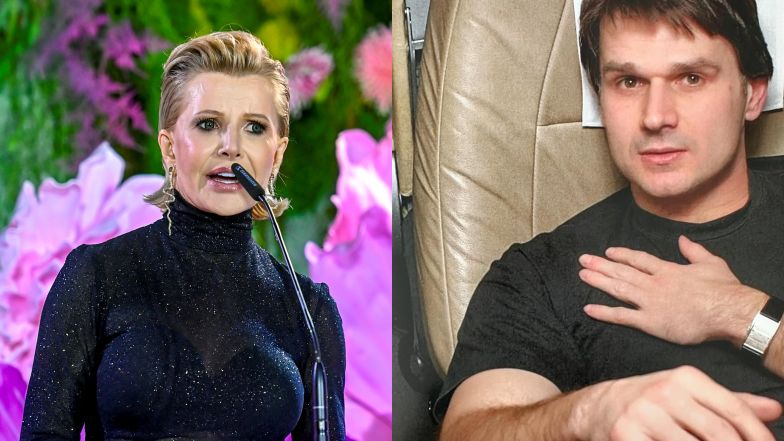
The enduring pain of the Smolensk air disaster continues to resonate through the personal accounts of those left behind. For Polish journalist Joanna Racewicz, the tragedy of April 10, 2010, is not merely a historical event but a defining moment of loss that reshaped her life and the upbringing of her son.
Racewicz lost her husband, Paweł Janeczek, a lieutenant with the Government Protection Bureau (BOR) assigned to the president, when the Tu-154 aircraft crashed. In recent reflections, the journalist has spoken candidly about the emotional weight of this loss, emphasizing that “time does not heal wounds” as she navigates the complexities of grief nearly 16 years after the event.
The tragedy claimed the lives of all 96 people on board, including the Polish President and high-ranking military and government officials. For Racewicz, the tragedy is compounded by the specific circumstances that led to her husband’s presence on that fateful flight.
A Decision Based on Family: The “Weight of Life”
One of the most poignant aspects of Joanna Racewicz’s account is the revelation that Paweł Janeczek was not originally scheduled to be part of the delegation to Smolensk. According to the journalist, her husband had initially planned to travel to New York with the president two weeks later. However, he decided to swap assignments with a colleague to ensure he could be home for the birthday of their son, Igor.
Racewicz recalls a conversation where Janeczek asked her, “What to choose, Joasiu?” After she expressed her desire for him to be present for their son’s birthday, he opted for the Smolensk trip. This decision, which was intended to prioritize family, ultimately led to his death. Racewicz has described this as a “swap on the weight of life,” noting the heartbreaking detail that the colleague who took his place in New York was the same person who later carried Janeczek’s coffin while weeping.
Navigating Grief and Parenthood
The aftermath of the crash forced Racewicz to confront the immense challenge of raising a child alone. In a conversation with Beata Sadowska, the journalist discussed the difficulty of conveying the reality of death to her son, who was not even two years traditional at the time of the crash.
Racewicz stated that she refused to lie to her son about the loss of his father, emphasizing that respect is a key value for her. She noted the inherent difficulty of the situation, remarking that “one cannot be both a mother and a father; one can only be in one role.” She described her late husband as her “anchor to reality,” a stability that was abruptly severed by the disaster.
Timeline of Remembrance and Milestones
| Date/Event | Significance |
|---|---|
| April 10, 2010 | The date of the Tu-154 crash in Smolensk; loss of Paweł Janeczek. |
| April 10, 2025 | 15th anniversary of the disaster; Racewicz shared a poem and family photo on Instagram. |
| April 16 (Annual) | The birthday of Paweł Janeczek (would have been 52 in 2025). |
| March 28, 2026 | Recent interview discussing the challenges of explaining the loss to her son. |
The Persistent Impact of the Tragedy
Despite the passage of years, Racewicz continues to use her platform to keep the memory of her husband alive. She regularly shares tributes on social media, marking not only the anniversaries of the crash but also wedding anniversaries and birthdays. These public expressions of grief serve as a reminder of the long-term psychological impact on the families of the victims.
In interviews, she has recounted the specific details of her day on April 10, 2010, recalling that she was at work, specifically at a restaurant at the intersection of Niepodległości and Odyńca, where she was meeting with Ania Dąbrowska for “Dzień Dobry TVN” when the tragedy unfolded.
The emotional toll remains significant, with Racewicz admitting that she often struggles to maintain composure during interviews regarding the event, sometimes having to stop mid-conversation as the memories of the disaster and the void left by her husband resurface.
As the world continues to mark the anniversaries of the Smolensk disaster, the personal stories of survivors and bereaved families like Joanna Racewicz highlight the human cost behind the political and historical narratives of the crash.
For those seeking more information on the official investigations or memorials related to the Smolensk disaster, official government archives and the commemorative sites in Poland provide comprehensive records of the event and its victims.
Do you have a story of resilience or a memory of a loved one you wish to share? We invite you to join the conversation in the comments below.