
Replicating the Brain’s Efficiency: A New Approach to AI Hardware Using Ion Dynamics
For decades, the pursuit of artificial intelligence has been hampered by a fundamental challenge: replicating the efficiency of the human brain. While modern computers boast immense processing power, they consume energy at a rate orders of magnitude higher than thier biological counterpart, limiting the scalability and sustainability of advanced AI systems.A groundbreaking new study from the University of Southern California, led by Dr. Ming wu,offers a promising solution - leveraging the principles of ion dynamics,mirroring the very mechanisms that power our own neural networks.
The Biological Basis of Brain-Inspired Computing
The human brain is a marvel of energy efficiency. Its ability to learn, adapt, and process information stems from the intricate dance of charged particles, or ions – potassium, sodium, and calcium - that facilitate electrical impulses across neurons. Thes impulses aren’t simply about speed; they’re about a fundamentally different mode of computation. As Dr. Wu, who also directs the USC Center of Excellence on Neuromorphic Computing, explains, “The human brain is the ‘winner in evolution – the most efficient intelligent engine,’ and that’s as of how it processes information.”
This realization has driven a growing field of research focused on neuromorphic computing - designing computer systems that mimic the structure and function of the brain. However, conventional silicon-based approaches ofen fall short in replicating the brain’s inherent efficiency.
Silver Ions: A Key to Mimicking Neural Function
Dr. Wu’s team has taken a novel approach, utilizing silver ions embedded within oxide materials to create artificial synapses and neurons. These “diffusive memristors” - named for the dynamic diffusion of ions within the material - generate electrical pulses that closely mimic the behavior of biological neurons, enabling fundamental processes like learning, movement, and planning.
“Even though it’s not exactly the same ions in our artificial synapses and neurons, the physics governing the ion motion and the dynamics are very similar,” Dr. Wu clarifies. Silver’s unique properties – its ease of diffusion and ability to create the necessary dynamics – allow for a remarkably simple structure capable of emulating complex biological functions.
Why ions Over Electrons? The Efficiency Advantage
The core innovation lies in shifting from electron-based computation to ion-based computation. While electrons excel at speed, they lack the inherent adaptability and energy efficiency of ions.
“It’s not that our chips or computers are not powerful enough,” Dr. Wu emphasizes. “It’s that they aren’t efficient enough. They use too much energy.”
The difference is stark. A young child can learn to recognize handwritten digits with just a handful of examples, while a conventional computer requires thousands. The brain accomplishes this feat on a mere 20 watts of power, compared to the megawatts consumed by supercomputers.
This disparity stems from the fundamental difference in how learning occurs.Traditional computers rely on software-based learning, requiring extensive data and processing power. the brain, though, learns thru the physical movement of ions across cell membranes – a process of hardware-based learning that is inherently more energy-efficient and adaptive.
“The brain learns by moving ions across membranes, achieving energy-efficient and adaptive learning directly in hardware, or more precisely, in what people may call ‘wetware’,” Dr. Wu explains.
Implications for AI Hardware and Future Research
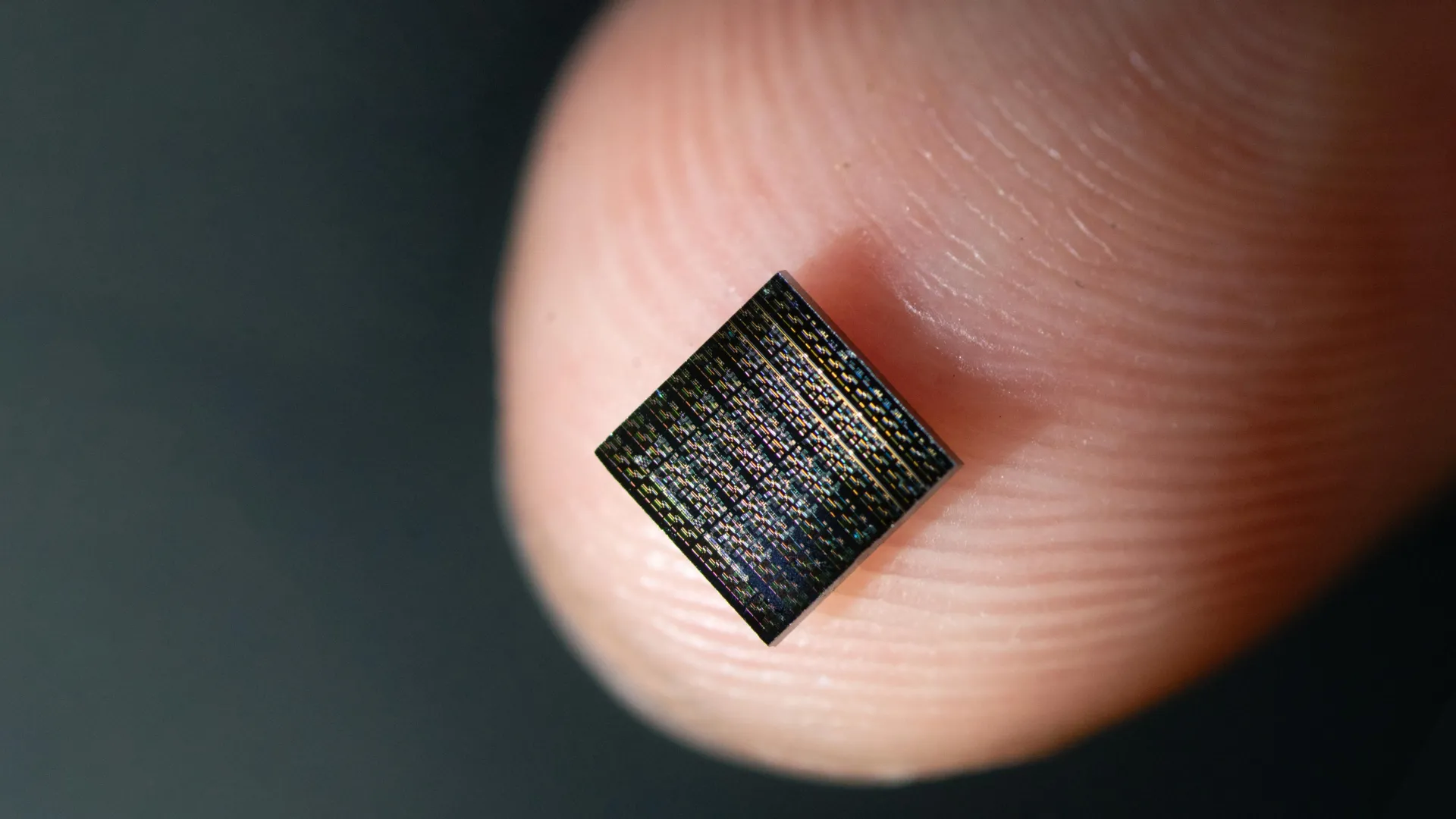
The potential impact of this technology is important. The diffusive memristors developed by Dr. Wu’s team are not only energy-efficient but also remarkably compact. Currently, a typical smartphone requires around ten chips, each containing billions of transistors.This new approach aims to drastically reduce that footprint.
“Rather [with this innovation],we just use a footprint of one transistor for each neuron,” Dr. Wu states. “We are designing the building blocks that eventually led us to reduce the chip size by orders of magnitude, reduce the energy consumption by orders of magnitude, so it can be sustainable to perform AI in the future, with a similar level of intelligence without burning energy that we cannot sustain.”
While the current iteration utilizes silver, which isn’t yet fully compatible with standard semiconductor manufacturing, the team is actively exploring alternative ionic materials. The next crucial step involves integrating large numbers of these artificial synapses and neurons to test their ability to replicate the brain’s complex capabilities at scale.
Beyond the immediate advancements in AI hardware,Dr. Wu believes this research holds the potential to unlock deeper insights into the workings of the brain itself. “Even more exciting,” he says, “is the prospect that such brain-faithful systems could help us uncover new insights into how the brain itself works.”
About Dr. Ming Wu:
Dr. Ming Wu is a leading researcher in the field of neuromorphic computing and directs the USC Center of Excellence on Neuromorphic Computing.








