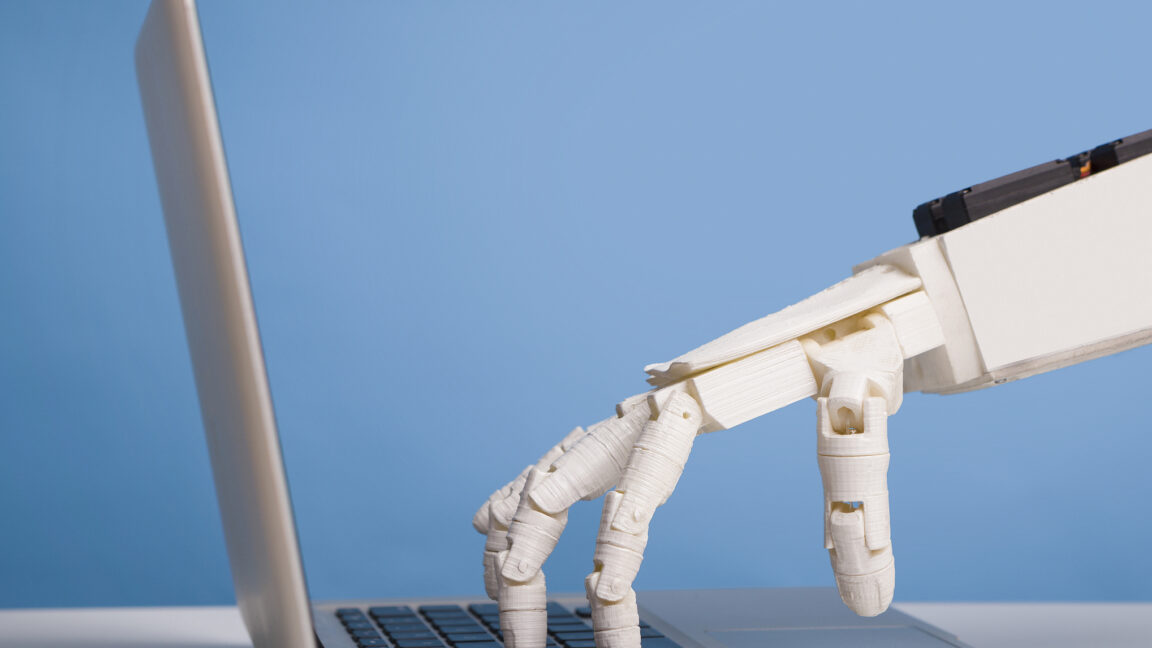
The Future of Touch: How Spiking Neural Networks are Powering Artificial Robotic Skin
Imagine a prosthetic hand that doesn’t just move like a real hand, but feels like one. A robotic surgeon capable of delicately manipulating tissue with the precision of a human touch. These aren’t distant fantasies anymore. A groundbreaking growth in artificial skin technology, leveraging the principles of the human nervous system, is bringing us closer too this reality.
Our sense of touch is a marvel of biological engineering. The nervous system expertly interprets a constant barrage of noisy signals – electrical impulses firing across a network of neurons - to create a cohesive understanding of the world around us. Now, researchers are successfully mimicking this process, building artificial skin that utilizes ”spiking circuitry” to replicate the way our brains process sensory information. This isn’t just about creating robots that can detect pressure; it’s about building systems with a nuanced understanding of where and how they are being touched.
Decoding the Language of the Nervous System
the complexity of human touch begins with specialized sensors in our skin, each designed to detect specific stimuli: heat, cold, pressure, pain, and more. These signals aren’t simply relayed to the brain; a significant amount of processing happens within the spinal column, enabling rapid reflex actions. But the signals that do reach the brain aren’t clean, digital data. They’re messy, analog streams of electrical activity.
This is where the brilliance of the nervous system lies. It doesn’t rely on perfect signals, but on patterns within those signals. Researchers in China recently took inspiration from this, developing an artificial skin for robotic hands that focuses on replicating this sophisticated processing of pressure data.
Their approach doesn’t attempt to perfectly replicate biological neurons – a feat still largely beyond our capabilities.Instead,it focuses on the principles of neural communication,specifically the use of “spikes” – short bursts of electrical current – to transmit information.This is a crucial step because it opens the door to integration with a new generation of energy-efficient computing hardware. As neuromorphic computing advances (chips designed to mimic the structure and function of the brain), these spiking systems can seamlessly integrate with AI-powered control software, like the advanced co-pilots now being developed for prosthetic hands.
How Does It Work? Building a Sensitive Artificial Skin
The team began by creating a flexible polymer skin embedded with pressure sensors. These sensors are connected to the processing unit via conductive polymers, forming a network that mimics the pathways of our own nervous system. The key innovation lies in how the pressure data is converted into a language the system can understand: a series of activity spikes.
But simply transmitting a spike for every bit of pressure wouldn’t be enough. The researchers cleverly utilized four distinct characteristics of these spikes to encode information:
* Shape of the Pulse: Subtle variations in the spike’s form.
* Magnitude: The strength or amplitude of the spike.
* Length of the Spike: The duration of the electrical burst.
* Frequency of the Spikes: The number of spikes occurring within a given timeframe.
While biological systems primarily rely on spike frequency to convey pressure intensity, the team ingeniously used the other three characteristics to create a unique “barcode” for each sensor. This allows the system to not only detect how much pressure is being applied, but also where the pressure is originating from.
This ability to pinpoint the location of input is critical. It allows the artificial skin to detect injuries, identify points of contact, and provide a more nuanced understanding of its habitat. The multi-layered processing approach mirrors the way our own nervous system filters and interprets sensory information, creating a robust and reliable system.
The Implications: Beyond Prosthetics
this breakthrough has implications far beyond improving prosthetic limbs. consider these potential applications:
* Advanced Robotics: Robots capable of delicate manipulation in manufacturing, surgery, and hazardous environments.
* Virtual and Augmented Reality: Haptic feedback suits that allow users to truly feel virtual environments.
* Medical Diagnostics: Artificial skin sensors that can detect subtle changes in tissue pressure, potentially aiding in early disease detection.
* Teleoperation: Remote control of robots with a heightened sense of touch,allowing for more precise and intuitive operation.
Are we on the cusp of a new era of robotic sensitivity? The development of this spiking neural network-powered artificial skin suggests we are. As research continues and neuromorphic computing matures, we can expect even more sophisticated and lifelike artificial sensory systems to emerge, blurring the lines between biology and technology.
**What applications





![Healthcare Worker Burnout: Support Systems & Preventing Collapse [Podcast]](https://i0.wp.com/kevinmd.com/wp-content/uploads/Design-4-scaled.jpg?resize=150%2C100&ssl=1 "Healthcare Worker Burnout: Support Systems & Preventing Collapse [Podcast]")