
Europe and Asia Forge Ahead in the New space Race: A Look at Launcher Advancement and International Collaboration
The global space landscape is undergoing a dynamic shift, marked by increased competition, burgeoning national programs, and a growing reliance on private sector innovation. Recent developments in both Europe and Asia demonstrate this trend, with significant investments in new launch capabilities and a continued emphasis on international partnerships. This article will delve into these key developments, providing a extensive overview of the current state of play and what it means for the future of space access.
Europe’s Bold Bet on a New Generation of Launch Providers
For years, Arianespace has been the cornerstone of European access to space. However,recognizing the need for greater resilience,competition,and innovation,the European Space Agency (ESA) has launched the ambitious European Launcher Challenge. this initiative aims to foster a new ecosystem of European rocket companies,ultimately providing more options for satellite deployment and reducing reliance on a single provider.
At the recent ESA Ministerial council meeting,member states demonstrated their commitment to this vision,pledging a significant €902 million ($1.05 billion) to the program. This funding will be used to purchase launch services from winning companies and co-fund crucial capacity upgrades.
The program has already identified a promising cohort of contenders: Isar Aerospace and Rocket factory Augsburg (Germany), PLD Space (Spain), MaiaSpace (France), and Orbex (UK). ESA is now working closely with the governments of these companies’ home nations to secure additional funding and support. Germany, with two companies in the running, is leading the charge, contributing over 40% of the total budget.France, Spain, and the UK are also making significant investments, reflecting a pan-European commitment to this strategic initiative.
This isn’t simply about creating alternatives; it’s about fostering a more agile and competitive European space industry. The Launcher Challenge acknowledges the changing dynamics of the space market and the need to adapt to the demands of a rapidly evolving landscape. It’s a proactive step towards ensuring Europe maintains its position as a key player in the global space economy.
Arianespace Diversifies,Serving South Korea and Beyond
while ESA invests in the future,Arianespace continues to play a vital role in current launch operations. Recently, the company successfully launched Korea Multi-Purpose Satellite-7 (Kompsat-7) aboard a vega C rocket from Europe’s Spaceport in French Guiana. This mission, delivering a high-resolution Earth observation satellite, highlights Arianespace’s continued ability to provide reliable launch services to international customers.
Interestingly, the Kompsat-7 launch represents something of a shift for Arianespace. It’s the first time in over two years the company has launched a satellite for a non-European client. Historically, Arianespace’s backlog has been dominated by payloads for ESA, the European Commission, and European national governments. However, the company is diversifying, with 18 launches already booked for Amazon’s Project Kuiper broadband network using the larger Ariane 6 rocket. This demonstrates Arianespace’s adaptability and its commitment to serving a broader range of customers.
South Korea Accelerates its Independent Space Capabilities
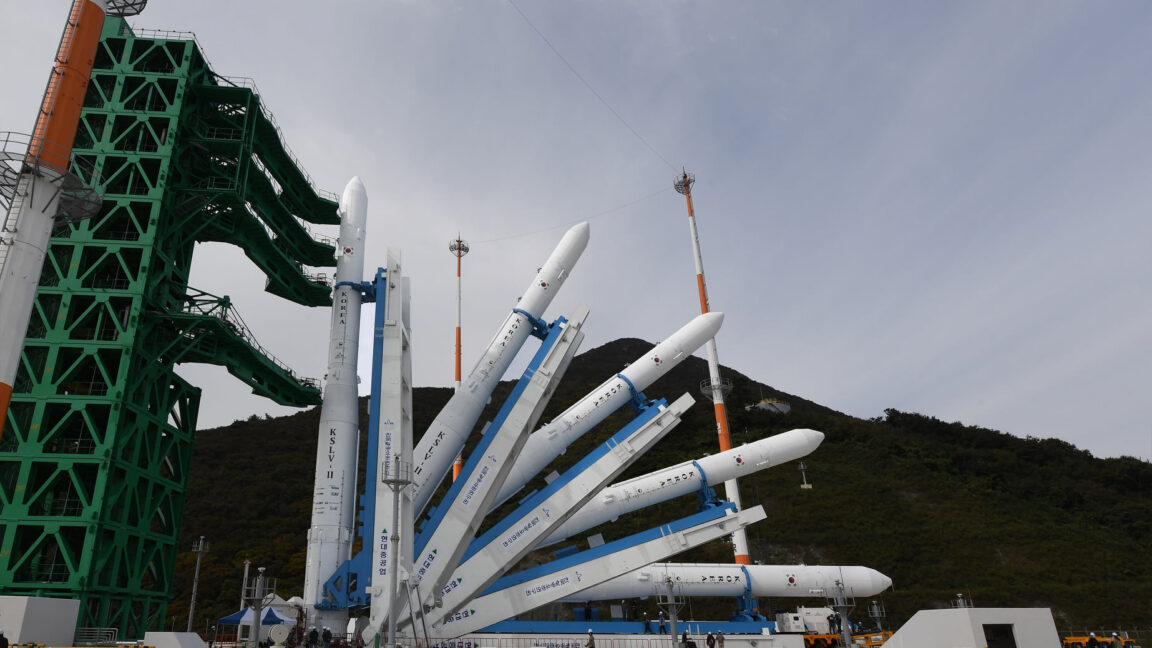
Across the globe, South Korea is making significant strides in developing its own independent space launch capabilities. The nation’s homegrown rocket, nuri, successfully launched on November 27th, carrying the CAS500-3 technology demonstration satellite, an Earth observation satellite, and a dozen CubeSat rideshare payloads.
This launch marks a crucial milestone in South Korea’s space program. While the initial test flight in 2021 experienced a setback, subsequent launches have proven accomplished. this latest mission is particularly noteworthy as it represents the first time Hanwha Aerospace has overseen the entire assembly process – a key step in the government’s long-term plan to transfer space technologies to the private sector.
With two further launches planned for 2026 and 2027, South Korea is demonstrating a clear commitment to building a robust and self-sufficient space program.This ambition is fueled by a desire to enhance national security, advance scientific research, and foster economic growth through space-based technologies.
The Bigger picture: collaboration and Competition in the New Space Era
These developments – ESA’s Launcher Challenge, Arianespace’s diversified portfolio, and south Korea’s growing independence – all point to a common theme: the increasing dynamism of the global space industry. We are witnessing a shift from a landscape dominated by a





