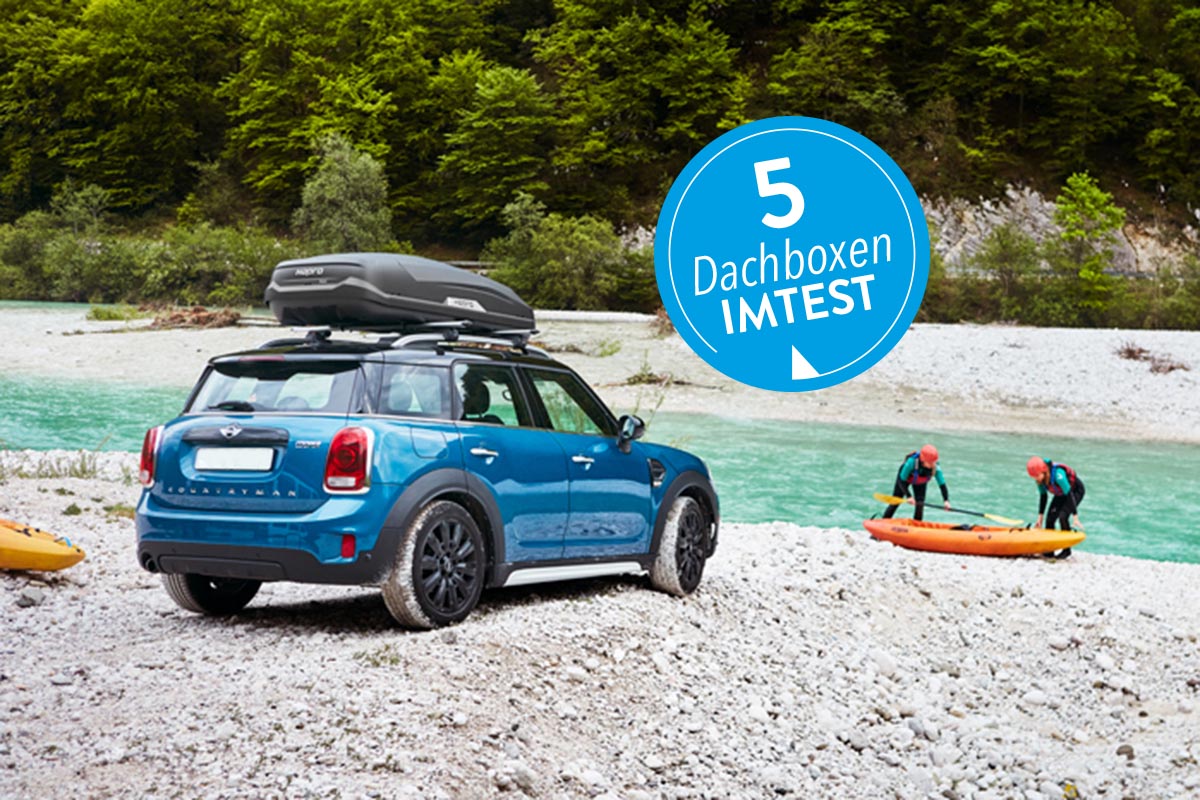
The winter holiday season is just around the corner. Now it’s time to book, pack your bags and load the car. But wait: an overcrowded car with whining passengers who can barely move because of the narrow space can be really annoying. Especially if the actual goal is a relaxing holiday in a holiday apartment or house, hotel or on the campsite is in prospect.
Vacationing by car: This is what you need to consider
To ensure that all occupants have enough space inside the vehicle, bags, suitcases and even bulky luggage can be easily transported onto the car roof in just a few steps – safely stowed in a roof box. IMTEST reveals which requirements must be met for this to be good Roof boxes and how the mobile luggage compartments prove themselves in practice.
The carrier system for roof boxes
For the test, five roof boxes were each attached to a station wagon (Audi A4), filled and taken on the road:
They have a capacity of 400 liters (Thule) to 560 liters (Hapro). The Hapro roof box offers the most space for suitcases for a family of four. To ensure that the cargo arrives at your vacation destination undamaged, the roof box must first be securely attached to the car. This requires a support system that is available in different designs and made of steel or aluminum.
How it is finally attached depends on what mounting options (such as roof rails, rain gutters or T-slots) the car offers. Regardless of the attachment, the following applies: The carrier system must under no circumstances be wider than the car. If you have not yet had any experience with a roof box, you should definitely seek advice before making a purchase. The specialist retailer knows best what needs to be attached to the car roof.
Test results at a glance
Test winner: Kamei Fosco 540
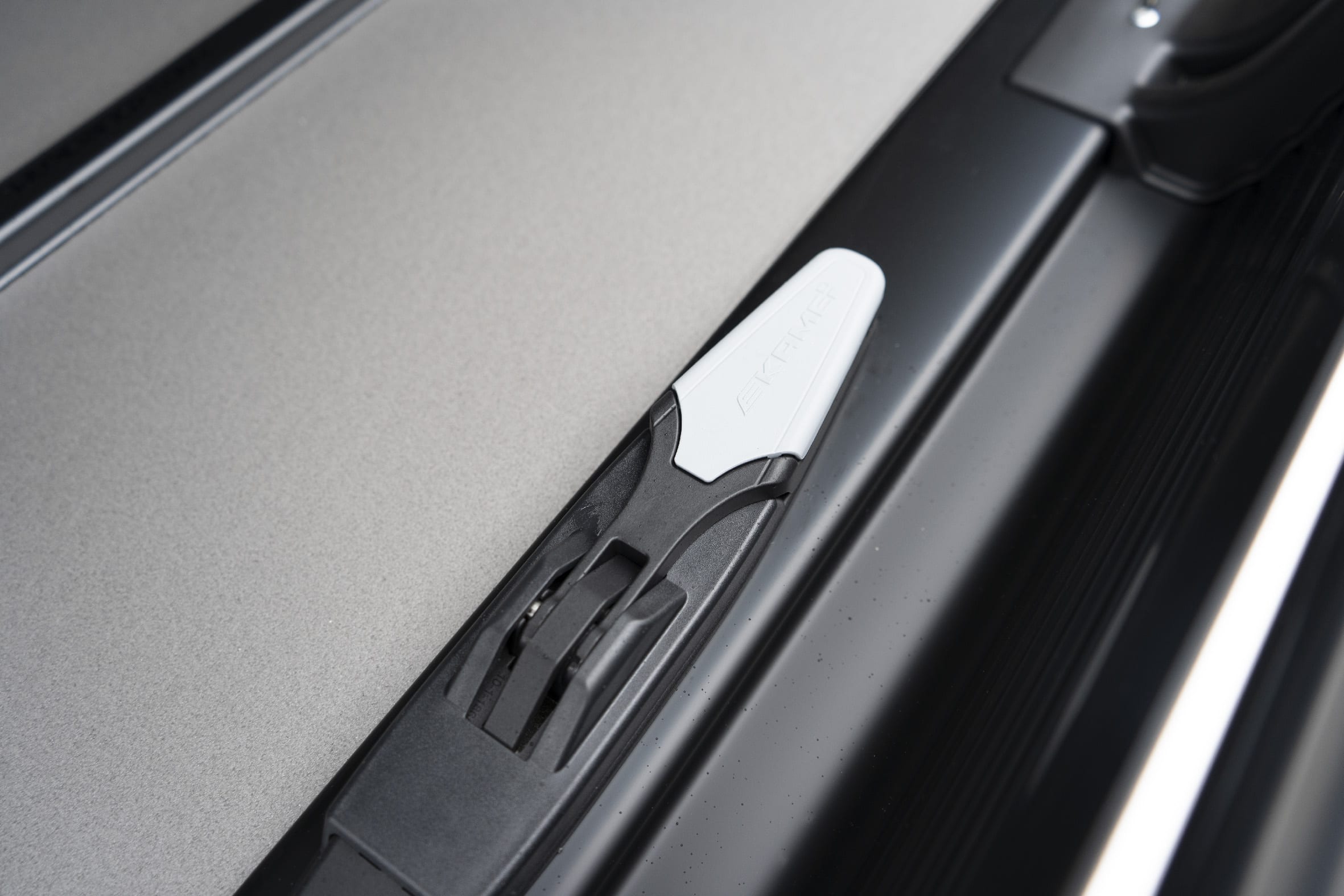
Solid, simple and good: The roof box enables one-handed quick attachment (“ClickFix”) for roof racks with a standard groove.
Summary of test results
- Equipment (25%): good (1.6)
- Handling (25%): good (2.0)
- Transport & Safety (35%): good (2.5)
- Service & guarantee (15%): good (2.0)
Kamei Fosco 540

- PRO
- Efficient quick-release system with one-handed operation.
- AGAINST
- Quite long (2.16 meters), the trunk lid hits it easily.
Price-performance winner: Norauto (ATU) Bermuda 400
The easy-to-use Norauto Bermude 400 is available exclusively through ATU (www.atu.de).
Summary of test results
- Equipment (25%): good (2.3)
- Handling (25%): good (2.0)
- Transport & Safety (35%): satisfactory (2.8)
- Service & guarantee (15%): good (2.0)
Norauto (ATU) Bermuda 400

- PRO
- Fits perfectly on many cars, trunk lid does not hit the box.
- AGAINST
- Luggage secured with a strap, but only small eyelets (front/rear)
Other tested models:
Thule Motion XT M
Comparatively short (1.75 meters), quite handy and robust: the Thule roof box also fits perfectly on smaller cars.
Summary of test results
- Equipment (25%): good (1.8)
- Handling (25%): good (2.0)
- Transport & Safety (35%): satisfactory (2.6)
- Service & guarantee (15%): good (2.0)
Thule Motion XT M

- PRO
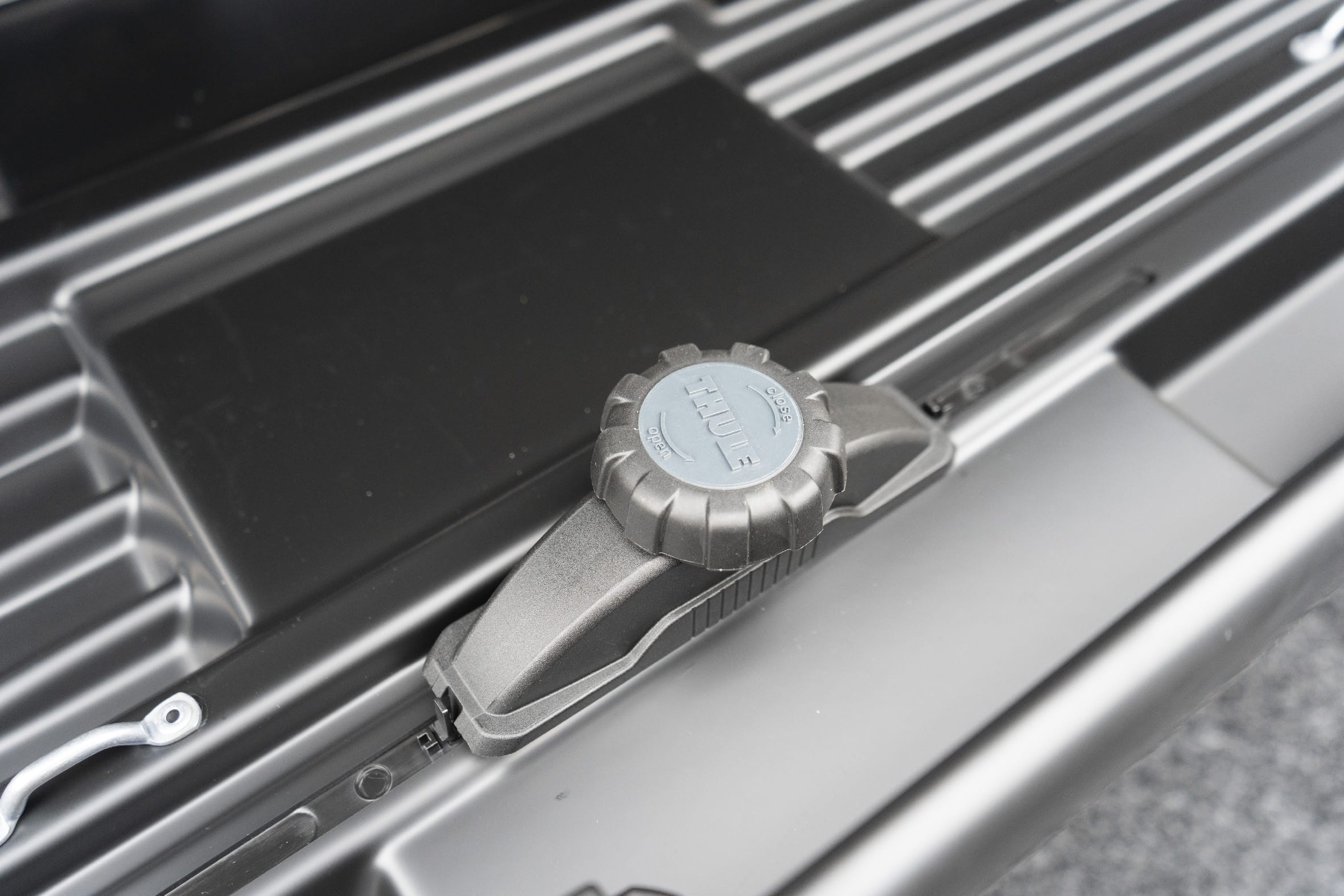
- Very handy and large screw wheels for attaching the claws
- AGAINST
- A bit fiddly closure system – despite the additional handle.
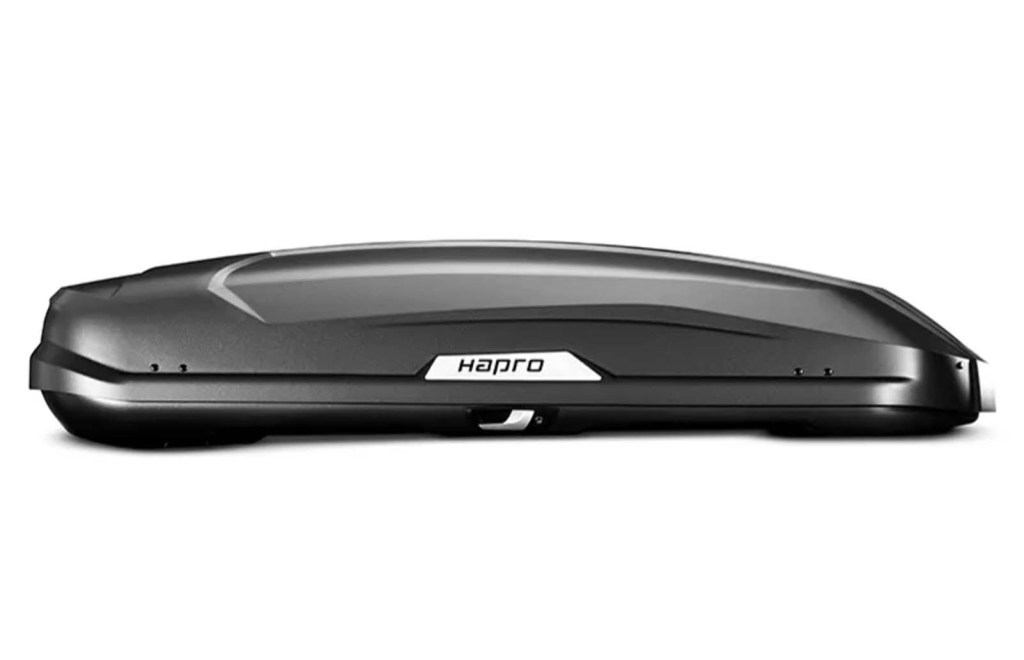
Hapro Trivor 560
Reliable protection against moisture while driving – thanks to the very good deck overlap and high brim.
Summary of test results
- Equipment (25%): good (2.0)
- Handling (25%): good (2.3)
- Transport & Safety (35%): satisfactory (2.7)
- Service & guarantee (15%): good (1.7)
- PRO
- All you need to do to open the Hapro box is just a flick of the wrist.
- AGAINST
- The empty weight of the roof box is comparatively heavy at 23.5 kilograms.
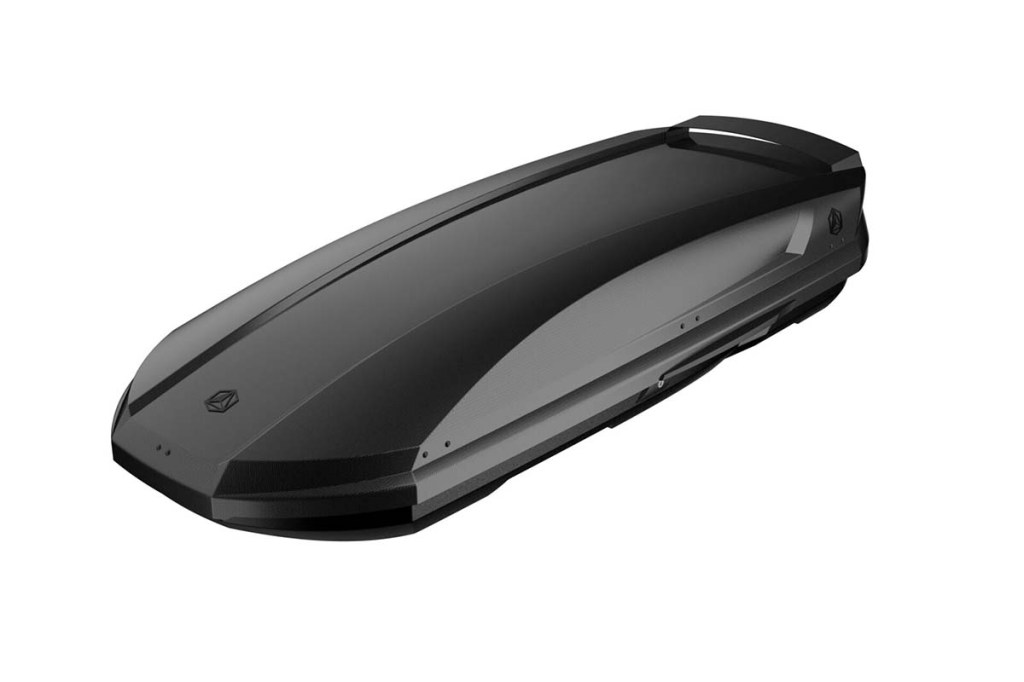
Northline Tirol Anthracite
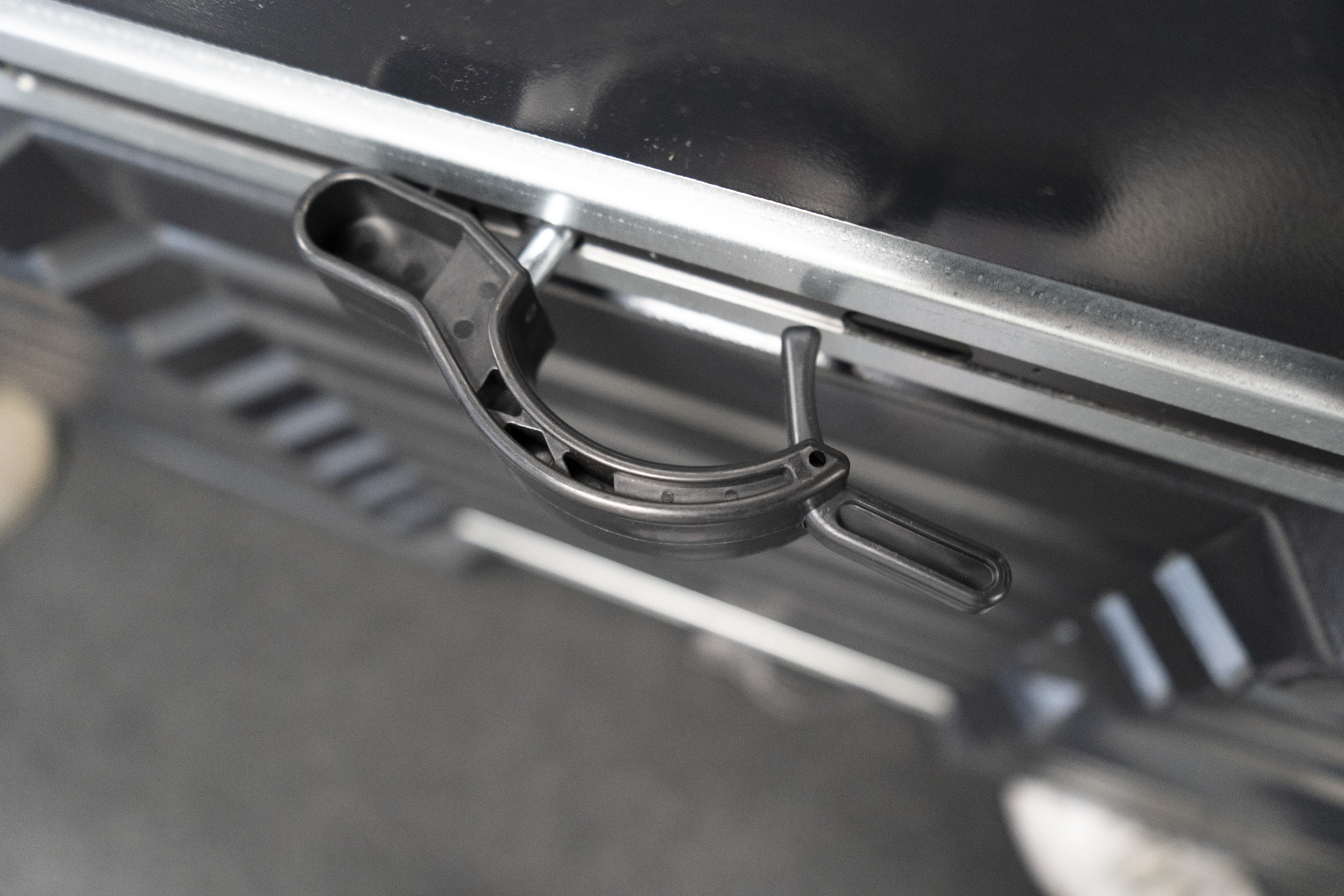
Hard to find: The tension strap eyelets to secure luggage from slipping are located directly in the screw tensioner system.
Summary of test results
- Equipment (25%): satisfactory (2.8)
- Handling (25%): satisfactory (2.9)
- Transport & Safety (35%): satisfactory (3.3)
- Service & Warranty (15%): (good) 2.2
- PRO
- Very long warranty period (6 years)
- AGAINST
- The brackets for fastening are a bit complicated to attach.
Imtest result:
satisfactory 2.9
Conclusion
The Kamei Fosco 540 deserves to win the roof boxes in the test. Its quick-release system for attaching it to a roof rack is very simple, the assembly is easy overall and large eyelets in the interior of the roof box ensure that the luggage is securely secured. The Norauto Bermude 400, which is 400 euros cheaper and can be purchased from ATU, also scores points with its easy handling and solid claw system.
Carrier system with roof rails for the test
IMTEST also relied on competent help for the test: the professionals at A.T.U Handels GmbH & Co. KG., which operates over 530 branches throughout Germany with attached master vehicle workshops, recommended a suitable carrier system for the test car with roof rails used by IMTEST.
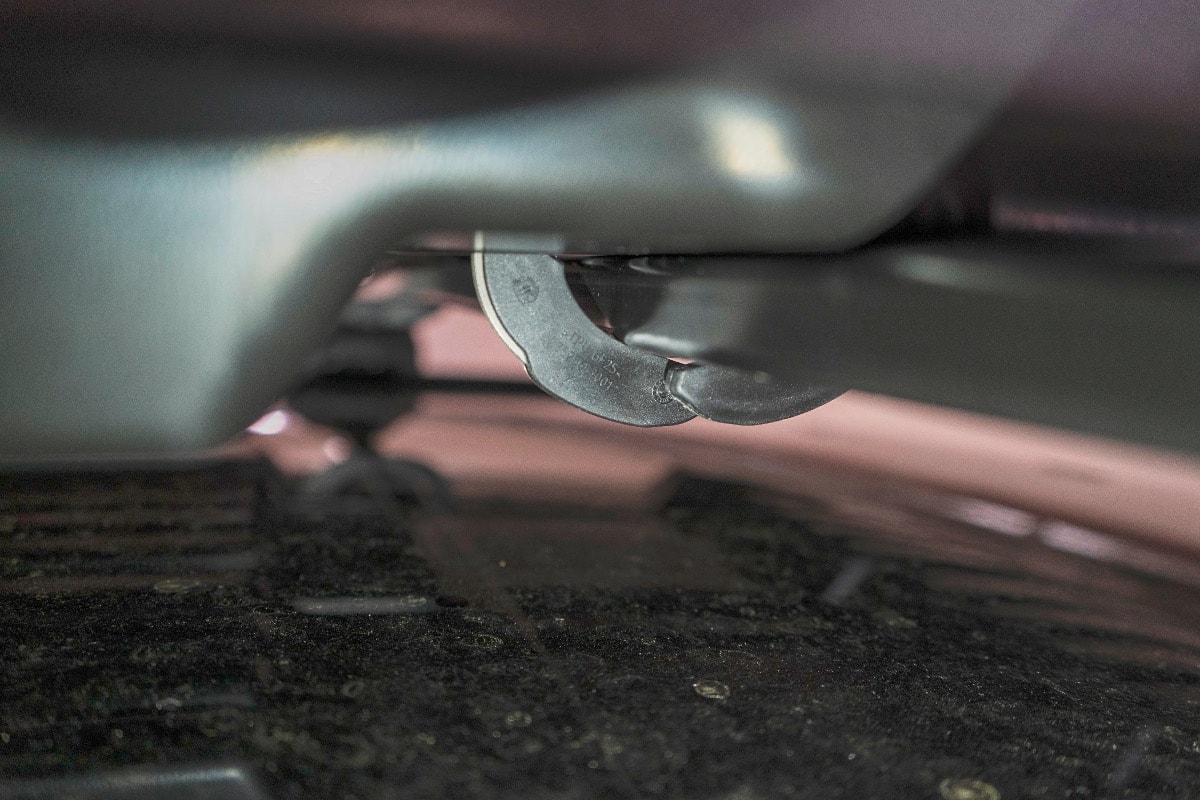
With the exception of the Fosco 540 box from Kamei, the roof boxes from the test could be attached to it with so-called claws. The holders can be pushed through slots in the bottom of the roof box.
The two gripping arms of the claw system can then be closed tightly around the roof rack like pliers by turning a screw wheel.
Fastening the roof boxes
In the test, the roof boxes from Thule and Hapro offered the best handling thanks to huge and easy-to-use screws. As with the Norauto roof box, a special pulling system ensures that the fastening wheel is tightened with the correct torque. The screw wheel can then be “locked” using a pressure switch so that it does not come loose unintentionally. Kamei relies on a quick-release system (“ClickFix”) for the Fosco. By folding down the fastening levers in the interior of the roof box, a clamping system is securely fixed in the groove of the roof rack. In contrast to other fastening systems, re-tensioning is no longer necessary.
The Northline roof box can also be mounted on a carrier with an embedded groove. However, using sliding adapters, which are also screwed into place like claws from the interior of the box. Alternatively, a bracket system that encompasses the roof rack can be used for the Tirol Anthracite. However, a fair amount of dexterity is required to mount the brackets on the box. Another point of criticism: The screw wheels inside the box are too small on Northline and are not nearly as easy to handle as on Thule, Hapro or Norauto.
One thing is certain: be sure to pay attention
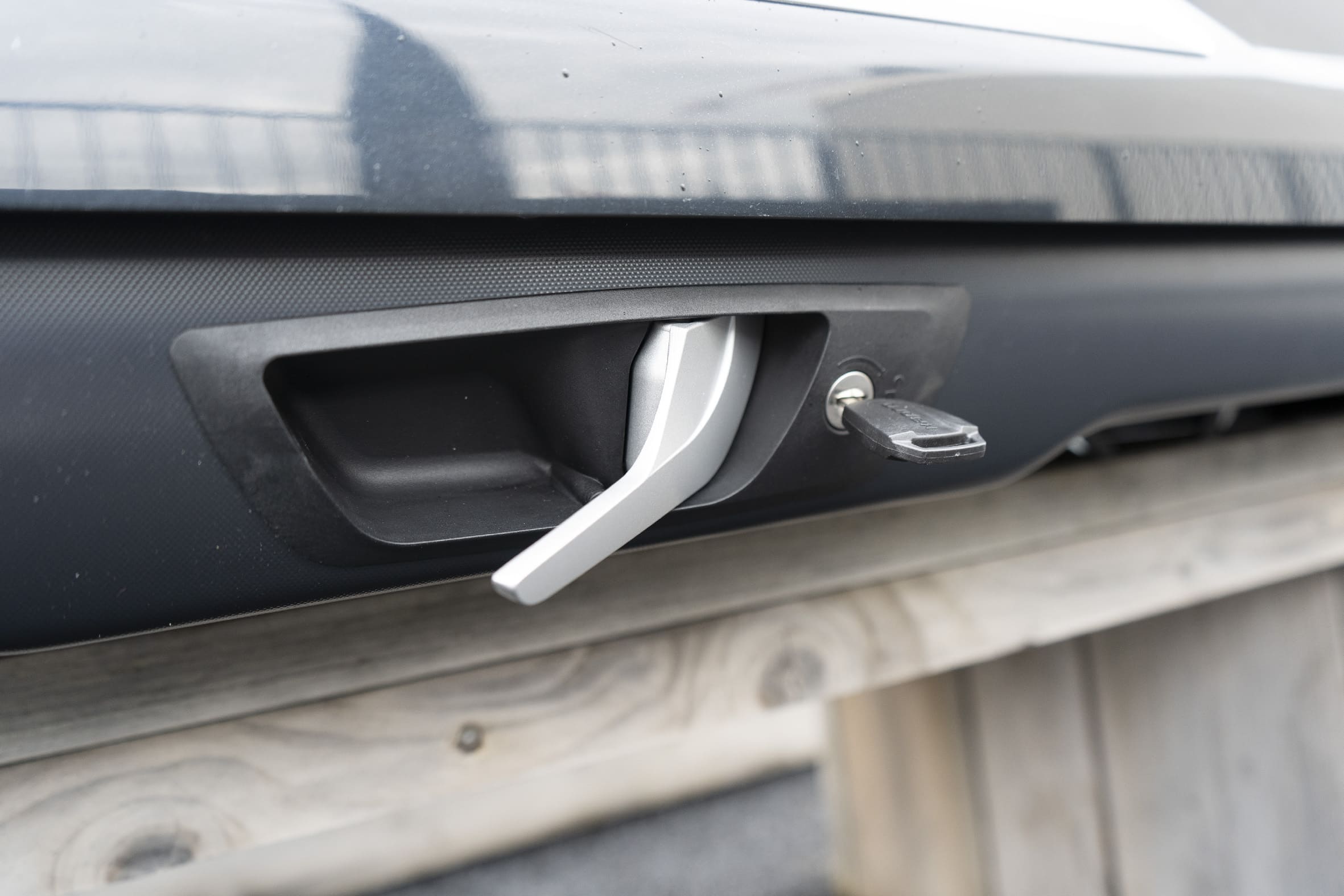
The use of a roof box is subject to regulations in this country: According to Section 22 of the Road Traffic Act, the vehicle and load together may not be wider than 2.55 meters (m) and not higher than 4 m. You can find out which regulations apply in other European countries via the ADAC. So not every roof box of any size fits on every car. By law, a roof box may not protrude more than 2.5 m to the front and no more than 1.5 m to the rear. In this case, a red warning flag must be attached to the box if it is one meter extra long.
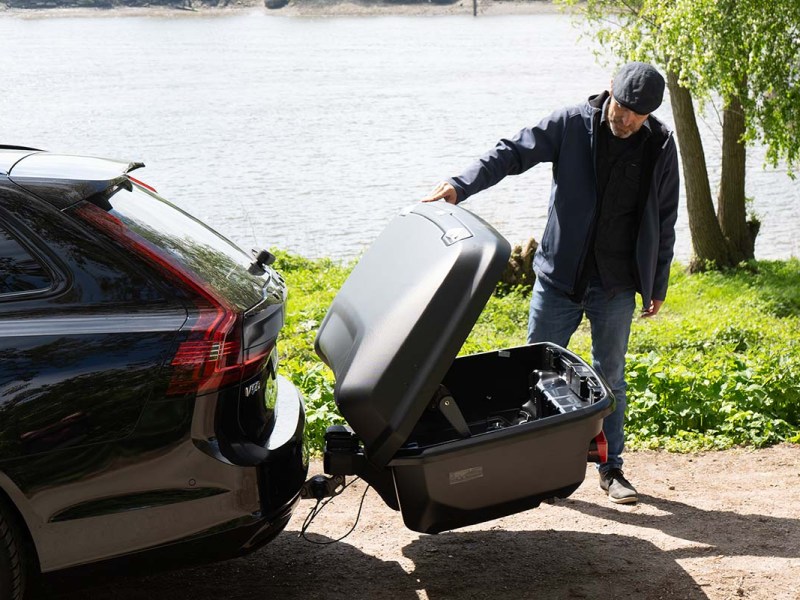
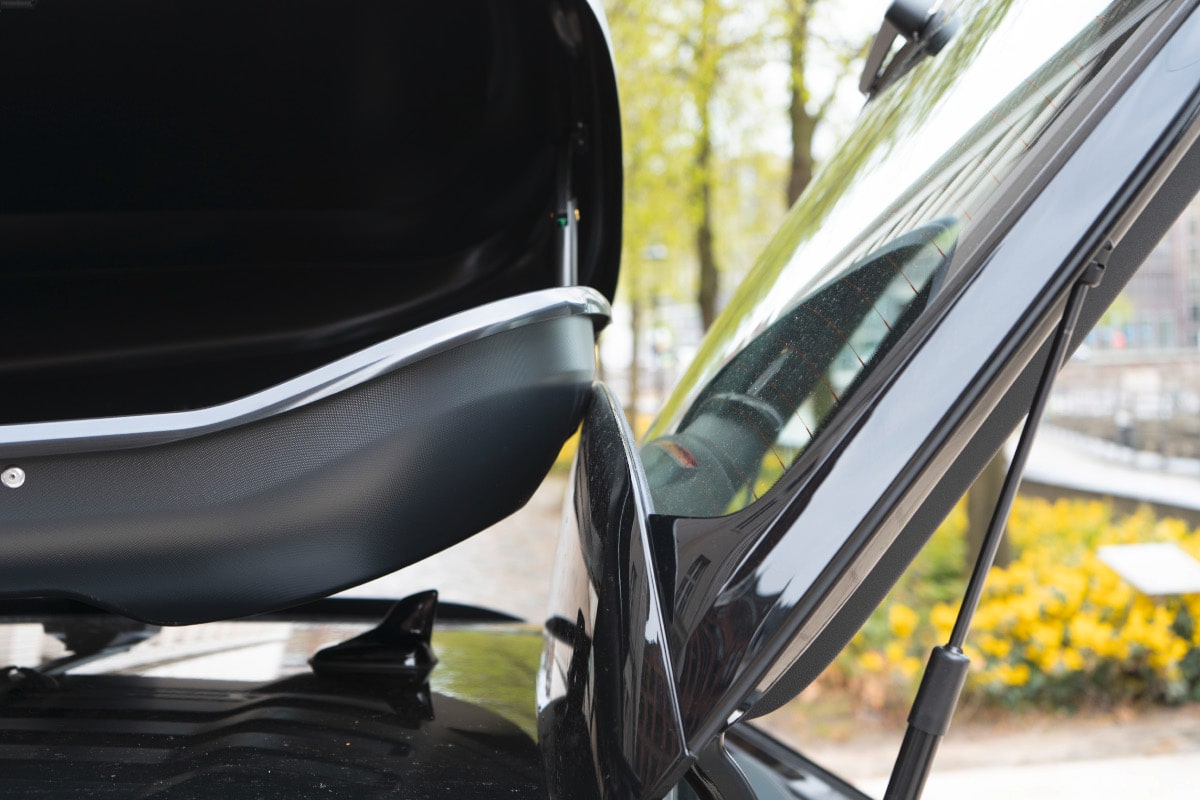
If the maximum size is used, storage space is guaranteed, but such an oversized roof box poses an unpredictable danger in the event of an accident. Especially if it protrudes forward over the windshield, they may no longer be able to hold the fuses in the event of sharp braking, for example. But sticking out to the rear is also dangerous and also impractical as the trunk may no longer be able to be opened all the way. In general, safety experts advise against having a roof box protrude above the car roof.
The right box for every car
There are many different types of roof boxes. What matters is that it fits the car. These are the differences.
Small car
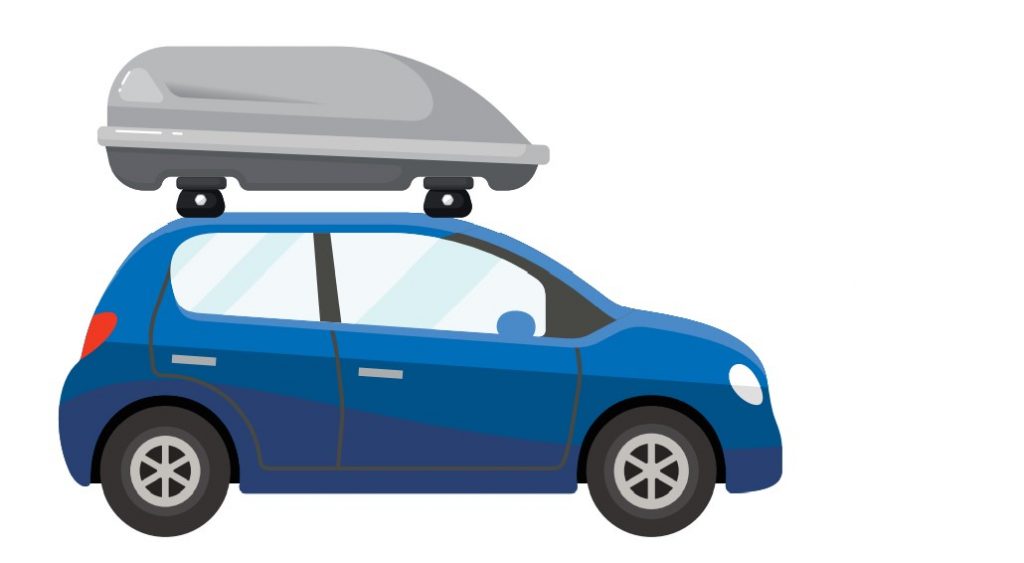
For sizes up to 400 liters. Loaded roof boxes ensure increased air resistance and fuel consumption as well as slower driving behavior when cornering and braking. The impact is greatest on a small car. However, these often lack fastening options such as grooves or grooves.
Station wagons/sedans
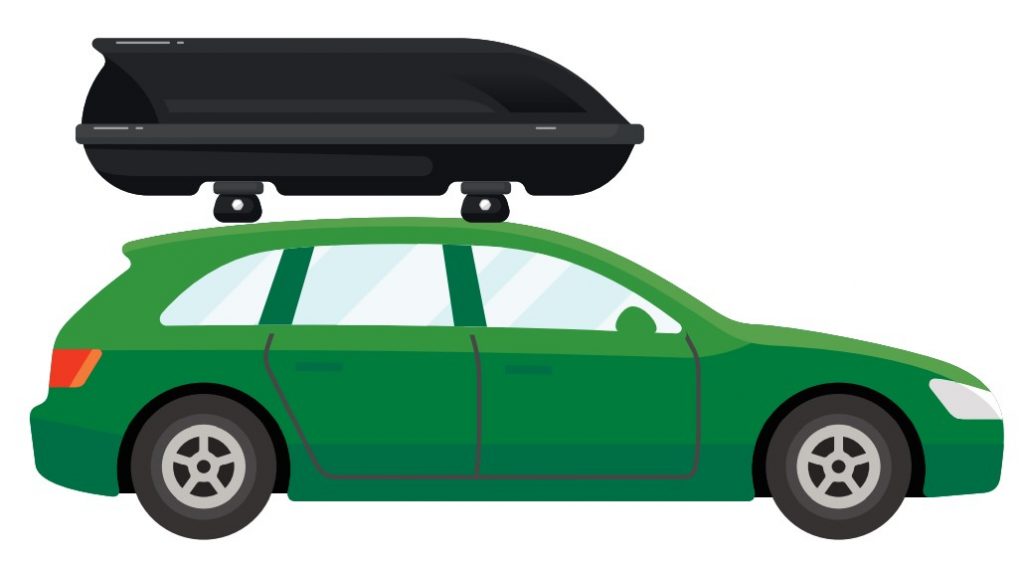
For sizes up to 550 liters. Station wagons and sedans with roof boxes are more stable than small cars and can therefore handle larger and longer boxes. A fastening aid in the form of roof rails, for example, is common for these types of vehicles.
SUV
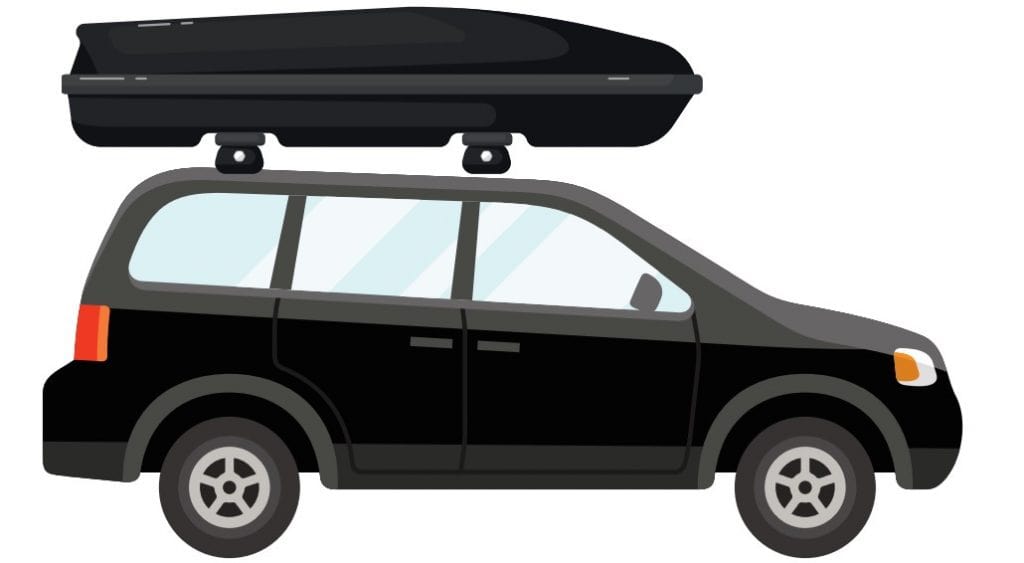
For sizes up to 700 liters. Like station wagons, SUVs are often equipped with mounting options. The maximum load capacity is high, so that even the largest boxes can be accommodated on these vehicles. However, drivers must pay particular attention to the overall height of the vehicle.
Do not exceed permitted weight
Depending on the size and load of the box, the center of gravity of the car also changes. Overcharging should therefore be avoided in any case. The total weight of the car (this information can be found in the vehicle registration document) and the permissible roof load must of course not be exceeded. In order to determine how much luggage can be loaded, including the weight of the roof box and the passengers, the unladen weight of the vehicle is deducted from the permissible total weight. The roof boxes in the test weigh between 17.5 kilograms (Thule and Norauto) and 23.5 kg (Hapro). All boxes in the test offer a permissible load of up to 75 kg.
Pack roof boxes correctly
If the roof box is filled with luggage, for example, you should always ensure that it is loaded evenly. The rule for this is: Half of the weight goes into the middle part of the box (i.e. between the roof racks), a quarter each goes into the front and back part of the box.
Roof box knowledge
Handling: You can’t do it alone
Not every box was easy to close. To ensure that all parts of the roof boxes were securely locked in place in the test, sometimes only an additional helping hand helped – just like during assembly. This was easy for everyone with the exception of Hapro and Northline. All boxes require at least two assembly helpers. They are also needed for transporting the box, for example if it is to be put in the garage. Only the Thule Motion XT M could be worn without outside help and could also be closed easily.
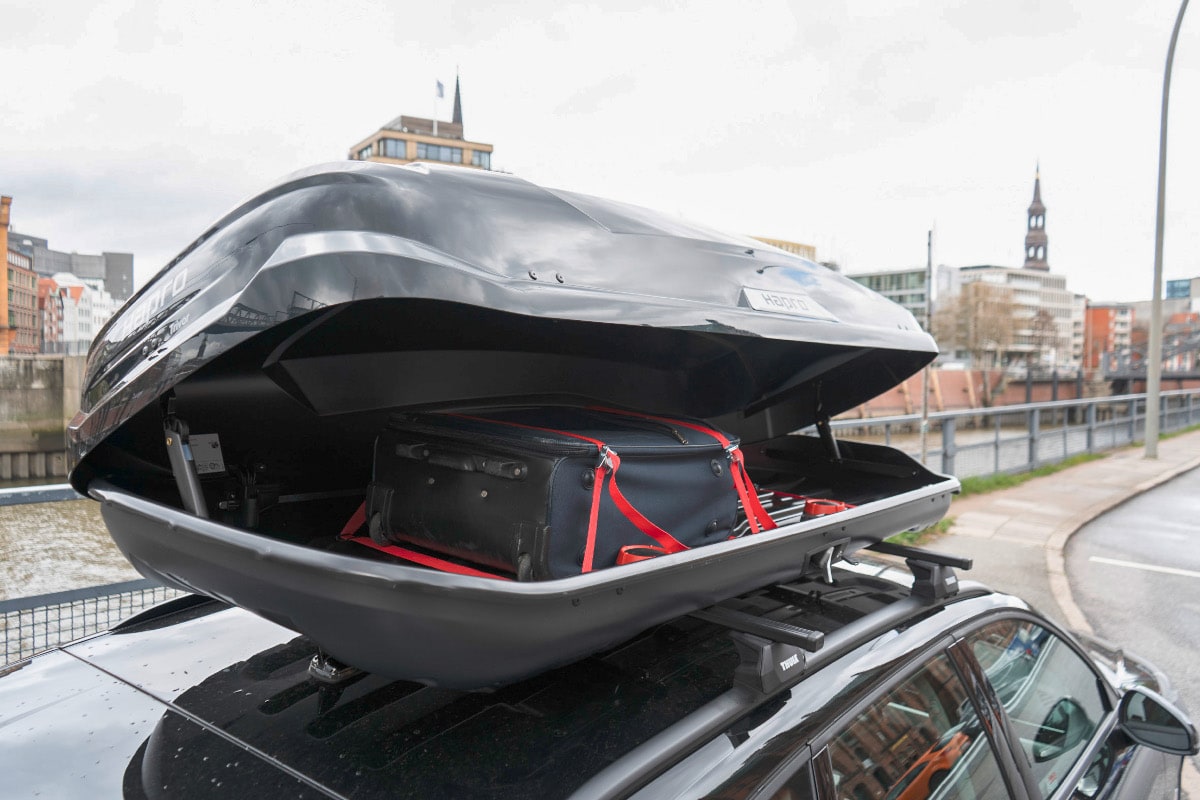
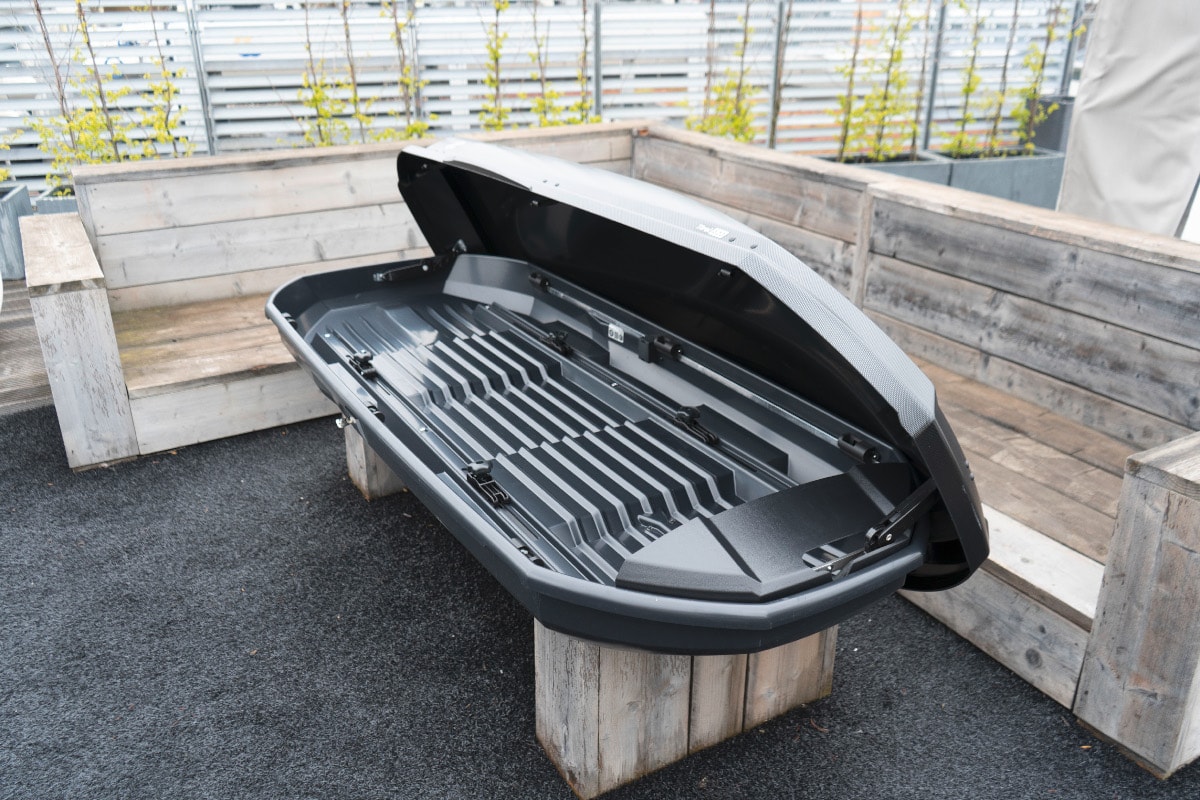
As with the Hapro, the Thule also has a practical lid lifter that makes a clear clicking noise when closed. Even though the keys on the boxes could only be removed when they were fully locked, the locks on the roof boxes from Norauto and Northline proved to be a bit fickle, making closing them complicated. The boxes from the test can be locked so that nothing is stolen on the way, for example during breaks at the rest stop. Thieves would first have to crack the lock in order to get their loot.
Caring for the roof boxes
Roof boxes are quite durable. A useful life of ten years or more is not uncommon in practice. Especially since they are usually not used more than once or twice a year. This is also shown by the extremely long guarantee period of the roof boxes from the test, which is between five or six years, for example from Kamei and Northline. The better the box is cared for, the longer it will last. After a vacation, it should therefore be cleaned first before being stowed away.
Not only road dirt, but also insect remains can leave unsightly stains in the long term. However, ordinary household cleaners are often too aggressive for this and can damage the plastic. As a result, stress cracks can occur in the plastic. Whatever can happen due to surface scratches – the roof boxes from Kamei, Hapro and Northline that are covered with a high-gloss layer are particularly susceptible to this.

Roof boxes ensure more fuel consumption
All roof boxes in the test have an aerodynamic design, which is intended to ensure that the additional fuel or electricity consumption due to air resistance is as low as possible. As a rule, however, a few more liters of fuel or kWh of electricity consumption per 100 kilometers cannot be avoided. The shape of the box is also important to reduce driving noise – as is the type of attachment.
The Fosco 540 from Kamei produced the least noise. With the speakers from Hapro and Northline, wind noise could be heard inside the vehicle during test drives on a very windy day. If the roof box is empty after your vacation, it and the carrier system should be removed from the car roof until the next trip.