
US Escalates Response to Latin American Cartel Violence: A Deep Dive into Ecuador, Venezuela, and the “Terrorist” designation
For decades, the flow of narcotics from South America to the United States has been a persistent challenge. Now, the US is taking increasingly assertive action, notably in Ecuador, raising complex legal and geopolitical questions.This article breaks down the recent developments, the implications of designating cartels as terrorist organizations, and what you need to know about this evolving situation.
A Shift in Strategy: Direct Action and Ecuadorian Support
Recent weeks have seen a notable escalation. A US military strike in the southern caribbean targeted members of the Venezuelan gang, Tren de Aragua, allegedly transporting narcotics. This action, confirmed by President trump, highlights a willingness to directly confront criminal organizations operating outside US borders.
Though, the operation is already facing scrutiny. Legal experts suggest the strike may have violated international human rights and maritime law. Venezuela, unsurprisingly, has yet to respond to accusations from the US defense department that its military aircraft ”provocatively” interfered with the operation.
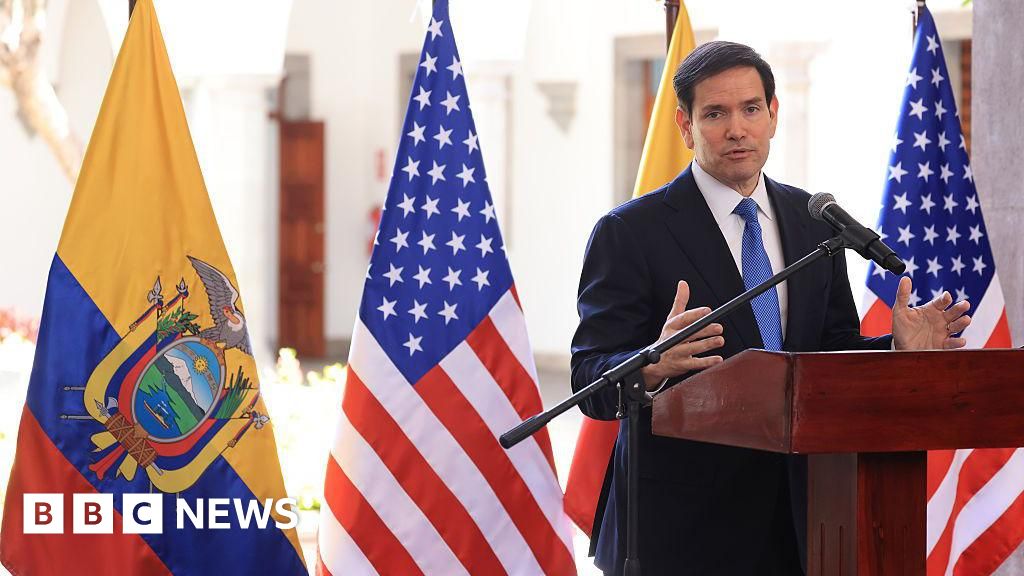
Crucially, this escalation is happening with the explicit support of Ecuador’s president Daniel Noboa. He’s declared a ”war” on criminal gangs and actively sought US intervention, even requesting the consideration of designating powerful gangs like Los Lobos and Los Choneros as terrorist groups. He’s even expressed a desire for direct military assistance from the US and European armies.
The “Terrorist” Designation: What Does It Mean?
The US has now officially designated several ecuadorian gangs as terrorist organizations. This is a notable move with far-reaching consequences.Here’s what it allows:
Asset Targeting: The US can now target the financial assets and properties of individuals linked to these groups.
Intelligence sharing: Restrictions on intelligence sharing with Ecuador have been lifted, enabling more robust collaboration. Potential Lethal Action: The designation opens the door for potentially lethal US action against cartel members, even outside US territory.
Noboa is also attempting to amend Ecuador’s constitution to allow foreign military bases to be re-established – a practice halted in 2009. This signals a strong desire for a long-term security partnership with the US.
Ecuador’s Crisis: A Hub for Cocaine Trafficking
The situation in Ecuador is dire. Violence has surged in recent years as criminal gangs battle for control of lucrative cocaine trafficking routes.
Consider these key facts:
Transit Hub: Approximately 70% of the world’s cocaine now transits through Ecuador.
Origin Points: The cocaine originates primarily from neighboring countries like Colombia and Peru.
Destination Markets: The final destinations are the US, Europe, and Asia.
This influx of drug money and power has fueled a dramatic increase in gang activity, destabilizing the country and driving a surge in migration towards the US.
Aid and Assistance: A $19.5 Million package
To bolster Ecuador’s fight, the US has pledged $19.5 million in aid.This includes:
$13.5 million in security assistance.
$6 million dedicated to drone technology.
This aid is intended to help Ecuador crack down on drug trafficking and regain control of its territory.
The Complicated Impact on Asylum Seekers
The “terrorist” designation introduces a complex layer to asylum claims from ecuador. While it could strengthen the case for those fleeing cartel violence as victims of “terrorism,” it also presents potential pitfalls.
Here’s the dilemma:
Potential Benefit: Recognition as victims of terrorism could bolster asylum claims.
Potential Hindrance: Individuals who have paid extortion money to gangs could be accused of “materially supporting” terrorism, potentially jeopardizing their claims.
Immigration law experts are still analyzing the implications,and the situation remains fluid.
A History of Unanswered Appeals
Interestingly, Ecuador has been appealing for international assistance for years, with little response untill recently. For 30 years, pleas for help have gone largely unanswered, highlighting the shift in US policy and the urgency of the current crisis.
looking Ahead: A Long-Term commitment?
The US response to cartel violence in Latin America is evolving.


