
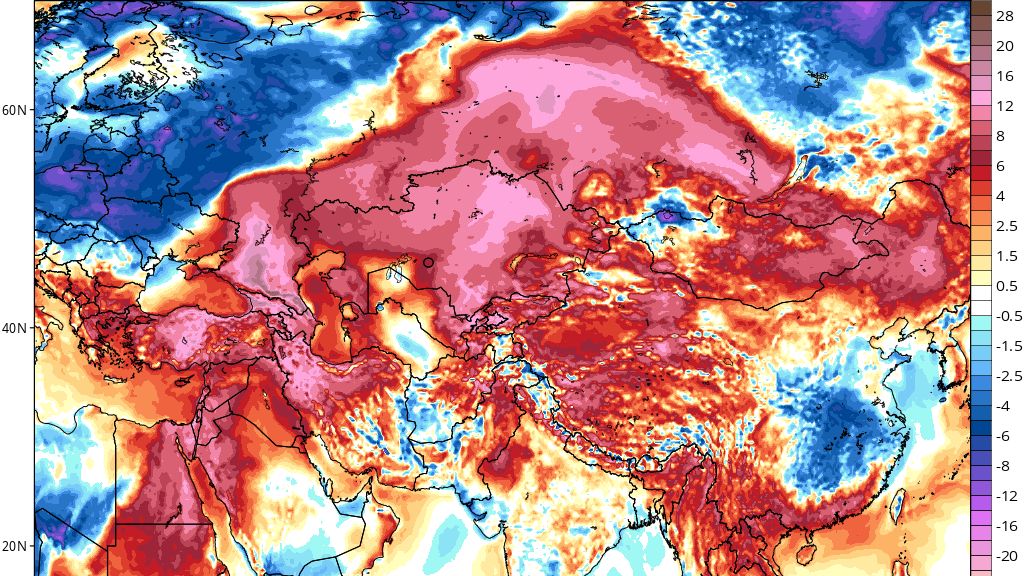
Dramatic Temperature Swings in Russia Highlight Continental Climate Extremes
Russia is experiencing a stark illustration of its vast and varied climate, with a remarkable temperature difference of over 81 degrees Celsius (approximately 178 degrees Fahrenheit) recorded within a single day this week. While significant temperature variations are common across the country’s immense territory, this particular swing is noteworthy, underscoring the extreme conditions found in parts of Siberia and the Caucasus region. The readings, taken on February 17, 2026, demonstrate the powerful interplay of weather systems impacting the region.
The extreme contrast was observed between Delyankir, a remote settlement in the Sakha Republic (Yakutia), and Nazran, a city in Ingushetia, located in the North Caucasus. Delyankir registered a frigid -54.2°C (-65.6°F), while Nazran enjoyed a relatively mild 26.9°C (80.4°F). This dramatic difference highlights the challenges of living in a country spanning eleven time zones and encompassing a wide range of geographical features and climatic influences. Understanding these regional variations is crucial for residents, infrastructure planning, and climate monitoring.
Such large temperature discrepancies are most typical during the winter months in Russia. Siberia is renowned for its exceptionally cold winters, with temperatures frequently plummeting to -60°C (-76°F) or lower. Conversely, the area between the Black and Caspian Seas generally experiences milder winter temperatures, often remaining above freezing. The recent event, however, was amplified by specific atmospheric conditions that created an unusually large temperature gradient across the country.
The Atmospheric Conditions Behind the Extreme Swing
Meteorological factors played a key role in creating the conditions for this exceptional temperature difference. A pocket of extremely cold Arctic air settled over eastern Siberia, while a surge of warm air from the south moved into the Caucasus region. This combination resulted in the simultaneous occurrence of exceptionally low temperatures in Delyankir and unusually high temperatures in Nazran. The warm air mass brought temperatures well above 20°C (68°F) to the area between the Black and Caspian Seas.
The unusually warm air has persisted across the Caucasus region, extending into former Soviet republics and central Siberia in recent days. Several locations have experienced temperatures 20°C (36°F) above normal, leading to the breaking of temperature records. In Nazran, the typical February maximum temperature hovers around 4°C (39.2°F), making the recorded 26.9°C (80.4°F) a significant anomaly. Temperatures exceeding 25°C (77°F) were also reported at other stations in the Russian Caucasus, with readings above 24°C (75.2°F) even at altitudes exceeding 1,000 meters (3,281 feet).
The warmth wasn’t limited to Russia. Armenia recorded a temperature of 23°C (73.4°F), breaking the February record for the country. Similarly, Turkmenistan experienced a record-breaking high of 30.7°C (87.3°F). These readings demonstrate a broader pattern of unusually warm weather across the region.
Delyankir: A Village on the Edge of the Arctic
Delyankir, located 44 kilometers (27 miles) from Artyk on the Kolyma Highway, is situated on the border with Magadan Oblast in the Oymyakonsky District of the Sakha Republic. As of the 2010 Census, the village had a population of just three people, a decline from four recorded in the 2002 Census. Delyankir is known for its extreme subarctic climate (Köppen climate classification Dwd), characterized by short, mild summers and long, extremely cold winters. The village’s location contributes to its harsh conditions, and This proves considered one of the coldest places in the northern hemisphere, alongside Oymyakon and Verkhoyansk.
The lowest recorded temperature in Delyankir was -61.1°C (-78.0°F) on the night of December 8–9, 2021, making it the coldest temperature recorded in December in the region. The village’s elevation of 801 meters (2,628 feet) further exacerbates the cold, as higher altitudes generally experience lower temperatures. The Kolyma Highway, a major transportation route, passes through Delyankir, connecting it to other settlements in the region, but the remoteness and harsh climate present significant challenges for its residents.
Climate Change and Extreme Weather Events
While extreme temperature variations are not uncommon in Russia due to its vast size and geographical diversity, the recent event raises questions about the potential influence of climate change. The Arctic region is warming at a rate significantly faster than the global average, leading to changes in atmospheric circulation patterns and potentially contributing to more frequent and intense extreme weather events. Scientists are actively researching the link between Arctic warming and mid-latitude weather patterns, but establishing a direct causal relationship remains a complex challenge.
The increasing frequency of record-breaking temperatures, both hot and cold, around the world is a growing concern. These events can have significant impacts on human health, infrastructure, agriculture, and ecosystems. Monitoring these trends and improving our understanding of the underlying mechanisms are crucial for developing effective adaptation and mitigation strategies. The recent temperature swing in Russia serves as a stark reminder of the vulnerability of even the most resilient regions to the impacts of a changing climate.
Looking Ahead
Meteorological agencies continue to monitor the weather patterns across Russia and the surrounding regions. Further analysis is needed to determine the long-term implications of the recent temperature swing and to assess the potential for similar events in the future. The Sakha Republic’s Emergency Services are prepared to respond to any challenges posed by the extreme weather, and residents are advised to take necessary precautions to protect themselves from the cold. The next official weather update from the Russian Federal Service for Hydrometeorology and Environmental Monitoring is expected on February 24, 2026, and will provide further insights into the evolving situation.
The dramatic temperature contrast observed in Russia this week underscores the complex and dynamic nature of our planet’s climate. As we continue to grapple with the challenges of a changing world, understanding these regional variations and their potential drivers will be essential for building a more sustainable and resilient future. We encourage readers to share their thoughts and experiences with extreme weather events in the comments below.


