## Russia’s Economic Outlook: Navigating Challenges in 2025 and Beyond
Russia has recently revised its economic growth projections for 2025 downwards, a growth stemming from the combined pressures of elevated interest rates and substantial financial commitments related to the ongoing conflict in Ukraine. This adjustment signals a growing awareness within Russian economic circles of the limitations of wartime spending as a lasting engine for growth.As of August 28, 2025, the nation faces a complex economic landscape characterized by stagnant wages and persistently high inflation, raising concerns about the long-term viability of its current economic trajectory.
### The Impact of Geopolitical Factors on Russian Economic Growth
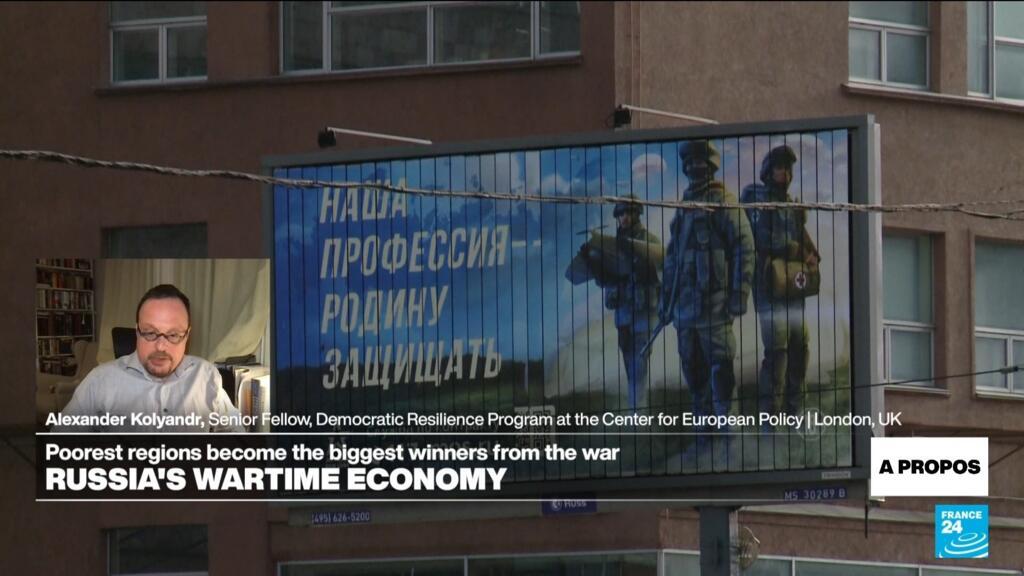
The current economic recalibration is inextricably linked to the geopolitical situation, particularly the financial strain imposed by the conflict in Ukraine. While initial wartime spending provided a temporary stimulus, experts now suggest this effect is waning. Alexander Kolyandr, a Senior Fellow at the Center for European Policy Analysis’ Democratic Resilience Program, articulated this sentiment in a recent interview wiht FRANCE 24, stating that the economic boost from military expenditure “cannot last forever” and that “this party is almost over.” This assessment highlights a critical turning point, suggesting that the Russian economy is approaching a phase where the benefits of increased military spending will be outweighed by the associated costs.
The prolonged nature of the conflict, coupled with international sanctions, has created a challenging surroundings for Russian businesses. Supply chain disruptions, reduced access to foreign markets, and increased financial isolation are all contributing factors. According to a recent report by the World Bank (July 2025), foreign direct investment in Russia has declined by over 90% since 2022. This dramatic decrease underscores the severity of the economic impact and the difficulty Russia faces in attracting capital for long-term development.
### Analyzing the Internal Economic Pressures
beyond the external pressures,Russia’s internal economic fundamentals are also contributing to the revised growth forecast. Inflation, despite efforts by the Central Bank, remains stubbornly high. Consumer price increases erode purchasing power, leading to decreased demand and economic stagnation. Real wages,adjusted for inflation,have been largely flat for the past year,further dampening consumer confidence.
| Economic Indicator | 2023 | 2024 (Estimate) | 2025 (Projected) |
|---|---|---|---|
| GDP Growth | 3.6% | 2.6% | 0.8% |
| Inflation Rate | 7.4% | 8.1% | 6.5% |
| Real Wage Growth | -1.2% | 0.5% | -0.3% |
| Key Interest Rate | 16% | 16% | 15.5% (projected) |
The reliance on commodity exports, particularly oil and gas, also presents a vulnerability. While high energy prices have provided some revenue, this dependence exposes the Russian economy to fluctuations in global energy markets. Diversification efforts have been limited, and the lack of a robust non-commodity sector hinders sustainable growth. The recent G7 price cap on Russian oil, implemented in december 2022, has further constrained revenue streams, forcing Russia to seek alternative markets and discount prices.
### The Sustainability of Wartime Stimulus
The initial economic impact of increased military spending was a short-term boost to certain sectors, such as defense and related industries. However, this stimulus is not without its drawbacks. Resources are diverted from other areas of the economy, such as healthcare, education, and infrastructure, possibly hindering long-term development. Moreover,the increased demand for labor in the