
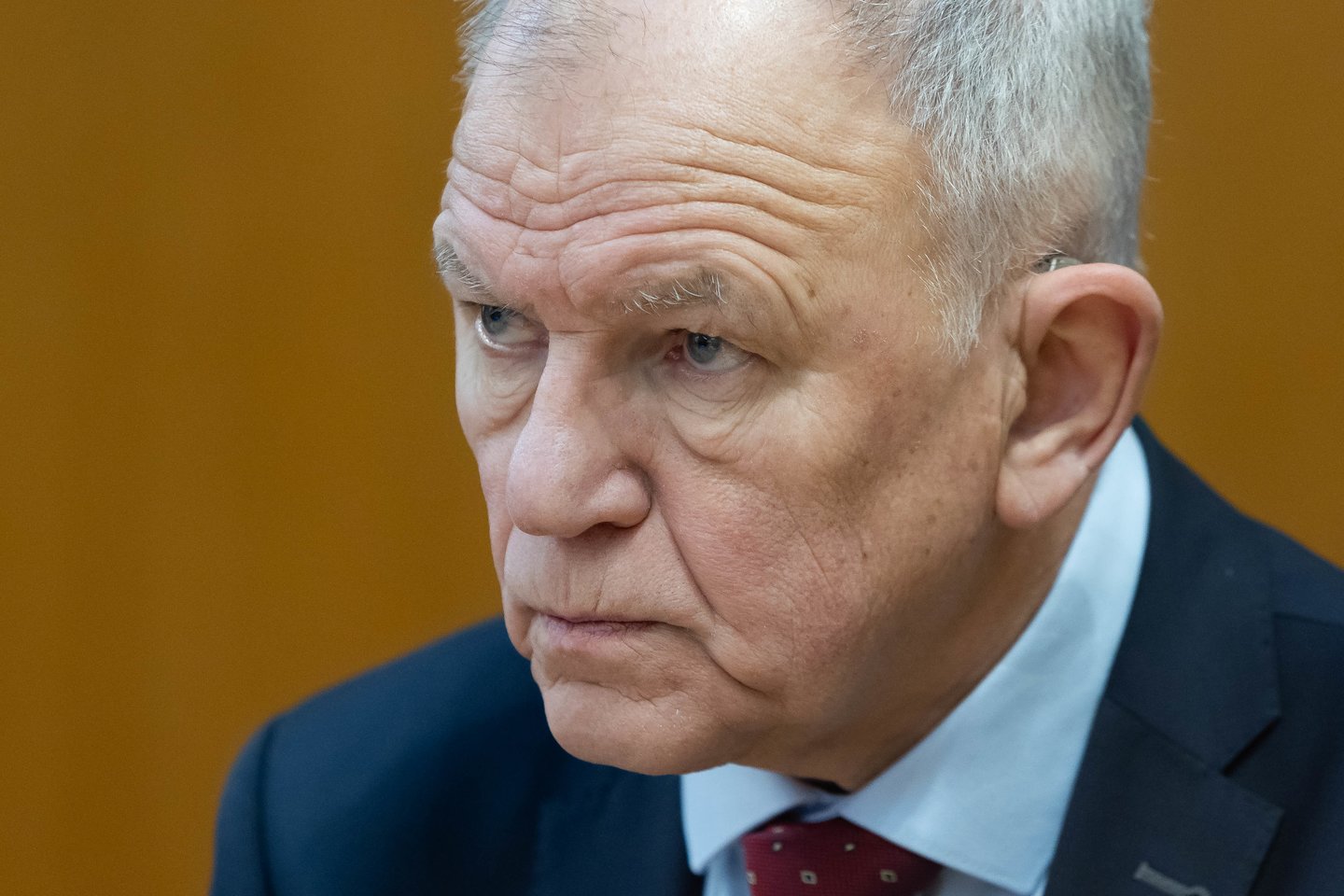
The political landscape in Lithuania has been thrown into turmoil following allegations of bribery involving Saulius Skvernelis, the former leader of the Democratic Union “Vardan Lietuvos.” The controversy has sparked a wave of disbelief and internal instability within the party, leading to a leadership transition and a public battle over the legal protections afforded to members of Parliament.
Virginijus Sinkevičius, who has stepped in as the acting leader of the Democratic Union “Vardan Lietuvos,” has described the current situation as one of the most stressful periods of his life. Speaking on the party’s commitment to transparency, Sinkevičius emphasized that the party’s principles remain unchanged despite the scandal, stating that the mission is to restore public trust in politics according to his statements on April 11, 2026.
At the center of the storm are suspicions of bribery surrounding Skvernelis. The situation has escalated to a point where the General Prosecutor’s Office is expected to approach the Seimas (the Lithuanian Parliament) to request the removal of the lawmaker’s legal immunity, a necessary step for criminal proceedings to move forward against a sitting member of parliament.
The fallout has extended beyond the party’s internal structure, drawing reactions from former allies and political observers who express shock at the allegations. The Democratic Union, which positioned itself as a “third way” for Lithuania—focused on connection rather than opposition—now finds itself fighting to maintain its credibility while facing a potential legal crisis for its former chairman.
Denials of Secret Deals with Social Democrats
As the pressure mounts, allegations have surfaced regarding potential backroom deals to protect Skvernelis from legal action. Skirmantas Malinauskas, a publicist and former advisor to Skvernelis, claimed on the program “politika.lt” that Skvernelis had been in discussions with Gintautas Paluckas, a representative of the Lithuanian Social Democratic Party (LSDP). Malinauskas alleged that the two were coordinating how to vote during a secret ballot to ensure that parliamentary immunity was preserved as reported on April 12, 2026.

Virginijus Sinkevičius has categorically denied these claims. In a statement posted to Facebook on Saturday evening, Sinkevičius asserted that the Democratic Union is not and has never been, involved in negotiations with the Social Democrats regarding the removal of legal immunity for any politician. He stated, “You’ll see no such thoughts about such possibilities, there were none and there will be none.”
Sinkevičius further clarified the party’s official stance on the matter, stating that the faction will vote “for” the removal of immunity whenever the General Prosecutor’s Office formally addresses the Seimas. This position serves as a direct rebuttal to the claims of a “protection pact” and reinforces the party’s public narrative that mandates and immunity should not be used as shields against legal accountability.
The Impact on Party Leadership and Public Trust
The scandal has forced a rapid reorganization of the Democratic Union “Vardan Lietuvos.” The appointment of Virginijus Sinkevičius as the acting leader comes at a time when the party is attempting to distance itself from the personal legal troubles of its former leader. Sinkevičius has acknowledged that the damage to public trust has already been done, noting that while investigations and court proceedings are not yet complete, the party must take responsibility for the “debt” it owes to the people of Lithuania.
The party’s ambition to provide a “third way” for the country—characterized by a political culture of dialogue rather than intimidation—is now being tested. Sinkevičius has indicated that the upcoming local government elections will be a critical litmus test to determine whether the public still views the Democrats as a force that seeks to serve rather than to rule per his April 11 commentary.
The internal strain is evident, with Sinkevičius admitting that the party, which once prided itself on being a political force without “dramas and sensations,” has now become the sensation itself. The focus for the leadership is now on “getting back up” as quickly as possible after the blow, emphasizing that the responsibility for understanding and sympathizing with politicians does not lie with the citizens of Lithuania.
Key Developments in the Skvernelis Case
- Allegations: Saulius Skvernelis faces suspicions of bribery, which have triggered a wider political scandal.
- Immunity Request: The General Prosecutor’s Office is expected to request the Seimas to lift Skvernelis’s legal immunity within the coming week according to reports from April 12, 2026.
- Leadership Shift: Virginijus Sinkevičius has assumed the role of acting leader of the Democratic Union “Vardan Lietuvos.”
- Party Stance: The party officially supports the removal of immunity when requested by the General Prosecutor’s Office, denying any secret agreements with the LSDP to protect the former leader.
The next critical checkpoint in this developing story will be the formal request from the General Prosecutor’s Office to the Seimas, followed by the parliamentary vote on whether to lift Saulius Skvernelis’s legal immunity. This vote will determine whether the investigation into the bribery suspicions can proceed to a full legal trial.
World Today Journal encourages readers to share their perspectives on political accountability in the comments below.