
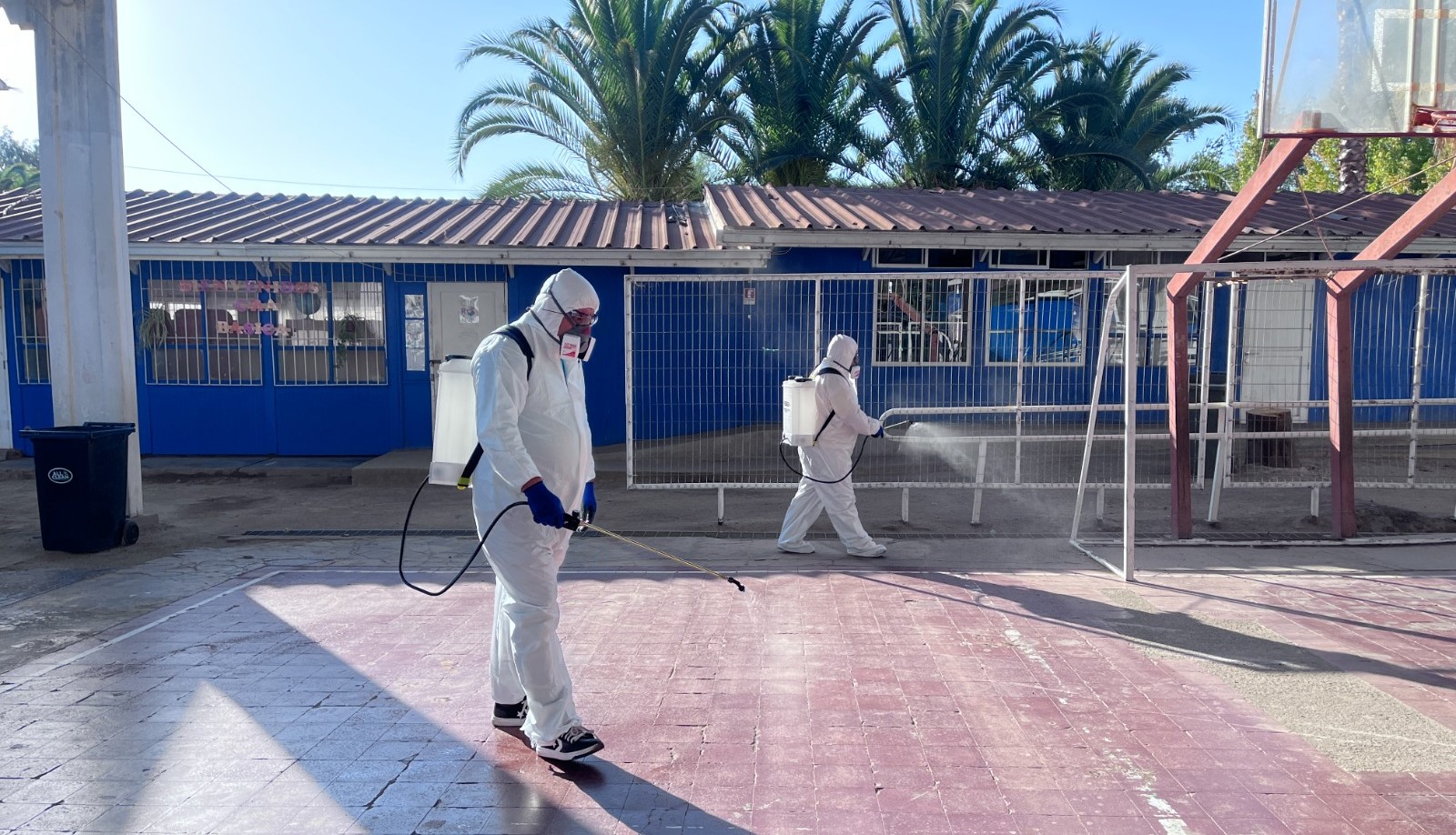
Municipal educational institutions in Hijuelas, Chile, have officially resumed classes following a period of suspension dedicated to intensive sanitization efforts. The decision to close schools and implement deep cleaning measures followed the tragic death of a seven-year-old student from a school in Ocoa, who passed away after contracting the Hanta virus.
While officials noted that the child’s infection was not directly linked to the school environment, local authorities opted for a comprehensive safety approach. The goal was to ensure the total absence of the “long-tailed” mouse (ratón colilargo), the primary vector that transmits the virus through its urine and droppings, across all educational facilities in the commune.
The restoration of normal school schedules and services occurred on a Thursday, with students returning to their classrooms under a commitment from the municipality to maintain constant and regular sanitization protocols moving forward. To address the academic gap caused by the suspension, officials announced that missed lessons will be recovered either at the end of the semester or by the end of the academic year.
Comprehensive Sanitization and Pest Control Measures
The effort to secure the schools involved a multi-faceted approach to environmental management and pest control. Because the Hanta virus is often associated with rural environments and the presence of specific rodent populations, the cleanup extended beyond simple surface disinfection.

According to local reports, the sanitization process was carried out by an external company with additional support from municipal resources, private contributions, and volunteers. The scope of work included:
- The demolition and removal of several old structures that could have served as nesting grounds for rodents.
- Massive pruning of tree branches and the clearing of overgrown vegetation surrounding the buildings.
- Professional sanitization and pest control services across all municipal schools, kindergartens, and the “Luis Laborda” communal high school.
Further details from the Municipal Education Department indicate that the rodent problem may have been exacerbated by external factors. Specifically, reports suggest that the cleaning of irrigation ditches (acequias) and the removal of a mulberry tree (mora) on properties adjacent to the school may have displaced rodents, forcing them to seek alternative shelter within the educational facilities Department of Education Municipal | Hijuelas.
Understanding the Risk: The Hanta Virus and Rodent Vectors
From a public health perspective, the response in Hijuelas highlights the critical link between environmental maintenance and infectious disease prevention. The Hanta virus is transmitted to humans primarily through the inhalation of aerosolized particles from the excreta of infected rodents, such as the long-tailed mouse mentioned by local authorities.
The decision to demolish old structures and clear vegetation is a standard public health intervention designed to eliminate “harborage”—the areas where rodents live, breed, and leave the contaminated waste that leads to human infection. By removing these attractants and barriers, the municipality aims to break the cycle of transmission in areas where children spend significant amounts of time.
Impact on the Hijuelas Community and Academic Calendar
The return to classes was described as proceeding with absolute normality, as the community sought to move past the trauma of the student’s death while ensuring a safe environment. The psychological impact of such a loss on a small community is significant, making the visible and thorough nature of the cleaning efforts a necessary step in restoring parental and student confidence.
The administrative handling of the suspension focuses on academic continuity. By scheduling the recovery of missed classes for the end of the semester or year, the municipality is attempting to balance the immediate need for safety with the long-term educational requirements of the students.
The commitment to “recent and constant sanitizations” suggests a shift from reactive cleaning to a preventative maintenance model. This approach is essential in rural regions where the intersection of agricultural activity and educational infrastructure can increase the risk of zoonotic diseases.
Key Takeaways for Community Safety
- Vector Control: The primary goal was the elimination of the long-tailed mouse, which carries the virus in its urine, and feces.
- Environmental Management: Effective prevention involves removing old structures and clearing vegetation to discourage rodent nesting.
- Institutional Response: The municipality utilized a combination of professional external services and community volunteers to expedite the cleaning process.
- Academic Recovery: Missed instructional time will be compensated at the end of the term to ensure students meet their curriculum goals.
The situation in Hijuelas serves as a reminder of the importance of rigorous environmental surveillance in school settings, particularly in areas where land use changes—such as the cleaning of ditches or removal of trees—can unexpectedly shift pest populations into human-occupied spaces.
The municipality has promised that these sanitization efforts will remain ongoing to prevent future occurrences. For those seeking further information on health protocols for educational establishments, the Ministry of Education and Ministry of Health provide updated guidelines on sanitary measures and epidemiological surveillance Protocolo de medidas sanitarias y vigilancia epidemiológica.
The next confirmed action for the community is the implementation of the promised regular sanitization schedule and the eventual recovery of the suspended class hours at the end of the semester.
We encourage readers to share this update and leave their comments below regarding public health measures in rural schools.