
For decades, the experience of a “trip”—the vivid hallucinations, the distortion of time, and the profound sense of ego dissolution—has remained one of the most elusive mysteries of neuroscience. While clinicians have observed the therapeutic potential of these substances, the actual mechanical shift occurring within the human brain has often been described in fragmented terms. That changed this week with the release of a massive international effort to map the psychedelic mind.
A comprehensive “mega-analysis” published on April 6, 2026, in Nature Medicine has identified a shared brain signature across different classes of psychedelic drugs. By integrating 11 independent resting-state functional magnetic resonance imaging (fMRI) datasets, researchers have provided a high-resolution look at how these substances reorganize brain architecture, effectively closing the gap between how we perceive the external world and how we process internal thought.
The study, which spanned research groups across five countries and three continents, focused on five major psychedelics: psilocybin, lysergic acid diethylamide (LSD), mescaline, N,N-dimethyltryptamine (DMT), and ayahuasca. The findings suggest that while these drugs vary in their chemical structure, they converge on a similar method of disrupting the brain’s standard operating procedure, creating a state of “high chatter” between regions that typically remain distinct.
This discovery comes at a critical moment as the medical community explores the use of these compounds to treat resistant mental health conditions, including severe anxiety, and depression. By understanding the precise neural mechanisms at play, scientists can better move toward standardized clinical applications and a deeper understanding of consciousness itself.
Closing the Gap Between Perception and Thought
In a typical waking state, the brain maintains a relatively strict boundary between sensory perception—the data coming in from our eyes and ears—and the abstract thinking and memory systems that help us make sense of that data. According to Manesh Girn, a neuroscientist at the University of California, San Francisco who led the research, psychedelics seem to dissolve this boundary. “This is suggesting the psychedelics might close that gap between how we think and how we perceive—between the internal and external,” Girn stated via National Geographic.
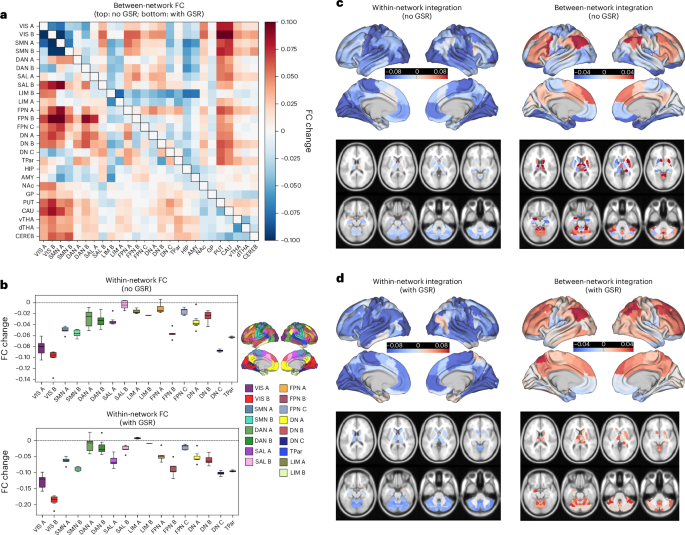
The technical driver of this experience is a core signature of increased functional connectivity. Specifically, the analysis found an increase in communication between “transmodal” networks—which include the default mode network, frontoparietal, and limbic networks—and “unimodal” networks, such as the visual and somatomotor systems. In simpler terms, the parts of the brain responsible for high-level cognition and self-reflection initiate talking directly to the parts responsible for basic sensory input, leading to the surreal blending of internal imagery and external reality.
This reorganization is not limited to the cortex. The mega-analysis revealed that key subcortical regions, including the thalamus, caudate, and putamen, as well as the cerebellum, showed altered coupling with sensorimotor networks. This suggests that the “trippy” nature of the experience is a whole-brain event, involving both the deep-seated regulatory centers of the brain and the outer layers of the cerebral cortex.
The Methodology of the Mega-Analysis
Previous studies on psychedelic brain activity often yielded inconsistent results because they were conducted in isolation, using different preprocessing methods and tiny sample sizes. To solve this, the research team implemented a Bayesian hierarchical modeling framework and a uniform preprocessing pipeline across all 11 datasets. This allowed them to filter out the “noise” of individual site differences and isolate the common effects induced by the drugs.

One of the most significant findings of this approach was the clarification of “within-network” connectivity. While some previous single-site reports suggested a strong decrease in connectivity within specific brain networks, the Bayesian modeling in this larger analysis revealed that these reductions were actually weak-to-moderate and highly selective. This indicates that the primary effect of psychedelics is not necessarily the “breaking” of networks, but rather the creation of new, unconventional connections between them.
Key Findings of the Brain Signature Analysis
- Increased Cross-Network Communication: Heightened connectivity between transmodal (thinking/emotion) and unimodal (sensory/motor) networks.
- Subcortical Engagement: Altered coupling in the thalamus, caudate, putamen, and cerebellum.
- Shared Architecture: A consistent “brain signature” observed across psilocybin, LSD, mescaline, DMT, and ayahuasca.
- Selective Connectivity: Within-network connectivity reductions were found to be more variable and less pronounced than previously thought.
Why This Matters for Mental Health
The ability to map these changes is more than a scientific curiosity; it is a prerequisite for the safe and effective medical use of psychedelics. For patients suffering from depression, the “default mode network” (a key part of the transmodal system) is often overactive, leading to repetitive, negative thought patterns known as rumination. By temporarily disrupting this network and forcing it to communicate with other parts of the brain, psychedelics may help “reset” the brain’s circuitry.
The discovery of a shared signature across different drugs suggests that the therapeutic benefit may not depend on the specific chemical structure of the drug, but rather on its ability to induce this specific state of cortical reorganization. This could streamline the development of “non-hallucinogenic” analogs—drugs that provide the antidepressant benefits of the brain reorganization without the intense, sometimes destabilizing, psychedelic experience.
Comparing the Five Analyzed Compounds
| Compound | Common Source/Type | Observed Effect |
|---|---|---|
| Psilocybin | Magic Mushrooms | Shared Brain Signature |
| LSD | Synthetic | Shared Brain Signature |
| Mescaline | Peyote/San Pedro | Shared Brain Signature |
| DMT | Various Plants/Synthetic | Shared Brain Signature |
| Ayahuasca | Brewed Vine/Leaf | Shared Brain Signature |
The Path Forward in Neuroimaging
As the scientific community moves forward, the focus will likely shift from what is happening to how these changes translate into long-term healing. The current data provides a snapshot of the acute effects—the state of the brain while under the influence. The next frontier for researchers will be determining how long these reorganized connections last and whether they create permanent pathways for improved emotional regulation.

The integration of data from the U.S., Europe, and South America highlights a growing global consensus on the need for rigorous, standardized research into consciousness. By moving away from fragmented, single-site studies and toward mega-analyses, the field of psychiatry is gaining a more objective, data-driven understanding of the mind’s most complex states.
With the publication of these findings on April 6, 2026, the medical community now has a baseline map of the psychedelic brain. The next step will be to apply this map to individual patient care, ensuring that the “closing of the gap” between perception and thought can be harnessed to treat the most stubborn of mental illnesses.
We invite our readers to share their thoughts on the intersection of neuroscience and mental health in the comments below. Please share this article with those interested in the future of medical innovation.