
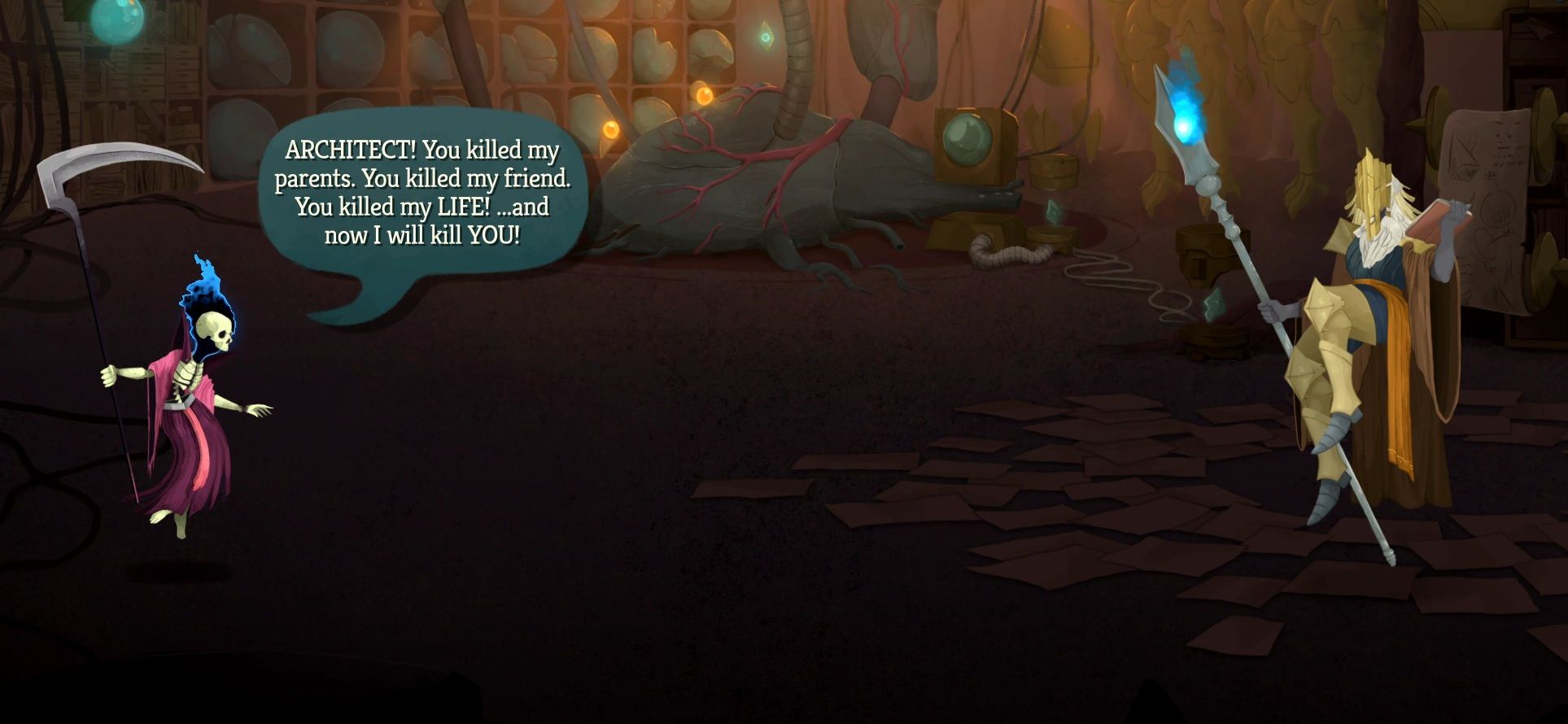
The highly anticipated sequel to the critically acclaimed deckbuilding roguelike, Slay the Spire 2, is currently in Early Access, offering players a glimpse into a game still very much under construction. While the core gameplay loop remains familiar, the developers at Mega Crit are taking a deliberate approach to crafting the game’s final ending, prioritizing player feedback and iterating on the experience. The current ending, featuring a mysterious figure known as The Architect, is intentionally temporary, serving as a placeholder while the studio refines the narrative and overall culmination of a successful run.
Currently, a run in Slay the Spire 2 culminates in a cutscene with The Architect, a character presumed to be the designer of the spire itself. The encounter is brief and somewhat anticlimactic; The Architect displays indifference to the player’s progress, shrugging off any damage inflicted before instantly defeating them. Following this, a screen displays the total aggregate damage dealt to The Architect by all players, a number that has already surpassed 99 billion. This “To be continued…” presentation signals the developers’ intention to significantly expand upon this final encounter. The game’s Early Access phase, which Mega Crit estimates could last between one and two years, is designed to allow for this kind of iterative development, shaped by the community’s response.
A Deliberate Approach to the Ending
In a recent interview with Mega Crit co-founder Casey Yano, the studio revealed their thoughtful process regarding the game’s eventual conclusion. While remaining tight-lipped about specific narrative details, Yano emphasized the importance of creating a more impactful and rewarding experience for players. “I do want there to be a better ending,” Yano stated. “I do want it to be more extravagant when you win. And I do want the showdown to also be a pretty big deal, we’ll say.” This suggests a departure from the current, minimalist ending, hinting at a more elaborate and satisfying resolution to a challenging run.
Crucially, the developers aren’t locking themselves into a fixed narrative. Yano explained that they deliberately designed the initial ending to be malleable, allowing player reactions to influence the final product. “I do want the endings to be pretty, pretty serious business, but they aren’t too designed at this time,” he said. “I wanted to witness the reaction that people have towards the narrative elements to the game that we’ve brought in. I like to read what people’s theories are on what the characters are, if they’re good or bad and things like that. And so we’re kind of just seeing what people like, what characters people are attached to. And while we do have kind of like a canonical idea of what is going to happen, we do make minor tweaks to make sure that the ending kind of meets everyone’s expectations, and also a little curveball, you realize, every now and then, but positive curveballs.” This player-centric approach is a hallmark of successful Early Access titles, fostering a sense of community and shared ownership in the development process.
Drawing Parallels to the Original and Other Roguelikes
The original Slay the Spire featured a similarly structured endgame. Players had to unlock Act 4 by completing Act 3 with each of the three playable characters. This unlocked a path requiring the collection of three keys, leading to a challenging miniboss before the final confrontation with The Corrupt Heart. Whether Slay the Spire 2 will adopt this same structure remains unclear, but the developers are clearly drawing inspiration from the successful formula of its predecessor. The original game, released in 2019, garnered widespread critical acclaim for its innovative gameplay and addictive nature, selling over 1.5 million copies as of 2023, according to SteamDB SteamDB.
Mega Crit’s approach to the ending also echoes that of other popular roguelike titles. Games like Hades and its upcoming sequel, Hades 2, have demonstrated the effectiveness of adding significant endgame content later in development. Hades, developed by Supergiant Games, initially launched in Early Access in 2018 and continued to receive substantial updates, including expanded storylines and new characters, even after its full release in 2020. This iterative development process allowed Supergiant Games to refine the game based on player feedback and create a truly compelling and rewarding experience. The success of Hades, which won numerous Game of the Year awards, serves as a blueprint for Mega Crit as they navigate the development of Slay the Spire 2.
Content Prioritization and Timeline
Yano indicated that finalizing the ending is likely to be one of the later stages of development. “I get the feeling it’s going to take a good while for the ending to show up, just because, you know, we have a few other types of content that we want to make. We want these alternative acts and the characters, we want to experiment with the game modes. I experience once those are done, we’ll probably think about finalizing an ending, probably as we go into V1.” This suggests that the studio is prioritizing the expansion of core gameplay elements and content before focusing on the final narrative resolution. The “V1” designation likely refers to the first official full release version of the game, signaling a significant milestone in the development process.

The current focus on alternative acts and characters aligns with the broader trend in roguelike games towards increased replayability and character customization. Players are increasingly seeking games that offer diverse playstyles and compelling narratives, and Mega Crit appears to be responding to this demand. The studio’s willingness to experiment with game modes further demonstrates their commitment to innovation and player engagement.
What to Expect Moving Forward
The development of Slay the Spire 2 is an ongoing process, and the final ending is far from set in stone. Mega Crit is actively soliciting player feedback and incorporating it into their design decisions. The studio’s commitment to creating a “pretty, pretty serious business” of an ending suggests a significant investment in the narrative and overall presentation of the game’s conclusion. Players can expect a more elaborate and rewarding experience than the current placeholder, but the exact form that will take remains a mystery.
As Slay the Spire 2 progresses through Early Access, players can continue to provide feedback through various channels, including the game’s Steam forums and social media platforms. Mega Crit has demonstrated a willingness to listen to the community, and their iterative development process ensures that player voices will play a crucial role in shaping the final product. The studio has not yet announced a specific release date for Version 1.0, but they anticipate the Early Access period will last between one and two years.
The future of Slay the Spire 2 looks bright, with a dedicated development team and a passionate community working together to create a truly exceptional deckbuilding roguelike. The promise of a more extravagant and impactful ending is just one of the many reasons why players are eagerly anticipating the game’s full release.
Keep an eye on the official Slay the Spire 2 Steam page for updates on development progress and opportunities to provide feedback. The developers are actively engaged with the community and eager to hear your thoughts on the game’s direction.