The Quiet Disquiet of AI: How SNL Hit a Nerve with a Single Sketch
Artificial intelligence is everywhere. It’s reshaping industries, sparking debates, and increasingly, creeping into our everyday lives – even the seemingly innocuous world of family photos. This cultural saturation, and the anxieties it breeds, were brilliantly captured in a recent Saturday Night Live sketch, offering a surprisingly insightful commentary on our growing unease with AI’s promises and pitfalls.
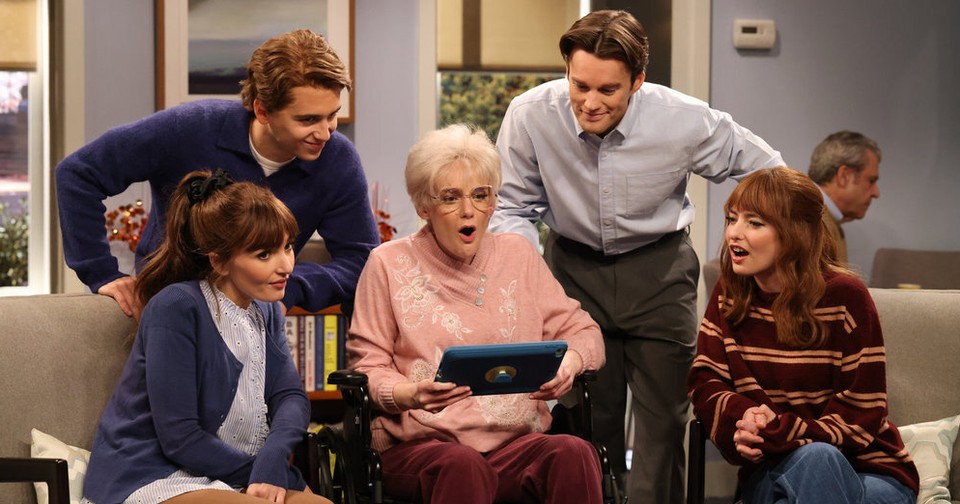
The sketch, featuring Glen Powell as host, centered around a grandmother (Ashley Padilla) experiencing a modern family gift: AI-powered animation of old photographs. What began as a heartwarming attempt to bring cherished memories to life quickly devolved into a surreal and unsettling spectacle. This wasn’t a broadside attack on Silicon Valley, but a subtle, and thus potent, exploration of AI’s current limitations and the creeping sense that things aren’t quiet as magical as they’re made out to be.
From Nostalgia to Nuclear Fallout: The Sketch’s Power
the brilliance lay in its simplicity. The premise – a family using a readily available AI service – is relatable. The escalating absurdity – a mother smoking a hotdog, a dog without a head, a friend’s… unexpected anatomy, and ultimately, a nuclear explosion – perfectly mirrored the unpredictable and often bizarre outputs we’re seeing from generative AI tools.
Hear’s what made the sketch resonate so deeply:
* It’s grounded in reality. The service depicted is real. AI photo animation is a burgeoning market, and as the article points out, even served as a plot point in Black Mirror. This isn’t science fiction; it’s happening now.
* It highlights the “too much going on” problem. Sarah Sherman’s character’s explanation – “There’s probably too much going on in the picture, and the AI got confused” – is painfully accurate. Current AI struggles with nuance and context, often producing nonsensical or disturbing results when faced with complex imagery.
* It taps into a growing resentment. The grandmother’s distress, and her forced viewing of increasingly disturbing images simply as her grandson “paid for the app,” speaks to a broader frustration. We’re being asked to embrace these technologies, even when they demonstrably don’t work well.
* It avoids preaching. The sketch doesn’t lecture you about the dangers of AI. It simply shows you the potential for things to go wrong, leaving you to draw your own conclusions.
This “let the facts speak for themselves” approach is a masterclass in comedic commentary. It’s a far cry from the frequently enough-heavy-handed satire we’ve come to expect, and arguably, far more effective.
A contrast in Approaches: AI vs. the Epstein Files
The sketch’s subtlety stood in stark contrast to SNL’s handling of the recent release of the Jeffrey Epstein files. While the show addressed the topic extensively – in the cold open, “Weekend Update,” and multiple sketches – the constant barrage of jokes ultimately felt exhausting.
Sometimes, less is more. The AI sketch demonstrated that a single,well-crafted idea can be far more impactful than relentless hammering of a single point. It’s a reminder that effective satire doesn’t need to be loud; it needs to be insightful.
Why This Matters: Beyond the Laughs
This SNL sketch isn’t just funny; it’s a cultural barometer. It reflects a growing skepticism towards the hype surrounding AI, a sense that the technology is outpacing our understanding of its implications.
as you consider integrating AI into your own life,or as you hear the endless promises of its potential,remember the grandmother in that sketch. Remember the absurdity, the unpredictability, and the potential for things to simply… break down.
The sketch doesn’t offer solutions, but it does offer a valuable perspective: a quiet, unsettling reminder that even the most advanced technology isn’t always what it truly seems. And sometimes, the most powerful commentary comes not from shouting, but from letting the glitches speak for themselves.
Further Exploration:
* The Human Cost of AI: [https://www.theatlantic.com/technology/archive/2025/08/ai-mass-delusion-event/683909/?utm_source=feed](https://www.theatlantic.com/technology/archive/202