Solar Flare Temperatures: New Research Reveals Unexpected Heat & Solves a 50-Year Mystery
Have you ever wondered just how hot teh Sun’s fiery outbursts – solar flares – actually get? Recent groundbreaking research from the University of St Andrews suggests they’re substantially hotter than previously believed, and this finding isn’t just about numbers.It’s a potential solution to a decades-old puzzle about our star and its impact on earth. Understanding solar flare activity is crucial, not only for astrophysics but also for protecting our technology and astronauts in space.
Unveiling the Extreme Heat of Solar Flares: A Paradigm Shift
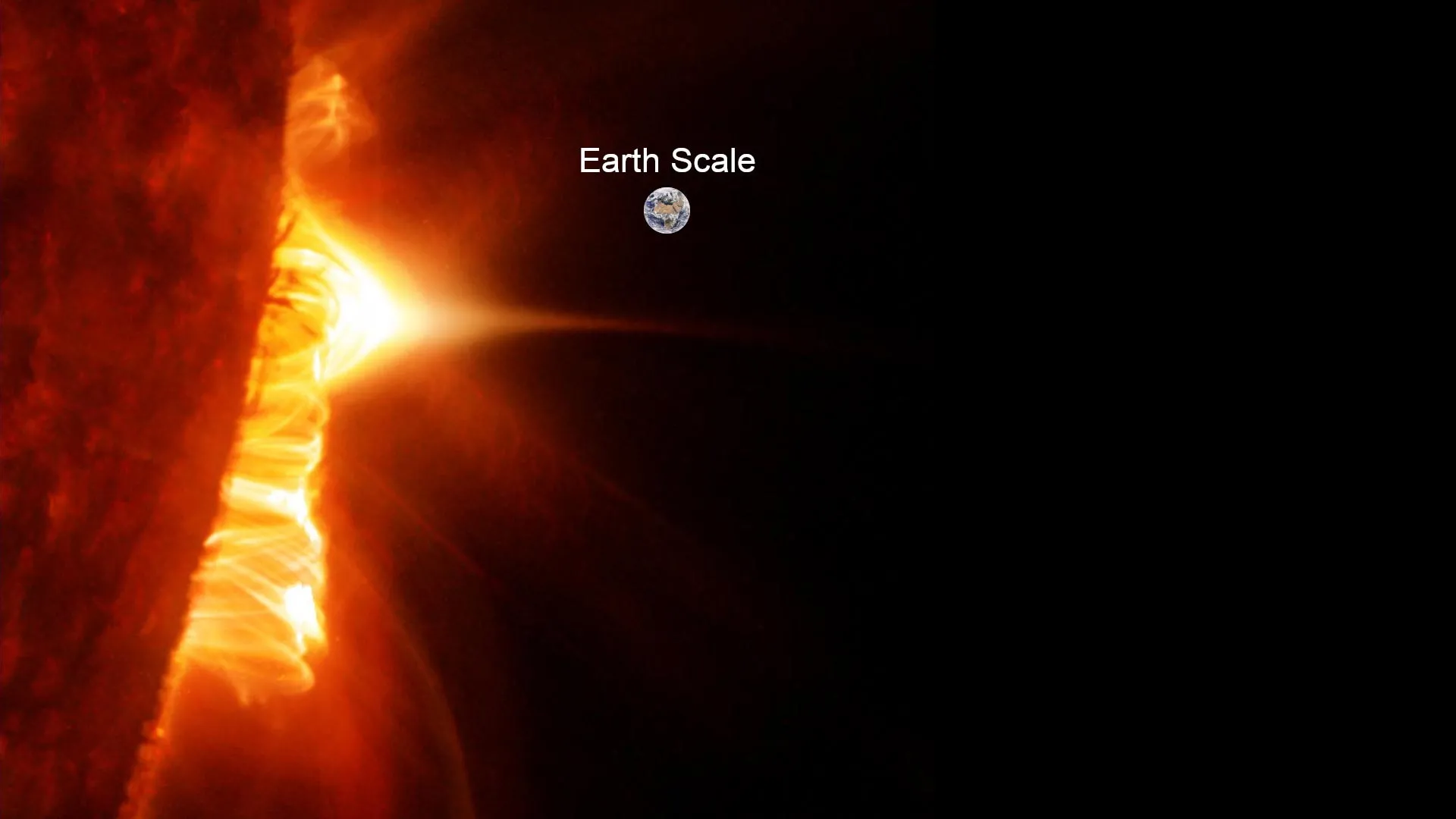
Solar flares are dramatic, sudden releases of energy originating from the Sun’s atmosphere. These events can heat regions to temperatures exceeding 10 million degrees Celsius, dramatically increasing the amount of solar X-rays and radiation reaching Earth. This surge in energy poses risks to satellites, astronauts, and even disrupts the Earth’s upper atmosphere – impacting communication systems and power grids. The recent study,published on September 3rd in The astrophysical Journal Letters,challenges long-held assumptions about how these flares heat solar plasma,the ionized gas that makes up the Sun.
For years, scientists believed that ions (positively charged particles) and electrons within solar plasma reached roughly the same temperatures during a flare. However, the new research, led by Dr. Alexander Russell from the School of mathematics and Statistics at the University of St Andrews,proposes a radical shift: solar flare ions can reach temperatures exceeding 60 million degrees Celsius – 6.5 times hotter than previously thought. This finding stems from connecting observations in solar flare physics with research in near-Earth space and the solar wind, revealing a consistent pattern of ions being heated much more intensely than electrons.
“We were excited by recent discoveries that a process called magnetic reconnection heats ions 6.5 times as much as electrons,” explains Dr.Russell. “This appears to be a universal law,confirmed in various space environments and computer simulations. Nobody had previously connected this to solar flares.” This magnetic reconnection, a process where magnetic field lines break and reconnect, releasing enormous energy, is now understood to be a key driver of this disproportionate ion heating. Understanding this process is vital for accurate space weather forecasting and mitigating potential disruptions.
Solving a 50-Year-Old Astrophysical Mystery: Flare Spectral Line Broadening
The implications of this discovery extend beyond simply quantifying the heat of solar flares. It also provides a compelling description for a perplexing phenomenon that has baffled astrophysicists since the 1970s: the unusually broad spectral lines observed during flares.These bright enhancements in solar radiation,measured at specific wavelengths in extreme-ultraviolet and X-ray light,were wider than expected.
Traditionally, scientists attributed this broadening to turbulent motions within the flare. However, identifying the source of this turbulence proved elusive, and the theory struggled to fully explain the observed line widths.The new research proposes a different explanation: the significantly higher ion temperatures contribute substantially to the broadening of these spectral lines. This represents a potential paradigm shift in our understanding of flare spectra, offering a more consistent and accurate interpretation of the data. This breakthrough utilizes advanced spectroscopic analysis techniques to confirm the correlation between ion temperature and spectral line width. Related research from NASA’s Parker Solar Probe (https://www.nasa.gov/mission_pages/parkersolarprobe/index.html) provides further insights into the behavior of ions and electrons in the solar corona, supporting these findings.
Evergreen Insights: The Sun-Earth Connection
The sun isn’t just a distant star; it’s a dynamic force that profoundly impacts life on Earth. Solar flares, coronal mass ejections (CMEs), and other forms of solar activity are all part of this complex relationship. While the Sun provides the energy necessary for life, intense solar events can disrupt our technological infrastructure. Historically, important flares have been linked to geomagnetic storms that caused widespread power outages and communication failures. Continued research into solar physics,like the work from the University of St Andrews,is essential for developing robust space weather prediction models and protecting our increasingly technology-dependent society. Investing in advanced solar observatories and data analysis techniques will be crucial for mitigating the risks associated with future solar events.
FAQ: Understanding Solar flare Temperatures
Q: What are solar flares, and why are they critically important?
A: Solar flares are sudden releases of energy from the Sun’s atmosphere, important as they can impact Earth’s technology and astronauts in space.
Q: how hot do solar flares get according to the new research?
A: The new research suggests solar flare ions can reach temperatures exceeding





![Redo & Succeed: How to Improve After First Attempts | [Industry/Topic]](https://i0.wp.com/www.trustedreviews.com/wp-content/uploads/sites/7/2025/12/Meze-99-Classics-2nd-Gen-headphones.jpg?resize=330%2C220&ssl=1 "Redo & Succeed: How to Improve After First Attempts | [Industry/Topic]")