
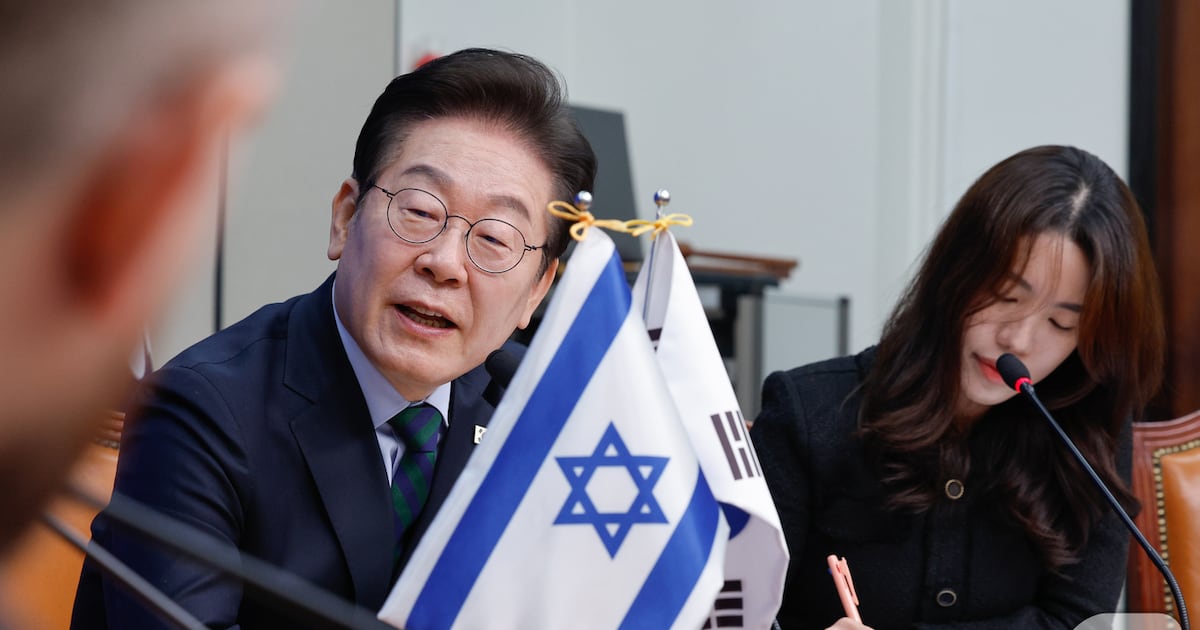
Diplomatic relations between South Korea and Israel have plummeted to what is being described as their lowest point since the establishment of formal ties, following a series of provocative social media exchanges involving South Korean President Lee Jae-myung. The escalation began after the South Korean leader shared footage of alleged war crimes, drawing a direct comparison to the Holocaust, a move that has sparked outrage in Jerusalem and triggered a diplomatic crisis.
The South Korea-Israel diplomatic crisis centers on a sequence of posts on X (formerly Twitter) where President Lee criticized the actions of the Israeli military. The tension reached a breaking point when Israel accused the South Korean president of trivializing the Holocaust, leading to a sharp exchange of condemnations that threatens to impact not only bilateral relations but also South Korea’s broader strategic partnerships in the region.
According to reports from NewsWorks, the friction intensified on April 11, 2026, when President Lee responded to Israel’s condemnation by describing Israel’s actions as “constant anti-human rights and anti-international law behavior.” This public confrontation marks a significant departure from traditional diplomatic discretion, reflecting a volatile atmosphere exacerbated by ongoing regional instability.
The Catalyst: Holocaust Comparisons and War Crime Allegations
The current rift was triggered on April 10, when President Lee shared a video on his X account allegedly showing soldiers from the Israel Defense Forces (IDF) dropping an individual from a building rooftop. In the accompanying text, Lee stated that such actions are no different from “the forced mobilization of comfort women, the Holocaust, or wartime killings” that the international community condemns. He further emphasized that the footage represented a real-world event from September 2024 and asserted that international humanitarian law and human dignity must remain non-negotiable priorities.
The Israeli government reacted with immediate and fierce condemnation. The Israeli Ministry of Foreign Affairs took to X to denounce the posts, specifically highlighting that these comments occurred on the eve of Israel’s Holocaust Remembrance Day. Israeli officials viewed the comparison of current military operations to the genocide of six million Jews as a dismissal of the unique horror of the Holocaust.
Despite the backlash, President Lee did not retract his statements. On the morning of April 11, he posted further critiques, stating, “If I am hurting, others hurt just as much. We see common sense to feel sorry when someone suffers because of my needs.” This rhetoric suggests a firm stance by the South Korean administration on human rights, even at the cost of diplomatic friction.
Economic Strain and Geopolitical Fallout
Beyond the ideological clash over human rights and history, the diplomatic freeze is occurring against a backdrop of severe economic pressure. President Lee alluded to the “tremendous suffering and national difficulty” currently being experienced by South Korean citizens, which analysts suggest is a reference to the economic damage resulting from the prolonged conflict involving Iran. Lee noted that he would continue to seek ways to protect “universal human rights and the national interests of the Republic of Korea.”
The implications of this fallout extend beyond the Seoul-Jerusalem axis. As noted by Chosun Ilbo, there are growing concerns that the deteriorating relationship could spill over into South Korea’s alliance with the United States, given the strategic importance of Israel to U.S. Foreign policy in the Middle East.
The South Korean Ministry of Foreign Affairs has attempted to mitigate the damage. In a statement following Israel’s condemnation of the president, the ministry expressed “regret” and offered “deep condolences” to the victims of the Holocaust, attempting to balance the president’s outspokenness with traditional diplomatic protocols to prevent a total collapse of ties.
Key Timeline of the Escalation
| Date | Event | Action/Statement |
|---|---|---|
| April 10, 2026 | Initial Social Media Post | President Lee shares IDF video; compares actions to the Holocaust. |
| April 10-11, 2026 | Israeli Response | Israeli Foreign Ministry condemns the “trivialization” of the Holocaust. |
| April 11, 2026 | Presidential Rebuttal | Lee cites “anti-human rights” behavior and expresses disappointment. |
| April 11-12, 2026 | Diplomatic Damage Control | South Korean Foreign Ministry expresses regret and condolences to Holocaust victims. |
Analysis: Why This Matters for Global Diplomacy
The confrontation between President Lee and the Israeli government highlights a growing trend of “digital diplomacy,” where heads of state use social media to bypass traditional diplomatic channels and speak directly to a global audience. While this can be an effective tool for highlighting human rights abuses, it also increases the risk of rapid escalation and permanent diplomatic scarring.

For South Korea, the crisis represents a tension between the pursuit of a “universal human rights” agenda and the pragmatic needs of national security and economic stability. The mention of the “comfort women” alongside the Holocaust indicates a desire by the Lee administration to link South Korea’s historical grievances with global human rights standards. Though, for Israel, the Holocaust is a foundational element of national identity and statehood, making any comparison to current military conflicts an existential affront.
The involvement of the South Korean Foreign Ministry in offering condolences—separate from the president’s own rhetoric—suggests a fragmented approach within the South Korean government, where the executive office is pushing a more aggressive moral stance while the diplomatic corps attempts to maintain the functional machinery of state relations.
As the situation remains tense, the international community is watching to see if this will lead to a formal downgrade in diplomatic status or if the “regret” expressed by the Foreign Ministry will be sufficient to stabilize the relationship. The potential for this to impact the South Korea-U.S. Relationship adds a layer of complexity, as Washington often seeks to maintain stability among its key allies in both the Indo-Pacific and the Middle East.
The next critical point of observation will be any official response from the Israeli government regarding the South Korean Foreign Ministry’s expression of regret, or further statements from President Lee’s office regarding the ongoing regional conflicts and their impact on Korean national interests.
We invite our readers to share their perspectives on the intersection of human rights and diplomacy in the comments section below.