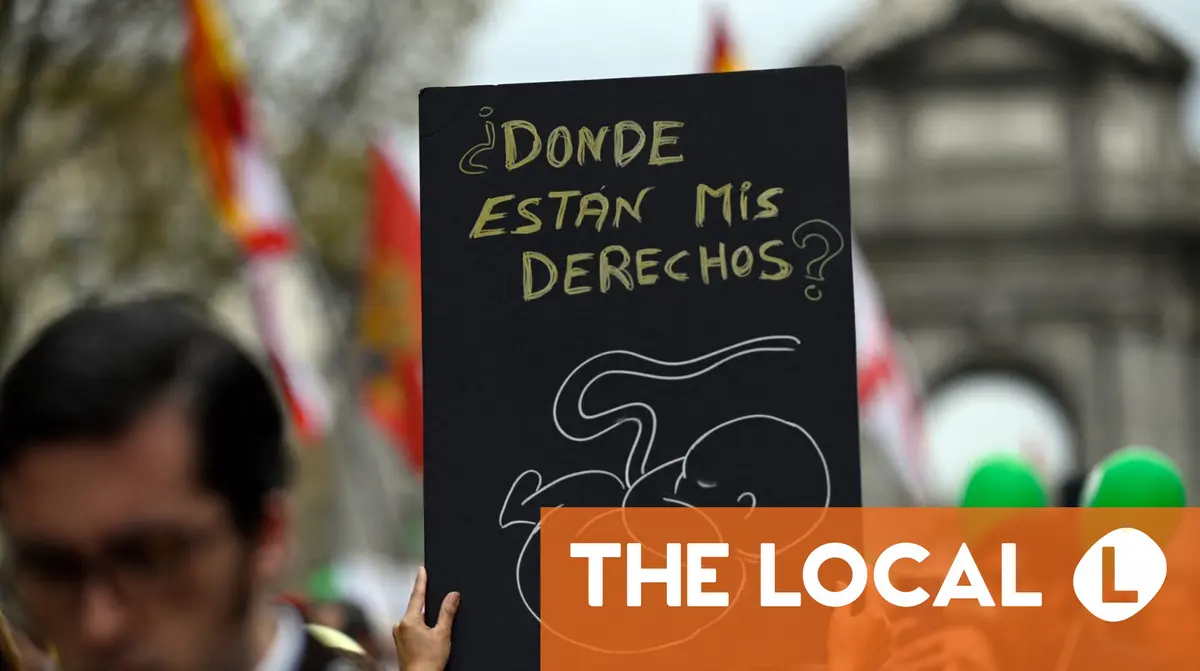
Spain Moves to Constitutionally Protect Abortion Rights Amidst Rising Conservative Opposition
Teh right to choose is facing renewed challenges globally, and Spain is no exception. Recent political maneuvering in Madrid has ignited a national debate, prompting the Spanish government to propose enshrining abortion rights directly into the constitution. This move comes after a controversial proposal by Madrid’s city hall – controlled by the conservative Popular Party (PP) – to inform women seeking abortions about a disputed “post-abortion syndrome.” but what exactly is at stake, and why is this happening now?
The Madrid Controversy: Disinformation and its Impact
On Tuesday, Madrid city hall approved a proposal mandating medical services to notify women about “post-abortion syndrome.” this alleged syndrome was claimed to cause a range of psychological and physical issues, including increased risk of substance abuse, suicidal ideation, and even cancer. The proposal further asserted that information about this syndrome was being deliberately suppressed, framing abortion as a financially motivated practice driven by “feminist ideology.”
This sparked immediate and widespread condemnation from progressive groups and medical professionals. The claims made about “post-abortion syndrome” are largely unsupported by scientific evidence. Major medical organizations, like the American Psychological Association, do not recognize it as a distinct clinical entity. https://www.apa.org/monitor/2008/11/post-abortion
Facing intense public backlash, Madrid’s PP mayor, José Luis Almeida, conceded on Thursday that post-abortion syndrome isn’t a “recognised scientific category.” He also stated that providing information about it would no longer be mandatory. Though, the damage was done, highlighting a growing trend of misinformation surrounding reproductive healthcare.
A constitutional Response: Safeguarding Reproductive Freedom
Prime Minister Pedro Sánchez swiftly condemned the PP’s actions, accusing them of aligning with the far-right. In response, he announced plans to submit a proposal to parliament to constitutionally protect the right to abortion. This is a meaningful step, aiming to solidify reproductive rights beyond the reach of future political shifts.
However, constitutional reform in Spain is a complex process. It requires a three-fifths majority in parliament,necessitating support from opposition lawmakers – a challenging prospect given the current political climate.
Spain’s abortion History: A gradual Progression
Spain’s journey towards accessible abortion care has been incremental.
* 1985: Abortion was decriminalized in cases of rape, fetal malformation, or risk to the mother’s physical or psychological health.
* 2010: The law was broadened, allowing abortion on demand during the first 14 weeks of pregnancy.
Despite these advancements,access remains uneven. A 2023 report by the Spanish Federation of Gynecology and Obstetrics revealed that many doctors in the public healthcare system continue to invoke a “conscious objection” clause, refusing to perform abortions. This creates significant barriers for women, especially in rural areas, forcing them to travel long distances or seek private care. https://www.sego.es/
France Leads the Way: Global Trends in Reproductive Rights
France took a groundbreaking step in 2022, becoming the first country in the world to explicitly enshrine the right to abortion in its constitution. This followed a similar wave of concern over potential rollbacks of reproductive rights, particularly in the United States after the overturning of Roe v. Wade.
This global context underscores the urgency of Spain’s current efforts. The trend demonstrates a growing recognition of the need to proactively protect reproductive freedoms against increasingly organized opposition. Recent data from the World Health organization shows that while abortion laws are becoming more liberal in some regions, restrictions remain prevalent in others, impacting millions of women globally. https://www.who.int/news-room/fact-sheets/detail/abortion
What’s Next for Spain?
The proposed constitutional amendment faces an uphill battle. Securing the necessary parliamentary support will require skillful negotiation and a willingness from opposition parties to compromise.
However, the current situation highlights a critical moment for reproductive rights in spain. The debate isn’t simply about legal access; it’s about combating misinformation, ensuring equitable access to care, and safeguarding fundamental freedoms.
Evergreen Section: The Importance of Reproductive Healthcare Access
Access to safe and legal abortion is a cornerstone of women’