Did You Know? in February 2024,a coalition of over 800 athletes signed an open letter calling for an immediate ceasefire in Gaza,highlighting the growing pressure on sporting bodies to take a stance on geopolitical conflicts.
The escalating conflict in Gaza has ignited a global debate extending beyond political and humanitarian spheres, now significantly impacting the world of international sports. On September 16,2025,Spanish Prime Minister Pedro Sanchez publicly advocated for Israel‘s exclusion from international sporting competitions,drawing a direct parallel to the sanctions imposed on Russia following its invasion of Ukraine. This assertive stance reflects a broadening movement questioning the appropriateness of allowing nations embroiled in notable armed conflicts to participate in events designed to foster unity and peace.
The Call for Suspension: Parallels to Russia and the broader Implications for Sporting Boycotts
Sanchez’s proposition, delivered on Monday, directly links the ongoing situation in Gaza to the precedent established with Russia’s ban from numerous sporting events after the commencement of hostilities in Ukraine. The rationale behind both calls centers on the idea that a nation’s actions on the international stage should have repercussions, and that allowing continued participation in global sporting events normalizes behavior deemed unacceptable by the international community. This raises complex questions about the role of sports as a platform for political expression and the extent to which sporting organizations should engage in geopolitical considerations.
The decision to exclude Russia from events like the Olympics, FIFA World Cup, and various European championships was largely driven by widespread condemnation of the invasion and a desire to demonstrate solidarity with Ukraine. According to a report released by the International Olympic Committee in March 2024, the decision to ban Russian athletes was based on protecting the integrity of the Olympic Games and ensuring the safety of participants. Now, Sanchez argues that the same principles should apply to Israel, given the scale of the humanitarian crisis unfolding in Gaza and the mounting international criticism of its military operations.
However, the comparison isn’t straightforward. While the Russian invasion of Ukraine was widely viewed as a clear violation of international law and a direct threat to European security, the Israeli-Palestinian conflict is a decades-long dispute with deeply rooted historical and political complexities. This nuance makes a direct comparison, and therefore a similar response, more contentious.
Disruptions at the Vuelta a España and Concerns Over Event Security
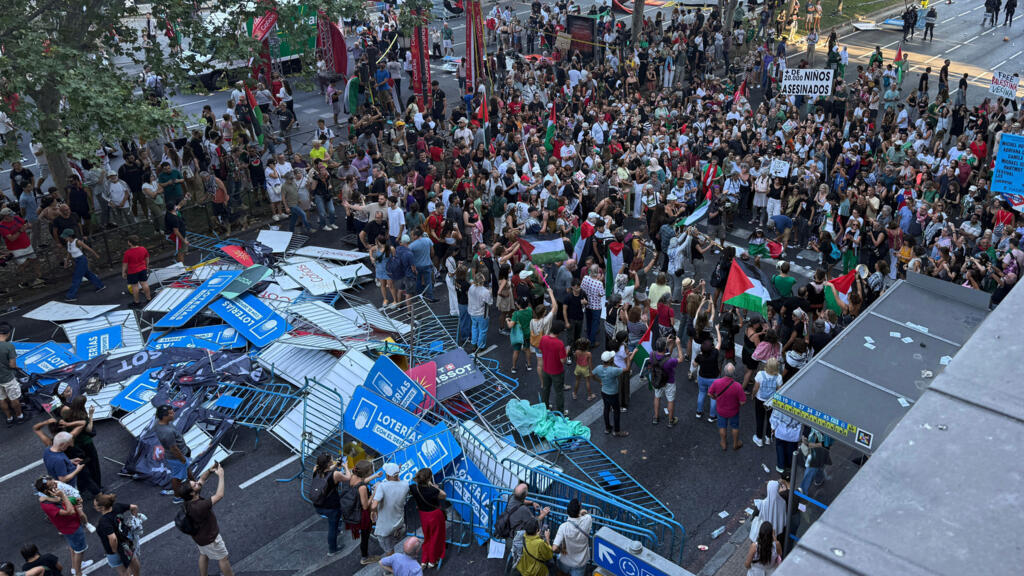
Adding to the pressure,the Union Cycliste Internationale (UCI),the governing body for cycling,strongly condemned disruptive protests that occurred during the Vuelta a españa cycling race. Demonstrators halted the race on multiple stages, expressing solidarity with Palestine and calling for a ceasefire. the UCI warned that such actions jeopardize Spain’s capacity to reliably host major international sporting events in the future.
the disruptions at the Vuelta highlight the increasing willingness of activists to use sporting events as a platform to draw attention to political causes. This trend presents a significant challenge for event organizers and security forces,who must balance the right to peaceful protest with the need to ensure the safety and smooth operation of competitions. A recent study by the Global Sport Institute at Arizona State University (published July 2024) found a 300% increase in politically motivated protests at major sporting events over the past five years.
pro Tip: When analyzing the potential impact of geopolitical events on sports, consider the specific rules and regulations of each governing body. Organizations like the IOC and FIFA have established frameworks for addressing political issues, but their request can vary significantly.
The UCI’s statement underscores the economic and reputational risks associated with hosting large-scale sporting events. Spain,like many nations,relies on such events to boost tourism,generate revenue,and enhance its international image.the possibility of repeated disruptions could deter future bids to host major competitions.
The Debate: Political Neutrality vs. Moral Responsibility in International Sports
The calls for Israel’s suspension and the protests at the Vuelta a España have reignited a long-standing debate about the role of sports in the face of political conflict. Should sporting organizations remain strictly neutral, or do they have a moral responsibility to take a stand against perceived injustices?
Advocates for neutrality argue that sports should be a unifying force, transcending political boundaries and fostering understanding between nations. They point to the Olympic Charter, which emphasizes the importance of political independence and non-discrimination. Though, critics contend that maintaining neutrality in the face of egregious human rights violations is tantamount to complicity. They