Unlocking protective Immunity: A Deep Dive into Anti-Streptococcal M Protein IgG and Bacterial Disease in The Gambia
Streptococcal diseases remain a notable public health challenge,especially in regions like The Gambia where rates of invasive infections and rheumatic heart disease are high. Understanding the nuances of the human immune response to Streptococcus pyogenes – the bacterium responsible for these illnesses – is crucial for developing effective prevention strategies. This research, conducted in close collaboration with gambian researchers and communities, investigates the role of antibodies targeting the M protein of S. pyogenes in protecting against future infections. Our findings reveal a complex interplay between antibody levels, specific M protein types, and the timing of immune responses, offering valuable insights into the potential for targeted interventions.
The Challenge of Streptococcus pyogenes and the Importance of M Protein
Streptococcus pyogenes expresses a diverse array of M proteins on its surface. These proteins are key virulence factors, enabling the bacteria to evade the immune system. However, thay also represent prime targets for antibody-mediated immunity. The sheer number of M protein types (over 200 currently identified, categorized by emm type) presents a significant hurdle for vaccine growth. Naturally acquired immunity, while common, is serotype-specific, meaning protection against one M protein type doesn’t necessarily translate to protection against others.
A Novel approach to Assessing Protective Immunity
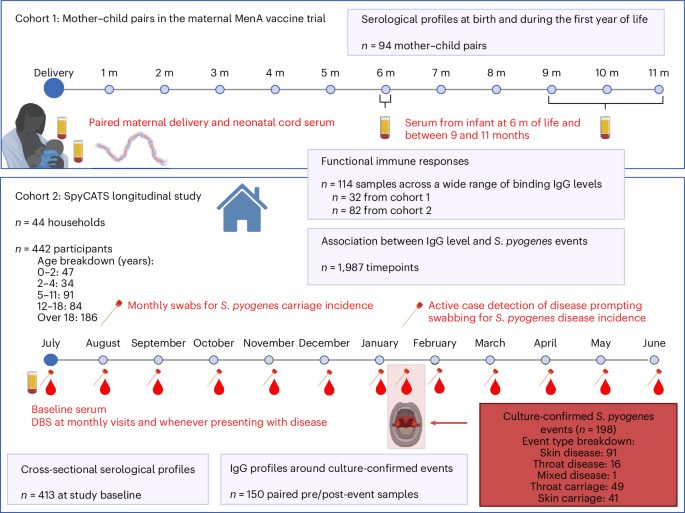
This study moved beyond simply measuring antibody levels to specific M protein types.We focused on characterizing the immune response to M proteins in a cohort of individuals in The Gambia, meticulously tracking infections and antibody levels over time. Our methodology incorporated several key innovations:
Leveraging Cluster Homology: Recognizing the limitations of focusing solely on individual emm types, we utilized a cluster-based approach. M proteins with similar genetic sequences (forming clusters) often elicit cross-reactive antibody responses. When a measurement for a specific, matching M peptide was available, it was prioritized. However, when unavailable, we utilized the level of antibodies targeting the entire M protein cluster, providing a broader picture of the immune response. This measurement was quantified as the cluster-related anti-M IgG z-score.
Accounting for Background Reactivity: antibodies can sometimes bind non-specifically. To address this, we carefully analyzed antibody reactivity to unrelated M peptides. The average z-score for these unrelated peptides was calculated for each timepoint and compared to the cluster-related z-score using Pearson’s correlation. This allowed us to distinguish between genuine, targeted immune responses and background noise.
Model Comparison with AIC: We employed Akaike Information Criterion (AIC) to rigorously compare statistical models. This ensured we selected the model that best explained the data, incorporating either the composite unrelated z-score or the cluster-related z-score, maximizing predictive accuracy.
Mixed-effects Logistic Regression: This powerful statistical technique allowed us to account for individual variability and repeated measurements over time, providing a robust assessment of the association between antibody levels and protection from microbiologically confirmed infections.We analyzed antibody responses before, during, and after infection events (in cases) and before and after events in household controls. Predicting Near-Term Risk: we explored the ability of IgG levels above a defined “transition point” for conserved antigens, combined with cluster-homologous anti-M IgG z-score, sex, age group, and household size, to predict the risk of infection within the next 45 days. Again,AIC criteria guided the selection of the optimal model.
Key Findings and Implications
Our analysis revealed a significant association between cluster-related anti-M IgG levels and protection against future streptococcal infections. Specifically, higher antibody levels, particularly those targeting clusters of related M proteins, were linked to a reduced risk of experiencing a new infection. The inclusion of the unrelated z-score in our models improved their predictive power, highlighting the importance of accounting for background antibody reactivity.
Furthermore,the model predicting near-term risk (within 45 days) identified a combination of factors – IgG levels above the transition point for conserved antigens,cluster-homologous anti-M IgG z*-score,and demographic variables – that could possibly be used to identify individuals at higher risk of infection.
Ethical Considerations and Community Engagement: A Foundation for Trust
This research was conducted with the highest ethical standards and a deep commitment to community engagement. The study received approval from both The Gambia government/Medical Research Council Joint Ethics Committee and the London School of Hygiene & Tropical Medicine Research ethics Committee. Informed consent was obtained from all participants, with assent also secured from