
Sudan’s Conflict: Why Past Peacemaking Efforts Failed adn What Lies Ahead
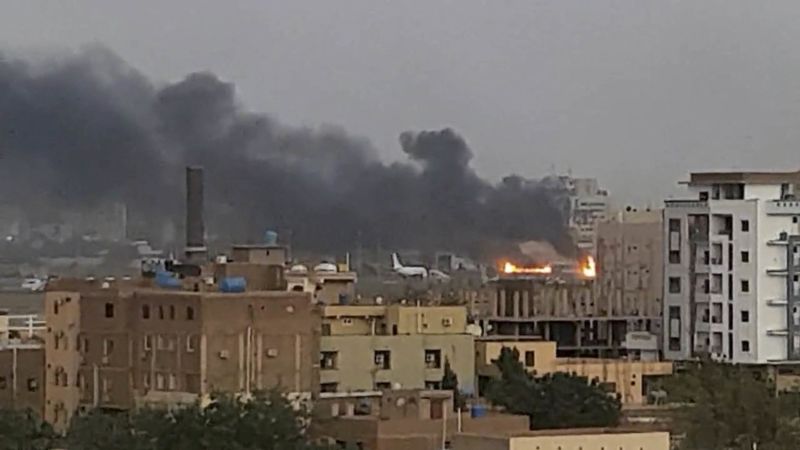
The recent eruption of violence in Sudan is not a sudden event, but the culmination of flawed international policies and deeply rooted power struggles. Understanding why previous attempts at peacebuilding have faltered is crucial to navigating the current crisis and supporting a future for the Sudanese people.
For years, international efforts focused on a specific, and ultimately damaging, approach. This involved attempting to unify the sudanese Armed Forces (SAF) and the Rapid Support Forces (RSF) into a single military entity. This strategy, while seemingly logical, ignored the basic reality: neither General Burhan, head of the SAF, nor General Hemeti, leading the RSF, was willing to relinquish the power they had accumulated.
This wasn’t a novel approach. In fact, it mirrored unification processes in south Sudan in 2013 and 2016, which tragically resulted in similar bloodshed. The pressure to merge the forces didn’t foster cooperation; it exacerbated the already tense relationship between Burhan and Hemeti, ultimately leading to the current conflict.
It’s easy to become cynical when observing the trajectory of uprisings in nations like Myanmar, Tunisia, Egypt, and Sudan. Many appear to ultimately fall short of their initial promise. However, dismissing these movements as failures overlooks a critical truth.
A nation’s political destiny isn’t a predetermined outcome, but a continuous struggle. Sudanese activists have consistently demonstrated this, fighting tirelessly for a democratic future. their resilience underscores the importance of recognizing that revolution is merely the beginning of change, not the end.
Here’s a breakdown of the key factors contributing to the current crisis:
* Flawed Unification Plan: The attempt to force a unified army disregarded the power dynamics and ambitions of key military leaders.
* Ancient Precedent: Similar unification efforts in South Sudan demonstrated the inherent risks of this approach.
* Power Struggles: The core issue was the unwillingness of Burhan and Hemeti to share or cede control.
* Ignoring Local Voices: International policy often failed to adequately incorporate the perspectives and needs of Sudanese activists and civil society.
Currently, the immediate priority for the Sudanese people is simply survival. Dreams of democracy, while still valid, are overshadowed by the urgent need for safety and stability.
Looking ahead, it’s vital to learn from these past mistakes. Prosperous peacemaking in Sudan requires:
* Prioritizing Civilian Leadership: Supporting and empowering Sudanese civilians to lead the transition process.
* Addressing Root Causes: Tackling the underlying issues of power imbalances, economic inequality, and regional tensions.
* A Long-Term Perspective: Recognizing that building a sustainable peace requires sustained commitment and a nuanced understanding of the local context.
* Genuine Dialog: Facilitating inclusive dialogue that incorporates the voices of all stakeholders, including marginalized communities.
The situation in Sudan is undeniably complex. But by acknowledging the failures of past approaches and embracing a more holistic, locally-driven strategy, we can offer meaningful support to the Sudanese people as they navigate this challenging period and strive for a brighter future.





![Lindsey Vonn: Olympic Return at [Year] Games – Age is Just a Number](https://ca-times.brightspotcdn.com/dims4/default/f9c3f38/2147483647/strip/true/crop/2710x1423+0+192/resize/1200x630!/quality/75/?url=https%3A%2F%2Fcalifornia-times-brightspot.s3.amazonaws.com%2Fdd%2Fb0%2F70789d624f00a25e1e9e71b6fe95%2Fap25356202970705.jpg "Lindsey Vonn: Olympic Return at [Year] Games – Age is Just a Number")


