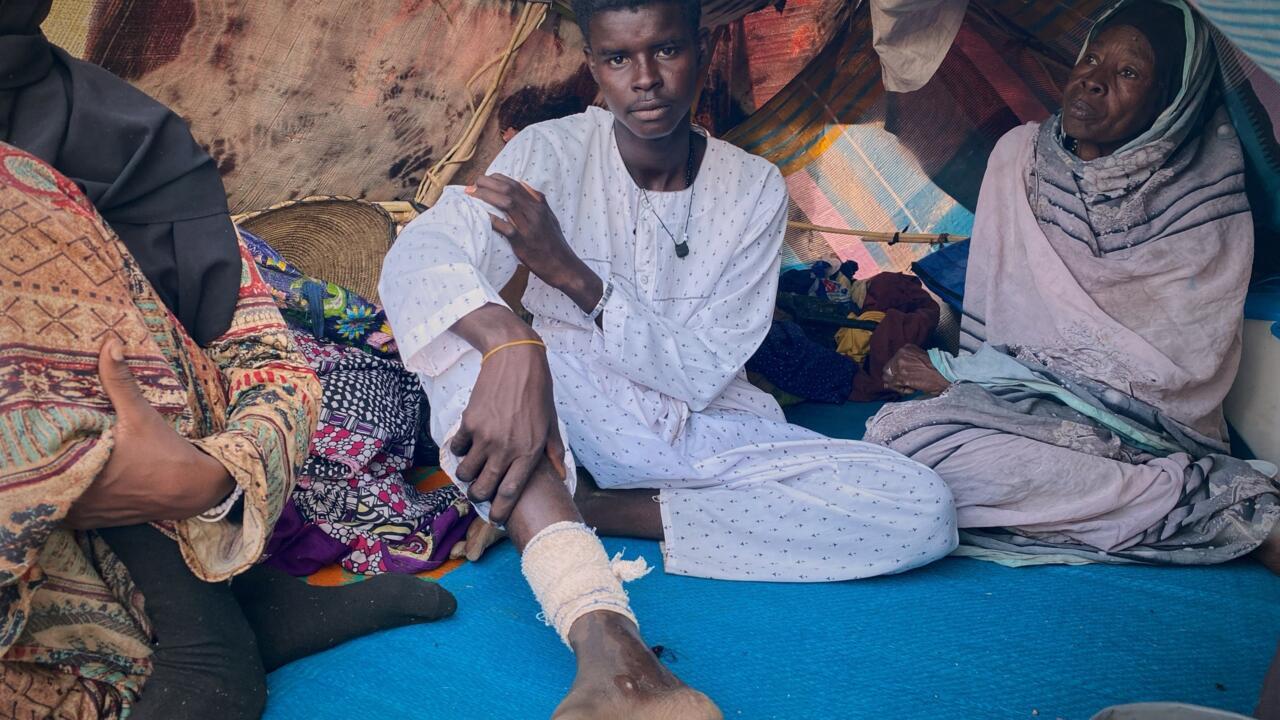
Mounting Evidence Suggests Ongoing Mass Killings in Sudan’s El-Fasher
The situation in Sudan, particularly around the city of El-Fasher, is rapidly deteriorating, with credible reports indicating continued atrocities. Recent findings from Yale University’s Humanitarian Research Lab paint a grim picture, suggesting mass killings are likely still occurring. This analysis, based on satellite imagery and open-source intelligence, raises serious concerns about the fate of civilians trapped in the conflict zone.
A City under Siege: What the Data Reveals
Yale’s lab released findings on Friday detailing the dire circumstances in El-fasher. They observed a disturbing lack of civilian exodus, leading them to believe a significant portion of the population is either deceased, captured, or forced into hiding. Specifically,researchers identified at least 31 clusters of objects consistent with human bodies across neighborhoods,university grounds,and military sites between Sunday and Friday.
Indicators clearly demonstrate that mass killings are continuing, according to the lab’s assessment. This reinforces growing fears about the escalating violence and the potential for widespread human rights violations.
A Humanitarian Catastrophe of Epic Proportions
The scale of the crisis was described as “apocalyptic” and “the greatest humanitarian crisis in the world” by a representative speaking at a conference in Bahrain on Saturday.The conflict has already displaced nearly 12 million people and created the world’s largest displacement and hunger crises.
you might be wondering what’s being done to address these concerns. While the rapid Support Forces (RSF) claimed to have arrested fighters accused of abuses following the capture of El-Fasher, UN humanitarian chief Tom Fletcher expressed skepticism about thier commitment to genuine inquiry.
Accusations of War Crimes and External Involvement
Both the RSF and the Sudanese army have faced accusations of war crimes throughout the conflict. The RSF, originating from the Janjaweed militias previously accused of genocide in Darfur, has a particularly troubling history.
Furthermore, the U.S. has previously resolute that the RSF has committed genocide in Darfur. Adding to the complexity, UN reports indicate the RSF has been receiving weapons and drone support from the United Arab Emirates (UAE).
However, an Emirati official vehemently denied these claims on saturday, stating they categorically reject any support for either warring party and condemn all atrocities. Meanwhile, the Sudanese army is receiving support from Egypt, Saudi Arabia, Iran, and Turkey.
The Strategic Implications of El-Fasher’s Fall
el-Fasher’s capture by the RSF grants them complete control over all five state capitals in Darfur. This effectively divides Sudan along an east-west axis, with the army maintaining control over the north, east, and central regions.
Unluckily, the violence is now spreading to the neighboring Kordofan region. UN officials are reporting “large-scale atrocities perpetrated” by the RSF in this area, signaling a further escalation of the conflict.
What You Need to Know: Key Takeaways
* Mass killings are likely ongoing in El-Fasher. Evidence from satellite imagery suggests a significant loss of civilian life.
* The humanitarian crisis is immense. Nearly 12 million people have been displaced, creating the world’s largest displacement and hunger crisis.
* Both sides face war crime accusations. The RSF’s history and recent actions are particularly concerning.
* External actors are involved. The RSF receives support from the UAE, while the army is backed by several other nations.
* The conflict is escalating. violence is spreading to neighboring regions, exacerbating the crisis.
This is a developing story,and FRANCE 24 with AFP will continue to provide updates as they become available. You can find more detailed information and visual evidence in this related article: Sudan: What photos and videos can tell us about the El-Fasher massacres.