
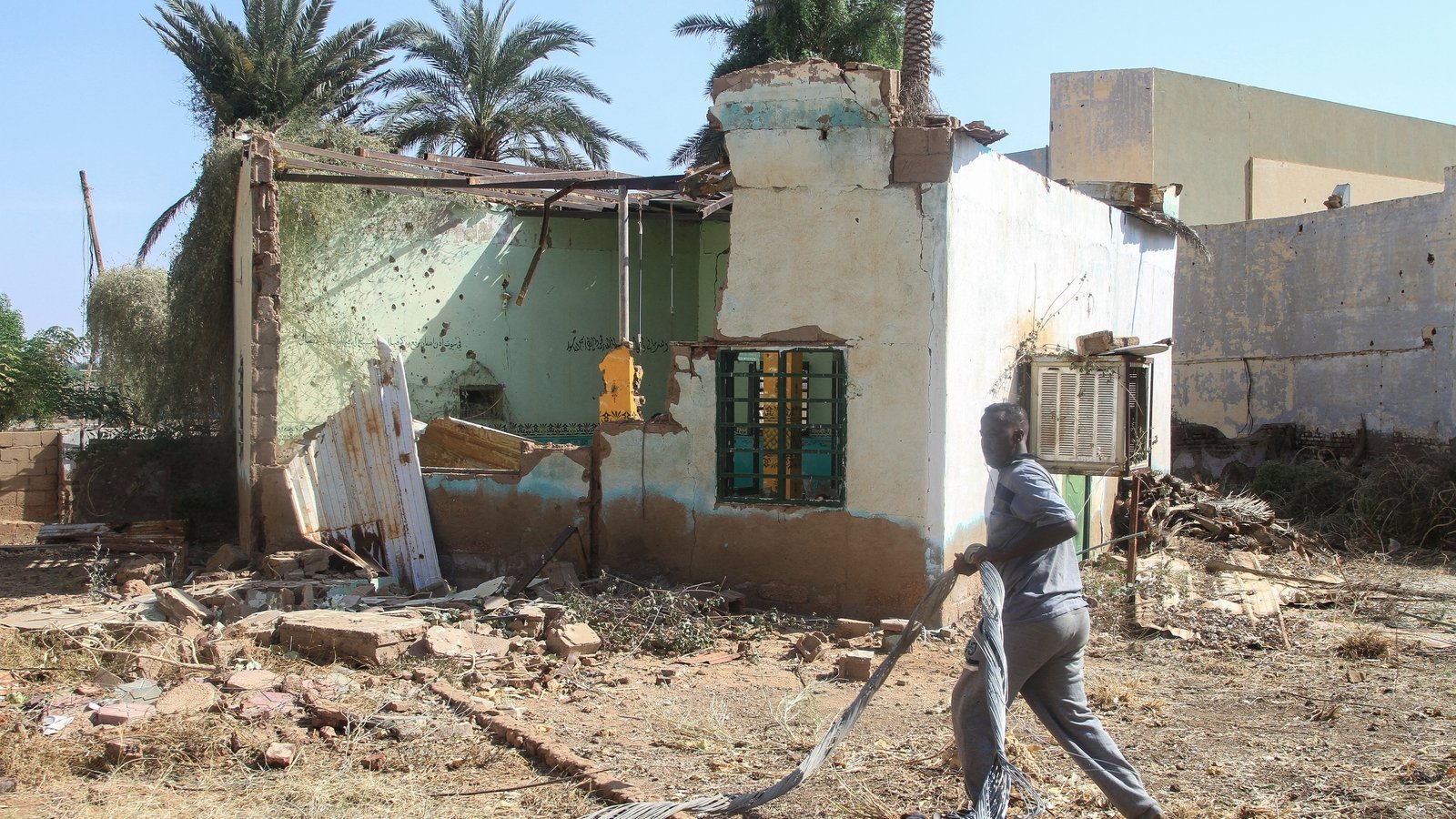
SudanS Escalating Crisis: Famine Risk, Atrocities, and a Fragile Ceasefire Attempt
The situation in Sudan continues to deteriorate rapidly, marked by escalating violence, a looming humanitarian catastrophe, and a fragile hope for de-escalation.recent reports paint a grim picture of widespread suffering, particularly in El-Fasher, North Kordofan, and khartoum, as the conflict between the Sudanese Armed Forces (SAF) and the Rapid Support Forces (RSF) intensifies. This analysis, drawing on the latest reporting from the field and expert commentary, details the current state of the crisis and its potential implications.
El-Fasher: A City Under Siege and Facing Potential Mass Atrocities
The west Darfur capital of El-Fasher is at the epicenter of the current crisis. Yale University’s Humanitarian Research Lab (HRL) has provided crucial evidence,utilizing satellite imagery,revealing the RSF’s purposeful obstruction of key escape routes for civilians.
* This blockade, coupled with reports of suspected mass graves identified through the same satellite imagery, has sparked grave concerns from Doctors Without borders (MSF).
* The fate of hundreds of thousands of residents remains unkown. Approximately 70,000 have fled to nearby towns like Tawila, leaving a important portion of the pre-conflict population of 260,000 unaccounted for.
* MSF President Javid Abdelmoneim highlighted the uncertainty, stating the whereabouts of the missing civilians are a major concern.
These developments strongly suggest a deliberate strategy to isolate and potentially target the civilian population, raising fears of further atrocities.
Kordofan Region: Sliding Towards famine and Intensified Violence
The conflict is now shifting its focus to the oil-rich Kordofan region, exacerbating an already dire humanitarian situation.
* In South Kordofan, the RSF shelled a hospital in dilling, killing five and injuring five more, and destroying the radiology department. This attack, confirmed by the Sudan Doctors’ Union, underscores the deliberate targeting of medical facilities.
* Dilling has been under RSF siege since June 2023 and is now at risk of famine, according to the Integrated Food Security Phase Classification (IPC).
* The regional capital, Kadugli, is already facing famine conditions.
* Residents of North Kordofan’s capital, El-Obeid, live “in fear” and are preparing to flee, despite the army briefly breaking the two-year siege in February.The RSF is now attempting to regain control of this crucial corridor linking Darfur to Khartoum.
Khartoum and Atbara: Continued RSF Drone Attacks
While Khartoum experienced relative calm after the army regained control earlier this year, the RSF continues to launch long-range drone attacks on military positions and infrastructure.
* Recent explosions were reported in Khartoum and Atbara,an army-held city 300km north.
* Witnesses in Omdurman reported explosions near a military base, while in Atbara, anti-aircraft defenses downed several drones, causing fires.
* No casualties have been immediately reported, and neither side has commented on the incidents.
These attacks demonstrate the RSF’s continued capacity to disrupt stability even in areas nominally under SAF control.
A Dubious Ceasefire Offer and Regional Dynamics
The RSF announced its acceptance of a mediators’ plan for a three-month ceasefire,aiming for talks in Jeddah. though, analysts are skeptical.
* Cameron hudson of the Center for Strategic and International Studies believes the announcement is a strategic move to deflect attention from atrocities in El-Fasher and portray the RSF as responsible.
* The proposed truce calls for a three-month pause in fighting,followed by negotiations.
* The UAE, a mediator, faces allegations from the UN of supplying arms to the RSF, which it denies.
* the SAF receives support from Egypt, Saudi Arabia, Turkey, and Iran, according to observers.
these complex regional dynamics highlight the challenges to achieving a lasting peace.
The Path Forward: urgent Action Needed
The situation in Sudan demands immediate and concerted international action.
* Humanitarian Access: Unimpeded humanitarian access to all affected areas, particularly el-Fasher and Kordofan, is paramount.
* Accountability: investigations into alleged atrocities, including the suspected mass graves in el-Fasher, are crucial.
* **Cease





