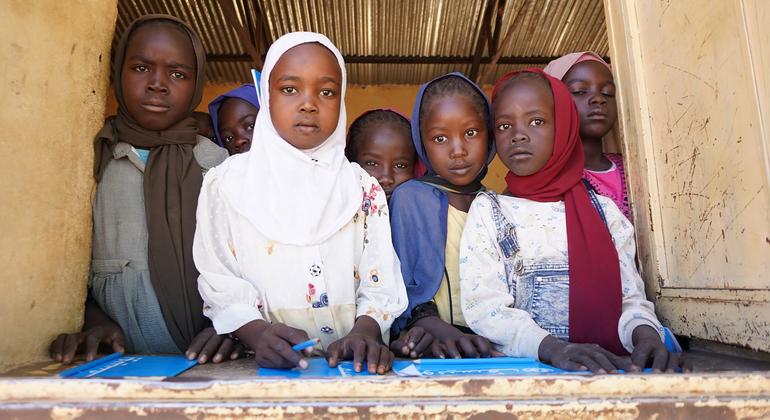
Sudan’s El Fasher: A City Under Siege and a Humanitarian Crisis Deepening
The situation in Sudan continues to deteriorate, with the city of El Fasher, North Darfur, representing a especially harrowing example of the conflict’s devastating impact on civilians. After a brutal 500-day siege culminating in its capture by the rapid Support Forces (RSF) in October, El Fasher remains largely cut off, facing a catastrophic humanitarian crisis. The World Food program (WFP) estimates that between 70,000 and 100,000 people are still trapped within the city, desperately in need of aid.
A Descent into desperation
The prolonged siege pushed residents to the brink of starvation. Reports from the UN human rights office detailed a horrifying reality where people were forced to consume peanut shells and animal feed simply to survive.Satellite imagery corroborated these accounts, revealing evidence of mass killings, executions based on ethnicity, and widespread atrocities. The city, now described by WFP’s Director of Emergency Preparedness and Response, Ross Smith, as “a crime scene with mass killings, with burnt bodies, with abandoned markets,” paints a grim picture of the suffering endured by its inhabitants.
“After more than a year and a half under siege, the essentials for survival have been entirely obliterated,” Smith emphasized, highlighting the scale of the destruction and the urgency of the situation.
Glimmers of Hope, Persistent Challenges
Securing access for humanitarian organizations remains the paramount concern. Network blackouts have severely hampered communication with those inside el Fasher, making accurate assessments and coordinated aid delivery incredibly difficult. Though, a potential breakthrough is on the horizon.
“We understand from discussions yesterday that we have agreement in principle with the Rapid Support forces for a set of minimum conditions to enter the city,” smith announced. “We anticipate to be able to do that very soon, to do some initial assessments and reconnaissance.” This agreement, while a positive step, is contingent on upholding the “unimpeded access” that humanitarian agencies have been consistently demanding.
The exodus and the Strain on Neighboring Communities
Those who have managed to escape El Fasher have faced perilous journeys, navigating roads riddled with landmines and unexploded ordnance. The majority have sought refuge in Tawila, a previously small desert town now transformed into a “sprawling, massive displacement settlement” housing over 650,000 people – a population equivalent to the entire country of Luxembourg. Others have fled to Ad Dabbah in northern State.
The influx of displaced people is placing immense strain on already limited resources. WFP is currently dispatching convoys to Tawila, carrying enough food to support 700,000 people for a month. However, this is a temporary measure in the face of long-term needs.
“These are families that have endured famine for many months on end and mass atrocities and are now living in overcrowded conditions with very limited support,” Smith explained. “There’s not enough shelter for people, many are staying in very makeshift structures: grass, straw structures, et cetera. Cholera and disease outbreak is widespread.”
A Nation Displaced: The Broader Sudan Crisis
The crisis in el Fasher is emblematic of the wider humanitarian catastrophe unfolding across Sudan. The conflict between the Sudanese army and the RSF, which erupted in April 2023, has triggered the world’s largest displacement crisis, with over 12 million people uprooted from their homes, both within Sudan and as refugees in neighboring countries.
Escalating Violence in Kordofan
The situation is not limited to Darfur. A recent update from the UN Refugee Agency (UNHCR) reveals a further deterioration of security in Kordofan. The RSF recently seized control of a Sudanese Armed Forces base in Babanusa, West Kordofan, following a week of intense fighting.
In South kordofan, civilians remain trapped in besieged cities like Kadugli and Dilling. UNHCR reports a disturbing trend: as women, children, and the elderly attempt to escape, men and young people are often left behind, facing heightened risks of detention by armed groups due to perceived affiliations. Over 40,000 people have been displaced from North Kordofan since November 18th, and UNHCR, along with its partners, is struggling to meet their urgent needs due to access constraints and critically low resources.
The Path Forward: Urgent Action Needed
The situation in Sudan demands immediate and sustained international attention. Unimpeded humanitarian access to all affected areas,