
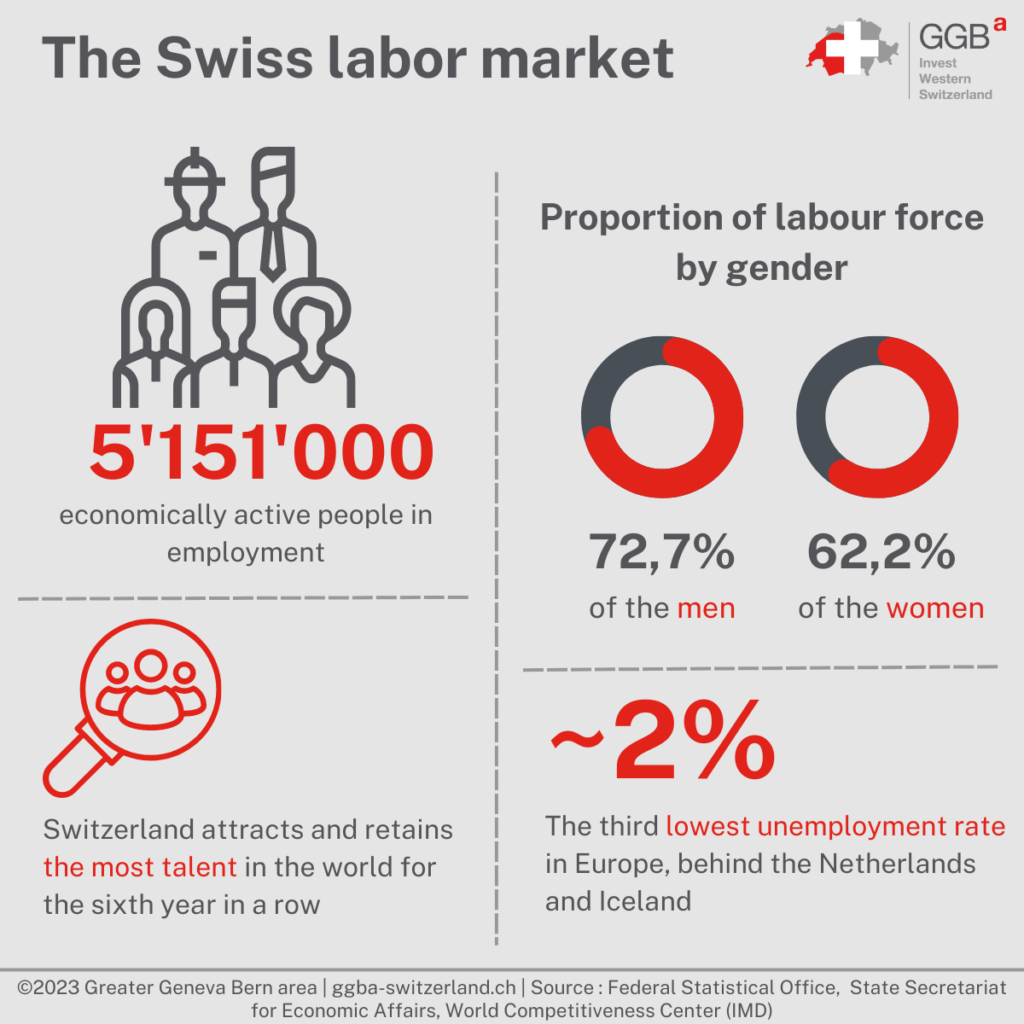
The Swiss labor market showed a notable shift in early 2026, characterized by a decrease in unemployment figures alongside growing systemic tensions between employees and management. According to the latest data released by the State Secretariat for Economic Affairs (SECO), the number of unemployed persons in Switzerland dropped in March 2026, reflecting a slight cooling of joblessness despite a broader climate of corporate instability.
In March 2026, the number of unemployed individuals decreased by 4,821, representing a 3.2% decline from the previous month. This brought the total number of unemployed persons to 146,255, as reported in the official SECO update dated April 8, 2026.
Even as these macroeconomic figures suggest a strengthening employment position, a separate analysis reveals a more volatile internal environment. A report from Glassdoor indicates that the Swiss market remains “tense,” with a trend of persistent layoffs and a widening cultural gap between staff and their superiors. This duality—falling unemployment numbers paired with rising workplace distrust—paints a complex picture of the current professional landscape in Switzerland.
Analyzing the March 2026 Unemployment Data
The decline in unemployment for March 2026 is the most recent update in a series of monthly reports provided by the Swiss government. The SECO documentation highlights a trend of fluctuations throughout the first quarter of the year, with reports issued on February 6, March 5, and April 8, 2026, to track the evolving situation on the labor market via the admin.ch portal.
For workers and policymakers, the 3.2% month-on-month drop is a key indicator of labor demand. Though, the broader context of 2026 suggests that this stability may be fragile. The persistent nature of layoffs mentioned in industry reports suggests that while recent roles may be opening, existing positions are being eliminated in other sectors, creating a churn in the workforce.
Rising Workplace Tension and the “Return to Office” Conflict
Beyond the raw statistics, the qualitative state of the Swiss labor market is under pressure. Data from Glassdoor suggests that the dynamics observed in 2025 have intensified in 2026. A primary point of contention is the “return to office” movement. While hybrid models and home office setups became standard during and after the pandemic, many executives are now prioritizing physical presence over performance and quality metrics.
This shift has led to increased friction, as employees feel their autonomy is being eroded. The report highlights a growing disconnect where managers are described as “out of touch” or “poor communicators” who are disconnected from the actual culture and objectives of their companies. In some instances, this disconnect has manifested in administrative failures, such as managers forgetting to include employees or apprentices in annual budget planning.
The Rise of Digital Surveillance
A particularly concerning trend for the Swiss workforce is the increase in workplace surveillance. Some employees, particularly in the artisanal and construction sectors, have reported the use of GPS in intervention vehicles and tablets to track movements on job sites. This atmosphere of distrust is further exemplified by strict policing of time-tracking, where workers are reprimanded for taking coffee breaks without “punching out.”

Key Takeaways: Swiss Labor Market March 2026
- Unemployment Drop: The number of unemployed persons fell by 4,821 (-3.2%) in March 2026, totaling 146,255.
- Corporate Volatility: Despite lower unemployment, layoffs continue to persist across various sectors.
- Management Friction: There is a widening gap between employees and supervisors, with managers often viewed as disconnected.
- Remote Work Decline: A strong push for a return to the office is creating tension as managers prioritize presenteeism over output.
- Increased Monitoring: The use of GPS and digital tracking tools is rising, contributing to a culture of distrust.
The next official update regarding the labor market situation is expected to follow the standard monthly reporting cycle established by the State Secretariat for Economic Affairs (SECO). Readers are encouraged to monitor official government channels for the May 2026 data release.
Do you suppose the return to the office is necessary for productivity, or is it a sign of outdated management? Share your thoughts in the comments below.