
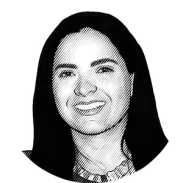
Human rights advocate and Venezuelan criminal lawyer Tamara Sujú has issued an urgent call for a democratic transition in Cuba, warning that the current geopolitical climate presents a critical window for change on the island. In a recent interview, Sujú described the Cuban government as a “malignant cell,” arguing that the regime’s influence extends beyond its borders to sustain repressive structures in other nations.
Sujú, who serves as the Executive Director and CEO of the Casla Institute, has spent years documenting the mechanisms of state control. Her recent assertions emphasize the require for Cubans to seize the current moment to dismantle the repressive apparatus that she claims is central to the regime’s survival.
The warning comes as part of Sujú’s broader work analyzing the intersection of authoritarianism in Latin America. By identifying the Cuban government as a catalyst for instability and repression, she positions the island’s political future as a linchpin for human rights progress across the region.
Analyzing the “Malignant Cell”: The Cuban Repressive Apparatus
During an interview with CiberCuba on April 9, 2026, Sujú explicitly stated that “the malignant cell is the Cuban regime,” urging the Cuban people to act decisively to promote a democratic transition to seize the current geopolitical moment. Her assessment is not merely political but based on her professional documentation of how the Cuban repressive apparatus has influenced other governments.
Sujú’s perspective is informed by her extensive legal background and her role as a specialist in human rights. According to her professional records, she is a graduate of the Universidad Católica Andrés Bello in Caracas, Venezuela, and has served as the International Coordinator of Foro Penal Venezolano per her LinkedIn profile. This experience in documenting political persecution in Venezuela has provided her with a framework to analyze the similar patterns of control utilized by the Cuban government.
The “malignant” nature of the regime, as Sujú describes it, refers to the systemic export of surveillance and repression techniques. She argues that the survival of the Cuban government is intrinsically linked to the maintenance of similar authoritarian structures elsewhere, making the transition to democracy in Cuba a vital step for regional liberation.
The Role of the Casla Institute in Latin American Human Rights
The Casla Institute, based in the Czech Republic, operates as a hub for promoting human rights and providing essential legal support to political prisoners across Latin American countries. Under the leadership of Tamara Sujú, the institute has become a critical repository for evidence of state-sponsored violence.
Sujú is the author of what is described as the largest archive of torture, sexual violence, and arbitrary detention cases in Venezuela. Her work involves the meticulous collection of first-hand testimonials; she has gathered accounts from more than 400 victims of violations carried out by the Venezuelan government according to the institute’s official team records. Through this data, Sujú has concluded that these human rights violations were not sporadic incidents but were instead systematic and widespread.
The institute’s mission is further supported by Fredo Arias-King, the President of the Board of Directors. Arias-King is an expert in political transitions who previously served as a senior advisor during Mexico’s shift to democracy in 2000. His experience advising democratic forces in nations such as Moldova, Russia, Peru, Belarus, and Ukraine complements Sujú’s legal expertise, creating a strategic approach to challenging entrenched authoritarianism in the Americas.
From Venezuela to Cuba: A Pattern of Systematic Repression
The connection Sujú draws between the Venezuelan and Cuban regimes is rooted in the shared use of a “repressive apparatus.” For a lawyer specializing in human rights, the parallels are evident in the way political dissidents are handled, the use of arbitrary detention, and the deployment of state security forces to stifle democratic movements.
By documenting the systematic nature of torture and sexual violence in Venezuela, Sujú provides a blueprint for understanding how authoritarian regimes maintain power through fear. Her call for a democratic transition in Cuba is based on the belief that the “malignant cell” of the Cuban government provides the ideological and tactical support necessary for other regimes to persist in their abuses.
The Casla Institute continues to advocate for the legal protection of those imprisoned for their political beliefs, viewing the liberation of political prisoners as a fundamental prerequisite for any lasting democratic change.
Key Pillars of Sujú’s Advocacy
| Focus Area | Key Contribution/Detail | Objective |
|---|---|---|
| Venezuelan Human Rights | Archive of 400+ victim testimonials | Prove systematic nature of state torture and violence |
| Cuban Political Transition | Identification of the “malignant cell” | Urge Cubans to seize geopolitical moments for democracy |
| Legal Support | Executive Director of Casla Institute | Provide legal aid to political prisoners in Latin America |
| Institutional Coordination | International Coordinator of Foro Penal Venezolano | Monitor and report on political persecution |
As the geopolitical landscape shifts, the work of the Casla Institute and the advocacy of Tamara Sujú highlight the precarious balance between state security and human rights. Her insistence that the Cuban government is the core of a wider regional problem suggests that without a fundamental change in Havana, the struggle for democracy in other Latin American nations will remain an uphill battle.
The next phase of this effort involves the continued documentation of repressive tactics and the mobilization of international legal support for those currently detained under authoritarian regimes. There are no currently scheduled public hearings, but the Casla Institute remains active in its mission to provide legal resources to political prisoners.
We invite our readers to share their perspectives on the role of international legal institutes in promoting democratic transitions in the comments below.