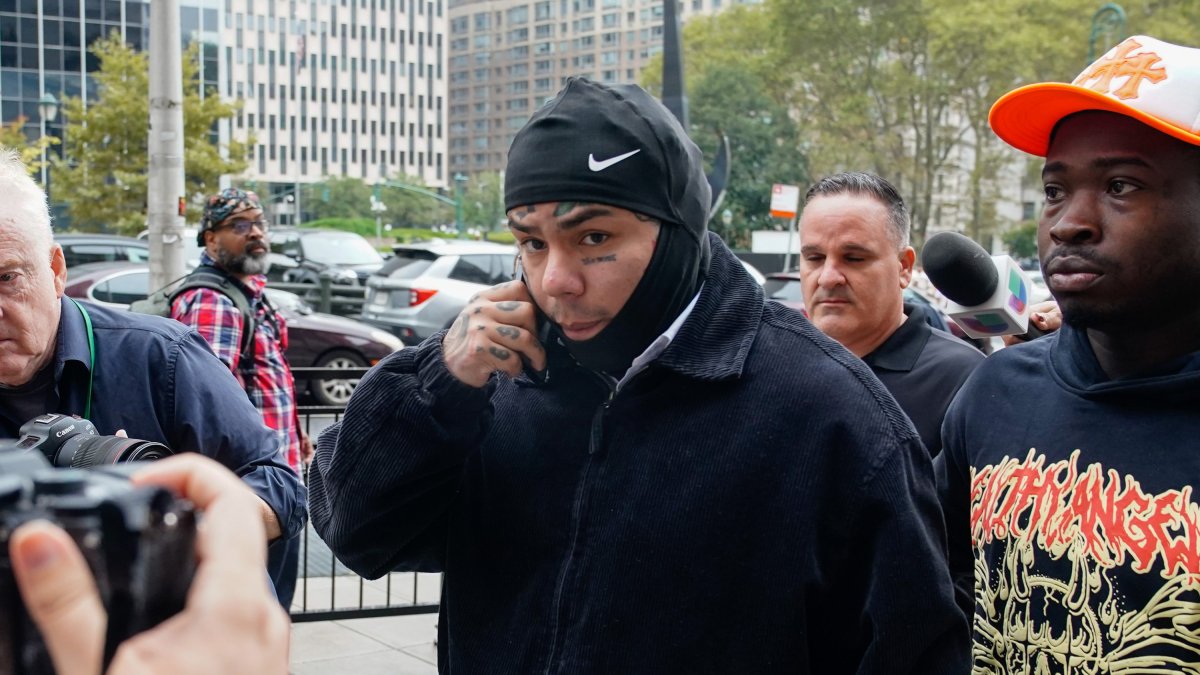
Tekashi 6ix9ine’s Continued Legal Troubles: A Deep Dive into Violations and Consequences
The controversial rapper Tekashi 6ix9ine, born Daniel Hernandez, is facing renewed incarceration after receiving a three-month prison sentence on december 5, 2025, for violating the terms of his supervised release. This isn’t Hernandez’s first brush wiht legal repercussions post-release; he received a 45-day sentence late last year for similar infractions.This ongoing cycle raises questions about rehabilitation, the challenges faced by cooperating witnesses, and the complexities of the justice system. Understanding the details of these supervised release violations is crucial to grasping the full scope of his legal battles.
The Latest Violations: Assault and Drug Possession
The recent sentencing stems from two separate incidents.In March 2025, a police raid at Hernandez’s Miami home uncovered small quantities of cocaine and ecstasy. Further compounding the issue, in august of the same year, Hernandez physically assaulted a man who allegedly taunted him at a Florida mall regarding his past cooperation with authorities. Judge Paul Engelmayer, visibly frustrated with Hernandez’s repeated offenses, stated that the rapper seemed to believe “ordinary rules don’t apply” to him. The prosecution highlighted these actions as clear breaches of his supervised release conditions,arguing for a deterrent to prevent future misconduct. Hernandez’s legal team requested six months of home confinement, but the judge ultimately deemed a return to prison necessary.
This case underscores the stringent requirements of federal probation, even for individuals who have already served significant prison time. The conditions often include regular drug testing, restrictions on travel, and prohibitions against associating with known criminals – all designed to ensure public safety and facilitate rehabilitation. Failure to comply can lead to revocation of release and further imprisonment. Recent data from the Bureau of Justice Statistics (BJS) shows that approximately 45% of individuals released on federal supervision are re-arrested within three years, highlighting the challenges of prosperous reintegration. https://bjs.ojp.gov/
From “Gummo” to Gang Testimony: A Troubled Trajectory
Tekashi 6ix9ine rose to prominence in 2017 with the release of his hit single “Gummo,” quickly becoming a polarizing figure in the hip-hop world. However, his success was overshadowed by his involvement with the Nine Trey Gangsta Bloods, a violent New York-based gang.in 2018, Hernandez pleaded guilty to racketeering and other charges, agreeing to cooperate with federal authorities in the case against his former associates. This decision, while leading to a relatively lenient two-year prison sentence followed by five years of post-conviction supervision, made him a target for retribution.
Hernandez’s testimony proved instrumental in securing convictions against several high-ranking gang members. However,it also placed him and his family in danger. He recounted in court harrowing experiences, including receiving a coffin with an animal inside as a threat and a terrifying incident where masked gunmen held his mother at gunpoint. these threats, while not excusing his violations, provide context to the pressures he faces. The concept of witness protection programs and the challenges of maintaining security for cooperating witnesses are critical aspects of this case. Experts in criminology note that the psychological toll of being a cooperating witness can be immense, potentially contributing to instability and poor decision-making.
Understanding Supervised release and its Implications
supervised release, often referred to as probation, is a period of court-imposed supervision following imprisonment. It’s intended to help individuals successfully reintegrate into society while ensuring public safety. Violations can range from technical infractions (like failing a drug test) to new criminal offenses. The consequences can include increased supervision, stricter conditions, or, as in Hernandez’s case, revocation of release and a return to prison.
The severity of the penalty depends on the nature of the violation and the individual’s prior criminal history. A key aspect of the process is the revocation hearing, where a judge determines whether sufficient evidence exists to justify revoking the release. Hernandez is scheduled to report to the Metropolitan Detention Center on January 6, 2026, to begin serving his latest sentence. This situation highlights the importance of adhering to the terms of criminal sentencing and the potential repercussions of non-compliance. Furthermore, it raises questions about the effectiveness of current strategies for supporting individuals transitioning back into society after incarceration.
Evergreen Section: The Long-Term Effects of Snitching & Witness Protection