The Evolving Patient Experience: Convenience, Coverage, and the Future of Healthcare Access
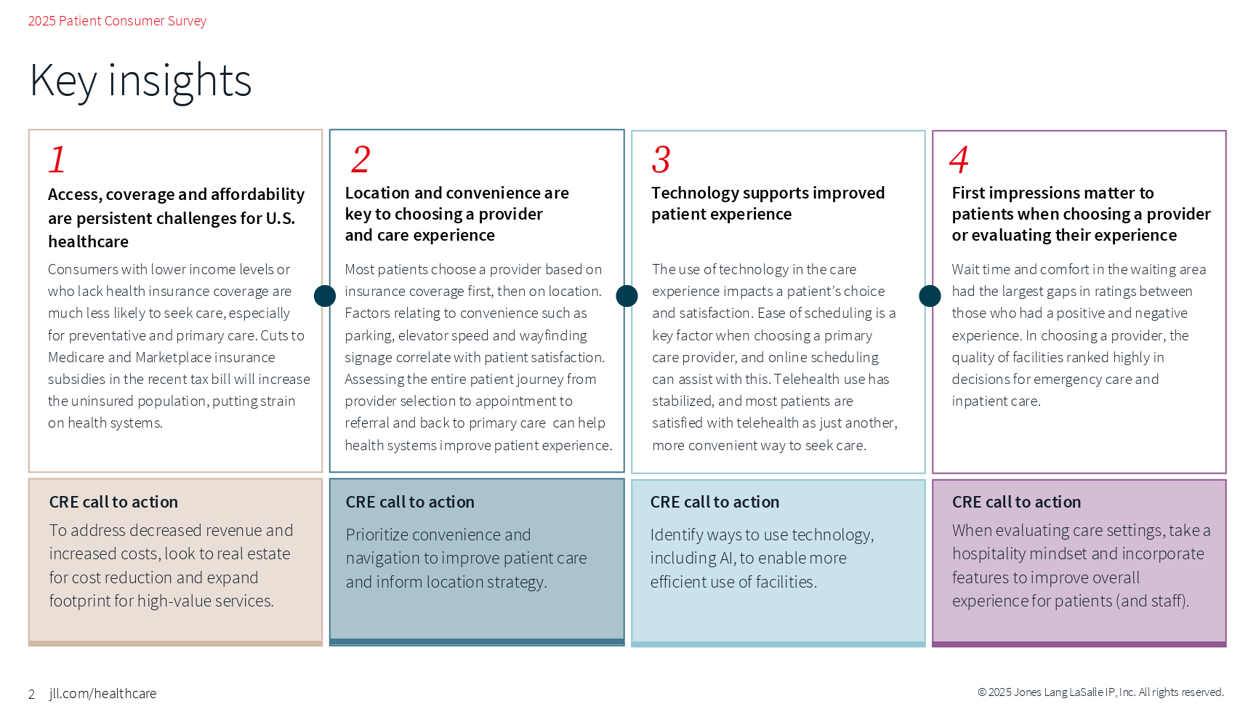
Healthcare isn’t just about clinical outcomes anymore. Today’s health consumers – you – are increasingly focused on convenience, access, and a respectful, empathetic experience. Recent data highlights how these factors are shaping patient choices and expectations.Let’s explore what’s driving these shifts and what the future of healthcare access might look like.
The Weight of Coverage Concerns
At the heart of many patient anxieties lies health insurance coverage. A recent study reveals a clear correlation between plan type and concern about losing coverage.
Those enrolled in Medicaid or government assistance programs understandably express the highest levels of worry. Individuals with Medicare, employer-sponsored plans, or direct-purchase plans demonstrate comparatively less concern. This underscores the vital role of stable coverage in fostering peace of mind for patients.
[Image of JLL-telehealth-how-tech-was-used.png – with alt text: “Patient Technology Use and Satisfaction”]
Convenience is King: The Rise of the Patient-as-Consumer
Convenience is a major driver of patient satisfaction. Net Promoter Scores (NPS) – a measure of customer loyalty – show a strong link between ease of access and positive patient experiences.
Specifically, patients highly value:
* Convenient locations.
* Ample parking.
* Easy wayfinding within facilities.
* Short distances from parking to the provider’s entrance.
These seemingly small details contribute substantially to a positive perception of care.
Technology’s Growing Influence
Technology is rapidly reshaping the patient journey. over half of consumers (51%) report being more likely to choose a provider offering these digital tools:
* Online appointment scheduling.
* Patient portals for health records and interaction.
* Email or text follow-up after appointments.
* Computerized or mobile check-in.
These technologies aren’t just “nice-to-haves” anymore. They represent respect for your time and a commitment to a seamless experience. They’re redefining what “good” looks like in healthcare, extending beyond clinical care to encompass empathy and trust.
Looking Ahead: Predictions and Challenges
While some technologies are gaining traction,others are still emerging. Chatbot use remains low (5% as of June 2025), but expect significant growth in the next few years. We anticipate adoption rates to climb to 25% or higher by 2026-2027.
Though,progress isn’t uniform. A critical challenge remains: the widening access gap between urban/suburban and rural communities. Without dedicated investment and support for rural healthcare, health outcomes will continue to diverge.
We must advocate for:
* continued investment in telehealth.
* Expanded virtual care options.
* Equitable access for all health citizens, regardless of ZIP code.
The future of healthcare hinges on embracing technology,prioritizing convenience,and ensuring equitable access for all. By focusing on these key areas, we can create a healthcare system that truly serves the needs of the patient – you.
Disclaimer: This article provides general information and should not be considered medical advice.Always consult with a qualified healthcare professional for any health concerns or before making any decisions related to your health or treatment.