
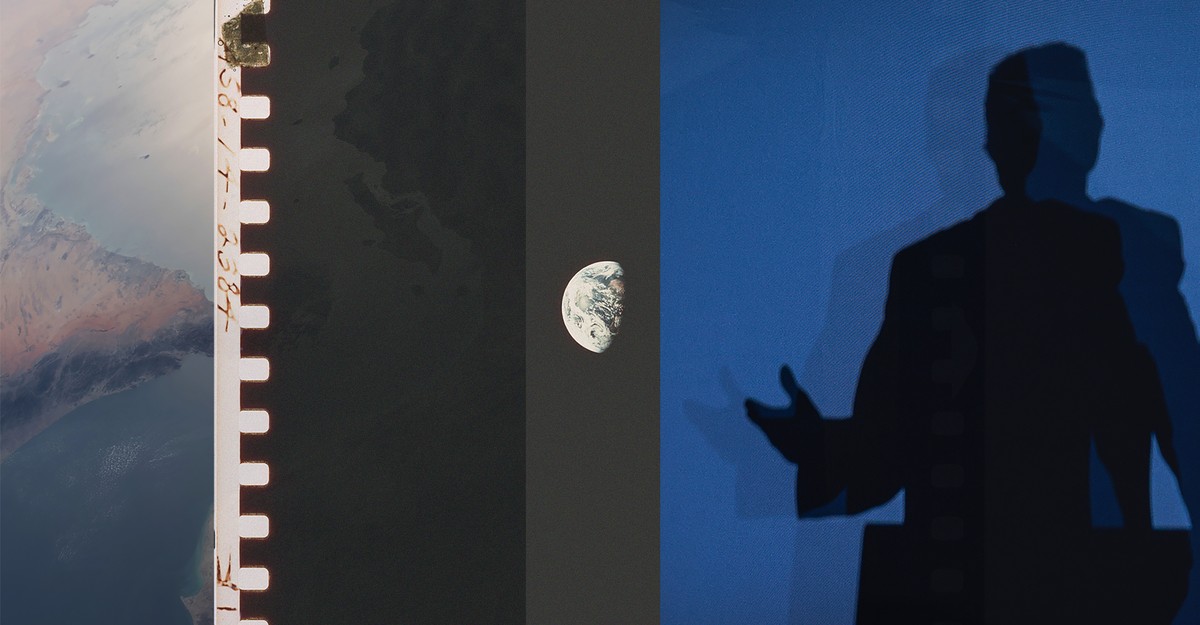
To gaze upon the Earth from the silence of the vacuum is to experience a psychological disruption so profound that it has its own scientific nomenclature. For the few who have left the atmosphere, the sight of our home—a fragile, glowing marble suspended in an infinite void—often triggers a “factory reset” of the human ego. It is a moment where the artificial constructs of nationality, religion, and political ideology dissolve, replaced by a visceral realization of planetary unity.
This phenomenon, known as the overview effect, describes a cognitive shift reported by astronauts who view the Earth from space via Wikipedia. Researchers characterize this state as one of awe with self-transcendent qualities, often precipitated by the striking visual stimulus of the planet’s curvature and the impossibly thin veil of its atmosphere. For many, the experience is not merely visual but deeply emotional, fostering an increased sense of connection to other people and the Earth as a whole.
As we move through April 2026, this cosmic perspective has taken on a haunting relevance. While the crew of the Artemis II mission captures the breathtaking beauty of our world from hundreds of thousands of miles away, the world below remains entangled in the same existential frictions that have defined the century. We are living in a paradoxical era where our capacity for exploration is peaking exactly as our capacity for self-destruction feels most imminent.
Defining the Overview Effect: A Shift in Consciousness
The term “overview effect” was coined in 1987 by space philosopher and author Frank White via NASA. According to White, the experience creates powerful changes in how astronauts perceive life and the planet. It is a transition from seeing the world as a collection of fragmented territories to seeing it as a single, integrated biological system.
The psychological impact is often overwhelming. NASA astronaut Christina Koch, a member of the Artemis II mission, described the experience of looking through the cupola and seeing the Earth against the backdrop of the universe, noting the “thin blue line” of the atmosphere and the ethereal green glow of the atmosphere on the dark side of the planet via NASA. Koch observed that from this vantage point, borders and political boundaries vanish, revealing a reality where humans are far more alike than they are different.
However, this awe is frequently shadowed by a sense of fragility. While some astronauts experience an expansive love for humanity, others experience a profound grief. Actor William Shatner previously described his experience of looking at the Earth as one of sadness and grief for the planet. For some, the realization that everything we have ever known exists on a tiny, vulnerable sphere leads to a conviction regarding the fragility of our civilization and the possibility of self-extinction.
Artemis II and the Distance of Perspective
The current Artemis II mission has pushed this perspective to its furthest limit. During a recent lunar flyby, the Integrity spacecraft reached a distance of 252,756 miles from Earth, marking the farthest any human has ever traveled from the home planet. At its closest approach to the moon, the spacecraft came within 4,067 miles of the lunar surface, during which time the crew experienced a 40-minute period of total communication loss with humanity.
The crew—comprising Christina Koch, Reid Wiseman, Victor Glover, and Jeremy Hansen—spent seven hours observing previously unseen portions of the lunar surface. In an effort to document this unprecedented journey, the astronauts captured approximately 10,000 photos, ranging from the “Earthset” behind the lunar horizon to the tiny, illuminated crescent of the planet shrinking into the blackness of space.
These images serve as a mirror for those of us remaining on the ground. We consume these life-affirming vistas on slight screens, often sandwiched between mundane digital noise: sports updates, fluctuating oil prices, and the jarring headlines of geopolitical instability. The contrast is jarring—the serene, borderless beauty of the planet in a photograph versus the fractured, volatile reality of the news cycle.
The Duality of Human Existence: Awe vs. Despair
The timing of the Artemis II mission has coincided with a period of extreme tension. On April 7, 2026, the world faced a critical deadline set by U.S. President Donald Trump regarding a deal to reopen the Strait of Hormuz. The rhetoric reached a fever pitch when the President posted a warning that “a whole civilization will die tonight” if his terms were not met by 8 p.m. Eastern Time.
This threat triggered widespread panic and condemnation from Democratic lawmakers and various media figures, with many interpreting the language as a hint toward nuclear warfare. The tension only broke an hour before the deadline when the President announced a two-week cease-fire deal, a diplomatic resolution brokered with the assistance of Pakistan.
This oscillation between the highest achievement of human curiosity and the lowest depths of political bluster defines our current age. We are a species capable of sending humans 250,000 miles into space to contemplate the unity of life, yet we remain susceptible to the whims of individuals who threaten that same life for strategic leverage. It is a series of existential reminders—ranging from nuclear proliferation and pandemics to the looming threats of climate change and the hypothetical risks of advanced AI.
The Conflict of the “Pale Blue Dot”
The tension we feel today is, a ground-based version of the overview effect. We are forced to reckon with the knowledge that our world is both galactically insignificant and unspeakably precious. When we see the Earth as a “pale blue dot,” the logic of war and the obsession with boundaries appear not only irrational but suicidal.

As Apollo 8 astronaut Jim Lovell recalled from his journey to the moon in 1968, the view of the Earth was so heavenly that it shifted his entire concept of existence. He realized that the “heaven” people hope for after death was actually the place he had been born into.
Choosing Earth: The Path Forward
Despite the volatility of the present moment, the Artemis II mission represents the best of the human spirit: the yearning to learn, to explore, and to band together to achieve something greater than the sum of our parts. The mission is not merely a technical exercise in aerospace engineering; it is a psychological necessity.
In a statement reflecting this sentiment, Christina Koch emphasized that while humanity will continue to build ships, found companies, and construct science outposts on other worlds, the ultimate choice must always remain the same. As she noted, we will always choose Earth, and we will always choose each other.
The challenge for the rest of us—those of us not orbiting the moon—is to integrate the overview effect into our daily lives. To recognize that the “thin blue line” of our atmosphere is the only thing protecting us from the void, and that our shared survival depends on the same unity that astronauts feel the moment they seem back at the horizon.
The current two-week cease-fire regarding the Strait of Hormuz provides a fragile window for diplomacy. The next critical checkpoint will be the expiration of this agreement, where the world will once again wait to see if we prioritize the borders of the map or the survival of the planet.
Do you believe the perspective gained from space exploration can fundamentally change how we handle conflict on Earth? Share your thoughts in the comments below.