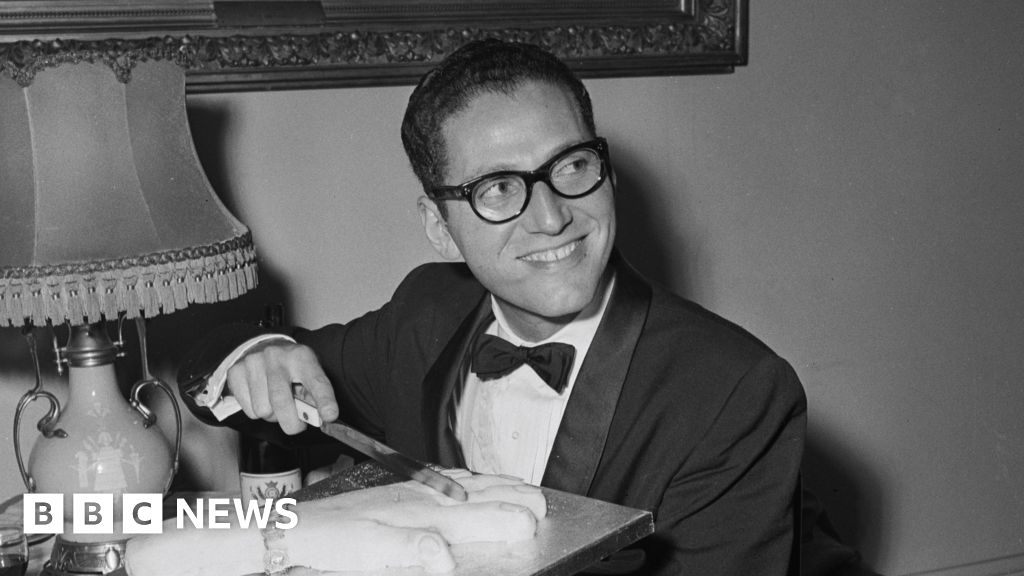
Tom Lehrer: The Satirical Genius Who Put Math & Mayhem into Music
Tom Lehrer wasn’t just a musician; he was a phenomenon. A Harvard-educated mathematician with a wickedly sharp wit, Lehrer carved a unique niche in 20th-century entertainment with his darkly humorous songs. He tackled taboo subjects with intelligence and musical flair, leaving behind a legacy that continues too resonate today. This is the story of a true original.
Early Life & Education: A Prodigy’s Path
Born in 1928, Lehrer displayed extraordinary intellectual gifts from a young age. He graduated early from the Loomis Chaffee School in Connecticut. At just 18, he earned a bachelor’s degree in mathematics from Harvard University in 1946.
He continued his studies at Harvard, completing a master’s degree, and began doctoral work at Columbia University, though he ultimately didn’t finish his PhD.It was during his time at Harvard that Lehrer began writing lyrics, initially to entertain his friends. Little did they know, these early efforts would blossom into a groundbreaking musical career.
The Rise of a Satirist: From Post to Nightclubs
Lehrer’s breakthrough came in 1953 with the release of Songs by Tom Lehrer. This self-produced record, sold directly through the mail, became a word-of-mouth sensation, selling an estimated half a million copies. Though, its provocative content led to bans on the BBC.
The album’s success propelled Lehrer onto the stage. He quickly gained a following performing in nightclubs across New York, Los Angeles, and San Francisco.he also became a favorite performer at events supporting anti-war and left-wing causes.
Signature Songs: A Catalog of Clever Controversy
what set Lehrer apart was his willingness to tackle difficult and often controversial topics with biting satire. Here are some of his most enduring works:
“The Elements”: Perhaps his most famous song, this rapid-fire listing of the chemical elements is set to the tune of “I Am the Vrey Model of a Modern Major-General” from Gilbert and Sullivan’s The Pirates of Penzance.
“The Masochism Tango”: A darkly comedic exploration of unconventional desires, featuring lyrics like, “I ache for the touch of your lips, dear / But much more for the touch of your whips, dear…”
“I Hold Your Hand in Mine, I Got It From Agnes”: A shockingly frank song about the transmission of a venereal disease.
“Poisoning Pigeons in the Park”: A macabre ballad detailing the (fictional) demise of pigeons via cyanide-laced peanuts.
“We Will All Go Together When We Go”: A chillingly humorous take on nuclear annihilation, with the memorable refrain, “Oh, we will all fry together when we fry.”
“the Vatican Rag”: A ragtime rendition of a Catholic hymn that playfully mocks the Church.
Beyond the Stage: Television, education & Public Domain
Lehrer’s talents extended beyond live performance and albums. He contributed satirical songs to the US edition of the British television show That Was the Week That was in 1965.
Later in life, he transitioned into education, teaching mathematics and musical theater at the University of California from 1972 to 2001. You might be surprised to learn he largely retired from performing in the 1970s, feeling his satirical edge had dulled in the face of increasingly absurd real-world events.
In a remarkably generous act, Lehrer placed his songwriting copyrights into the public domain in 2020. He relinquished all rights to his songs and recordings, stating, “In short, I no longer retain any rights to any of my songs. So help yourselves,and don’t send me any money.” his website,though he predicted its closure,remained active at the time of writing.
A Lasting Legacy
Tom Lehrer’s impact on music and satire is undeniable. He demonstrated that intelligence,wit,and a willingness to challenge conventions could create truly memorable and thought-provoking art. His songs continue to be performed, studied, and enjoyed by audiences worldwide, proving that a little bit of mayhem, combined with a lot of math