
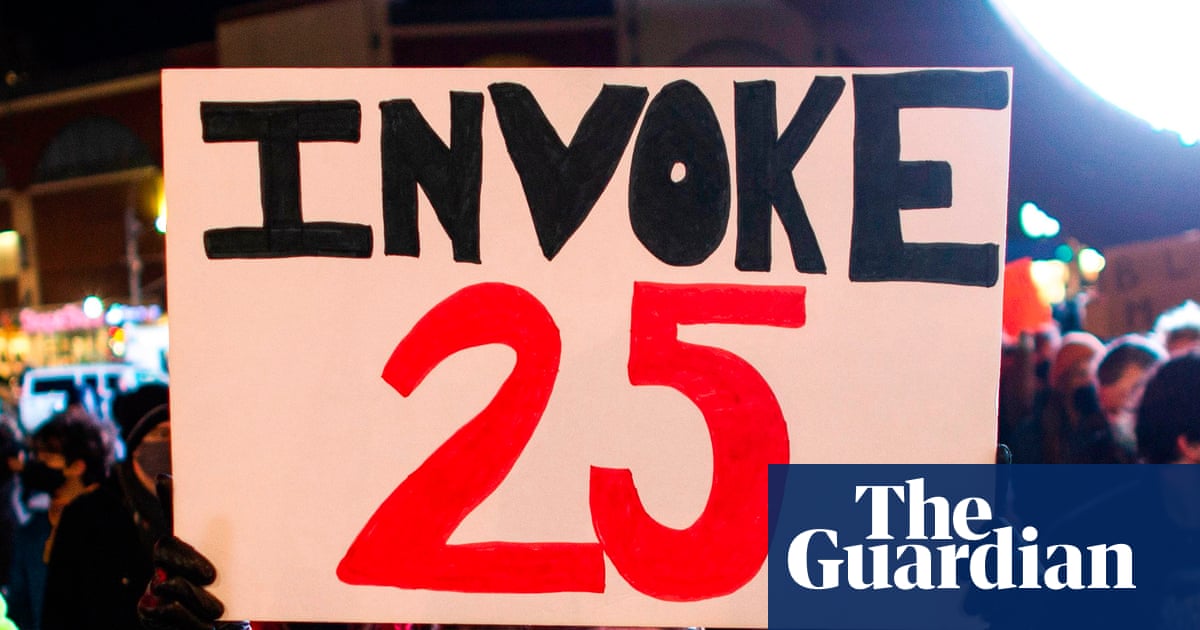
The United States is facing a profound constitutional crisis this Tuesday, April 7, 2026, as a wave of lawmakers and civil rights organizations call for the immediate removal of President Donald Trump from office. The urgency follows a series of escalating threats directed at Iran, culminating in a social media post on Tuesday morning in which the president warned that “a whole civilization will die tonight” unless Tehran reaches a deal with the U.S. Government.
The calls to invoke the 25th Amendment have approach from an eclectic coalition, spanning from Democratic leaders to former Republican allies. The turmoil centers on the president’s recent rhetoric, including a profanity-laced Easter Sunday post that threatened to bomb civilian infrastructure in Iran, an action that critics and legal experts have decried as a potential war crime according to analysis from CNN.
While the Democratic party has been the primary driver of these removal efforts, the current atmosphere is marked by a stark divide within the GOP. While most Republican leadership remains silent, some former close allies of the president have broken ranks, citing “madness” and “delusional behavior” as the catalyst for their sudden shift in loyalty.
As an 8 p.m. EST deadline for Iran to cut a deal approaches, the world is watching to see if the U.S. Cabinet will act or if the president’s rhetoric will translate into a global conflict. The White House has denied that nuclear weapons are being considered, though the president’s phrasing has sparked widespread alarm across international capitals as reported by CNN.
The Mechanism of Removal: Understanding the 25th Amendment
The 25th Amendment to the U.S. Constitution provides a legal pathway for the removal of a president who is deemed “unable to discharge the powers and duties of his office.” Unlike impeachment, which is a legislative process handled by the House and Senate, the 25th Amendment is an executive-led process. To successfully remove the president, the Vice President and a majority of the Cabinet must sign a written declaration stating that the president is unfit to serve as detailed by USA TODAY.

This provision has never been used to forcefully remove a sitting president. The high threshold for its invocation is designed to prevent political opponents from using health or stability concerns to stage a “palace coup.” Still, the current calls for its leverage are based on the argument that the president’s recent behavior represents a clear and present danger to national and global security.
Despite the public outcry, the practical path to removal remains narrow. Current reports indicate that Vice President JD Vance is not on board with the effort, and You’ll see no indications that a majority of Cabinet officials are currently considering the move per CNN analysis. Without the cooperation of the Vice President and the Cabinet, the 25th Amendment cannot be triggered, regardless of how many members of Congress call for it.
An Unlikely Alliance: From Democrats to Former Allies
The push to remove President Trump is notable for the diverse range of voices involved. More than two dozen Democratic lawmakers have called for the amendment’s invocation, including high-profile figures such as Illinois Governor J.B. Pritzker according to CNN. These lawmakers argue that the president’s threats to target civilian power plants and infrastructure are not only illegal under international law but evidence of an unstable mental state.
Adding to the pressure, the NAACP issued a statement on April 7 calling for the president’s immediate removal. Derrick Johnson, President and CEO of the NAACP, cited “deteriorating health and increasingly delusional behavior,” stating, “This president is unfit, unwell, and unhinged. The rhetoric and behavior we are witnessing from Trump isn’t just alarming, it’s dangerous” as reported by USA TODAY.
Perhaps most surprising is the intervention of former GOP Representative Marjorie Taylor Greene. Once a staunch ally of the president, Greene used X (formerly Twitter) on April 7 to call for the 25th Amendment to be invoked, describing the situation as “evil and madness.”
“25TH AMENDMENT!!! Not a single bomb has dropped on America,” Greene said. “We cannot kill an entire civilization. This is evil and madness.”
The coalition has even extended to unconventional voices. conspiracy theorist Alex Jones was recorded on Monday asking how to “25th Amendment his ass” according to CNN. This broad spectrum of opposition suggests that the president’s current trajectory has alienated a significant portion of his traditional base and political support system.
A Pattern of Instability: From Greenland to Iran
Critics argue that the current crisis is not an isolated incident but part of a continuing pattern of erratic behavior. Several Democrats previously attempted to call for the 25th Amendment in January 2026. Those calls were triggered after the president sent a text message to Norwegian Prime Minister Jonas Gahr Støre, claiming that U.S. Plans to take control of Greenland were a result of him not winning the Nobel Peace Prize per USA TODAY.
The shift from diplomatic eccentricities to threats of “civilization-ending” warfare has fundamentally changed the stakes. The focus has moved from questioning the president’s judgment to questioning his basic fitness for office. The mention of civilian infrastructure—specifically power plants—has drawn particular condemnation, as targeting such sites is generally prohibited under the Geneva Conventions.
Key Takeaways of the Current Crisis
- The Trigger: Social media posts threatening to bomb Iranian civilian infrastructure and a warning that a “whole civilization will die tonight.”
- The Legal Goal: Invocation of the 25th Amendment to remove the president due to inability to discharge duties.
- The Requirement: A written declaration from the Vice President and a majority of the Cabinet.
- The Opposition: A coalition including over two dozen Democrats, the NAACP, and former GOP ally Marjorie Taylor Greene.
- The Obstacle: Lack of support from Vice President JD Vance and the current Cabinet.
The Global Stakes and the 8 p.m. Deadline
The immediate focus for the international community is the 8 p.m. EST deadline set by the president for Tehran to reach a deal. The ambiguity of the “deal” and the severity of the threatened retaliation have created a volatile environment. While the White House has denied the use of nuclear weapons, the phrasing “a whole civilization will die” has left global leaders unsettled according to CNN.
For the U.S. Cabinet, the situation presents an unprecedented dilemma. They must weigh their loyalty to the president against their oath to the Constitution and the potential for an unplanned global catastrophe. If the Cabinet remains silent, the president retains full control over the U.S. Nuclear arsenal and conventional military forces, regardless of the public outcry from Congress.
The silence of the broader Republican party is equally significant. By not publicly condemning the threats or supporting the removal efforts, the GOP leadership is effectively betting that the president’s rhetoric is a negotiating tactic rather than a sign of genuine instability. However, the public break by figures like Marjorie Taylor Greene suggests that the internal consensus within the party may be more fractured than it appears.
The next critical checkpoint is the 8 p.m. EST deadline tonight, April 7, 2026. Whether the president follows through on his threats or pivots to a diplomatic resolution will likely determine if the calls for the 25th Amendment fade or intensify into a formal Cabinet movement.
World Today Journal will continue to monitor this developing story. We invite our readers to share their perspectives on the constitutional implications of this crisis in the comments below.