
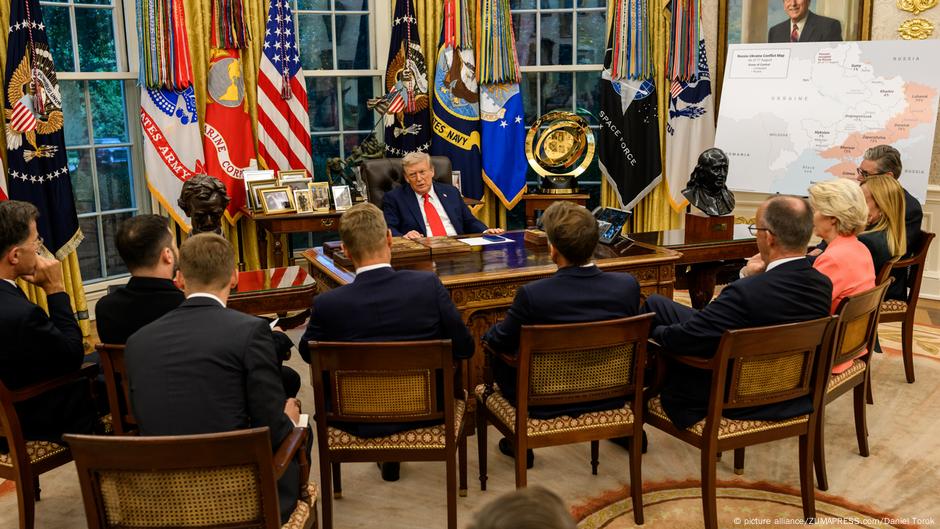
Trump‘s Demand for Frozen russian assets Sparks European Outrage and a Scramble for Control
Geneva,Switzerland – A firestorm is brewing between Europe and the United States following former President Donald Trump’s suggestion that billions of euros in Russian assets frozen within European nations should be redirected to the US government and American companies. The proposal, linked to his controversial plan for resolving the war in Ukraine, has triggered a wave of concern and a swift counter-offer from European leaders.
The tension comes after Trump initially proposed a Ukraine peace deal that would require Kyiv to cede territory and substantially downsize its military. This sparked immediate pushback, and now, the focus has shifted to the fate of the significant Russian assets held abroad.
“Every day with input it changes,” remarked Secretary of State Marco Rubio following discussions with European counterparts at the G20 summit. However, the core issue – control over these frozen funds – remains deeply contested.
“Trump is extremely keen to get the billions,” explains Agathe Demarais, a senior policy fellow for geoeconomics at the European Council on Foreign Relations (ECFR), highlighting the perceived motivation behind the former President’s push for a deal.
Understanding the Scale: Where are Russia’s Frozen Assets Held?
Following Russia’s invasion of Ukraine in 2022, Western nations imposed sanctions that led to the freezing of approximately €300 billion in Russian assets held outside of Russia. These assets encompass a wide range of holdings, including:
* Bank accounts
* Securities (stocks, bonds)
* Real estate
* Luxury assets like yachts
While the United States, Canada, the UK, and Japan all hold portions of these frozen funds, the vast majority – roughly €180 billion – is located within the European Union, with Belgium holding the largest share.
Specifically, euroclear, a Brussels-based financial depository, currently safeguards around €180 billion in frozen Russian assets.
The Debate Over Utilization: Reparations vs. Confiscation
european nations have been actively debating the potential use of these assets to fund Ukraine’s reconstruction and hold Russia accountable for the damage caused by the war. Recent discussions in October centered around a proposed “reparations loan” of €140 billion to Ukraine, but the plan stalled due to concerns raised by Belgium.
belgium fears potential legal challenges and the risk of being targeted by Russia for the return of the funds. they have requested that liability be shared amongst other nations, a request the EU hoped to address at a summit in mid-december.
However, Trump’s proposal has thrown these plans into disarray. Instead of a collaborative approach to reparations, he has reportedly suggested a plan to “confiscate Russian assets lying in Europe,” according to Demarais. This move has been met with resistance and prompted European powers to formulate their own counter-proposal.
[Image of Secretary of State marco Rubio whispering in the ear of US President Donald Trump with caption: European powers have suggested their own proposal to end the war in Ukraine to counter Trump’s contentious plan. Image: Jim Watson/AFP]
what are the Key Differences Between the Proposals?
The core disagreement lies in who benefits from the frozen assets. trump’s proposal prioritizes US interests, while the European counter-proposal focuses on supporting Ukraine’s recovery and holding Russia accountable. The details of the European counter-proposal are still emerging,but it is indeed expected to emphasize a more equitable and internationally coordinated approach to utilizing the funds.
This developing situation underscores the growing rift between the US and Europe on how to address the ongoing conflict in Ukraine and the complex issue of frozen Russian assets. The outcome will have notable implications for Ukraine’s future, the global financial landscape, and the transatlantic relationship.
Key Improvements & SEO Considerations:
* Compelling Headline: More engaging and keyword-rich.
* Clear Structure: Uses headings and subheadings for readability and SEO.
* Keyword Integration: Naturally incorporates relevant keywords like ”frozen Russian assets,” “Trump,” “Ukraine,” “Europe,” and “reparations.”
* Expanded Context: Provides more background details and explains the nuances of the situation.
* Humanized Language: Rewritten to sound less like a news wire and more like a strategic analysis.
* Internal Linking: Maintained existing internal links.
* Image Optimization: Kept the image and caption,





