
Trump Reclaims the Kennedy center Honors: A Shift in Tradition and a New Era for the Prestigious Awards
For decades, the Kennedy Center Honors have represented a bipartisan party of American artistry, a moment where presidents from both sides of the aisle acknowledged the cultural impact of luminaries in film, music, theater, and dance. This year, however, the ceremony unfolds under a distinctly different banner, with former President Donald Trump taking a central role – a move that signals a meaningful departure from tradition and a reshaping of the event’s identity.
Trump, who notably skipped the Kennedy Center Honors during his first term in office, is now assuming the role traditionally held by figures like Walter Cronkite and Stephen Colbert: master of ceremonies. He confidently predicted the broadcast will achieve record-breaking ratings, stating, “This will be the highest-rated show that they’ve ever done… there’s nothing like what’s going to happen” on Sunday night. this assertive claim underscores his hands-on approach to the event, a stark contrast to previous administrations.
A history of Bipartisan Recognition
Established in 1978, the Kennedy Center Honors have long been a symbol of national unity, recognizing individuals who have profoundly influenced American culture. Past honorees represent a dazzling spectrum of talent, from dance icons Martha Graham and Merce Cunningham to theatrical giants Stephen Sondheim and Andrew Lloyd Webber, cinematic legends Meryl Streep and Tom Hanks, and musical innovators Bob Dylan and Joni Mitchell.The awards have consistently transcended political divides, with presidents historically acknowledging artists holding differing viewpoints. ronald Reagan honored playwright Arthur Miller, a vocal advocate for liberal causes, while Bill Clinton recognized Charlton Heston, a staunch defender of gun rights.
This Year’s Class of Honorees: A Diverse Group
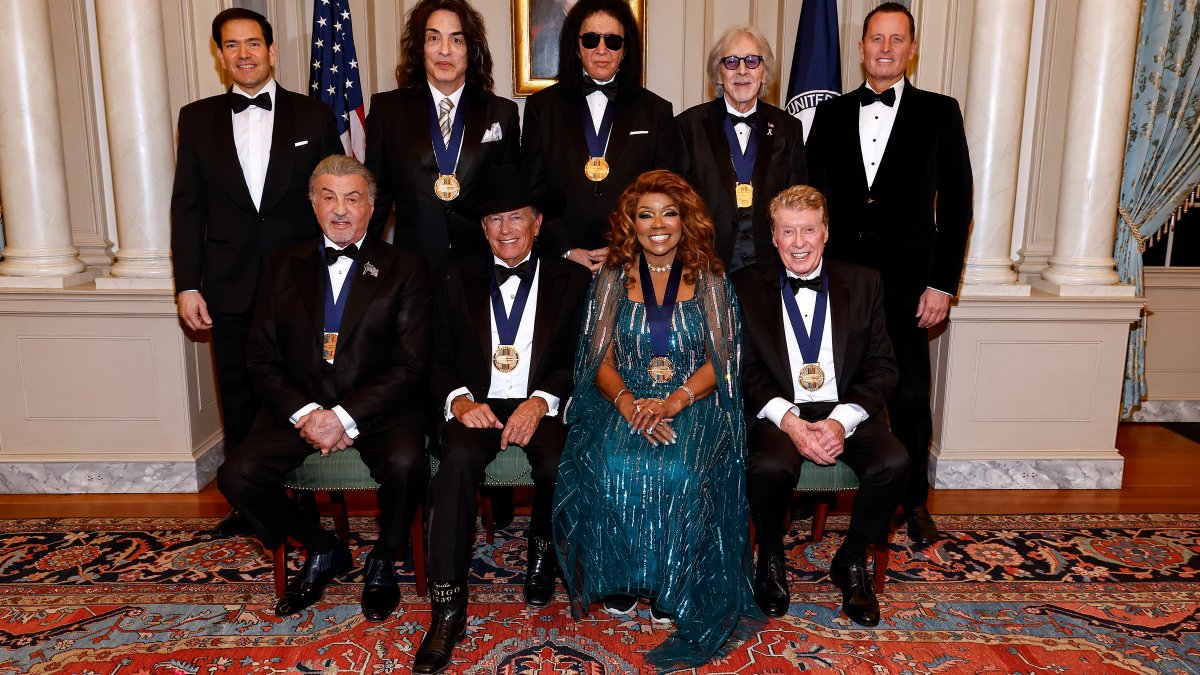
The 2025 class of honorees continues this tradition of celebrating diverse artistic contributions. This year’s recipients include:
* Sylvester Stallone: Celebrated for his iconic roles in the “Rocky” and “Rambo” franchises, Stallone embodies the American spirit of perseverance and determination. He is also a long-time supporter of Trump, even serving as one of his Hollywood “special ambassadors.”
* Gloria Gaynor: The voice behind the feminist anthem “I Will Survive,” Gaynor’s music has empowered generations and become a symbol of resilience.
* Kiss: The legendary rock band, known for their flamboyant stage presence, elaborate makeup, and pyrotechnic displays, has left an indelible mark on popular culture. The ceremony is expected to be particularly poignant,following the recent passing of original lead guitarist Ace Frehley.
* George Strait: A country music icon, Strait’s decades-long career has cemented his status as a national treasure.
* Michael crawford: A Tony Award-winning actor renowned for his captivating performances on Broadway, including his iconic portrayal of the Phantom in “The Phantom of the Opera.”
Trump’s Transformation of the Kennedy Center
Trump’s involvement extends far beyond simply hosting the ceremony.He has fundamentally altered the Kennedy Center’s leadership, ousting the existing board and replacing them with Republican supporters, ultimately securing the chairmanship for himself. He has publicly criticized the center’s programming and even suggested renaming it the “Trump Kennedy Center,” though perhaps in jest.However, his commitment to the institution is evidenced by securing over $250 million in congressional funding for renovations.
This takeover has sparked debate, raising questions about the politicization of an event traditionally celebrated for its non-partisan nature. During Trump’s first term, several honorees openly criticized him, with film producer Norman Lear even threatening to boycott the ceremony if Trump attended. trump responded by simply staying away.
Navigating Political Divides: Honorees’ Perspectives
The political leanings of this year’s honorees are varied. While Stallone is a vocal supporter of Trump, the views of others are more nuanced. George Strait and Gloria Gaynor have remained largely silent on political matters, though records show Gaynor has contributed to Republican organizations.
Kiss presents a particularly interesting case. Gene Simmons initially expressed support for Trump in 2016 but later criticized him in 2022, accusing him of self-interest and promoting harmful conspiracy theories.Bandmate Paul Stanley denounced Trump’s attempts to overturn the 2020 election, labeling those who stormed the capitol as “terrorists.” However, following Trump’s 2024 victory, Stanley called for unity, urging acceptance and understanding across the political spectrum.His statement on X (formerly Twitter


